543 Featured Specimen
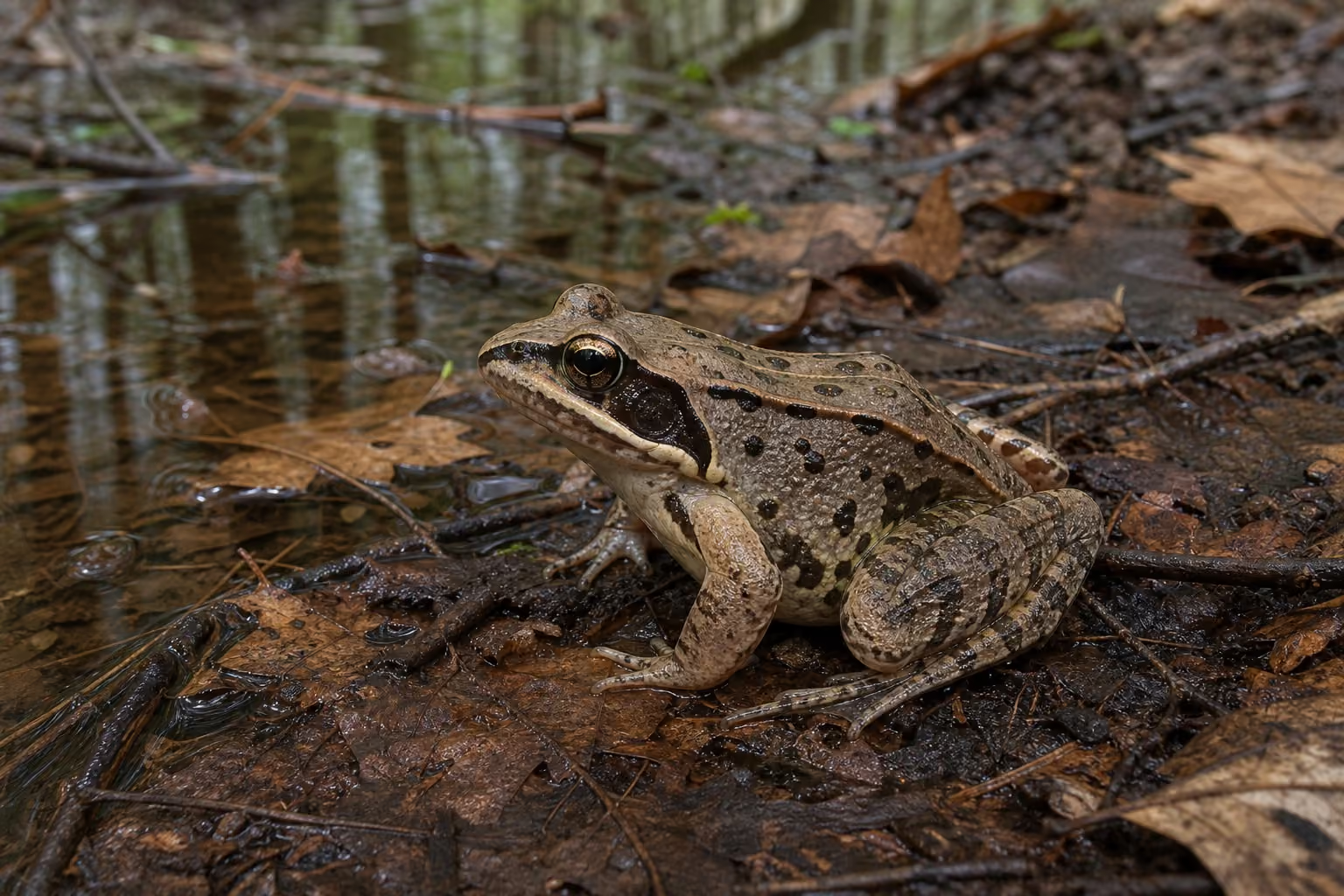
Wood frog

Details

Wood frog

Lithobates sylvaticus

Size
3.5–8.3 cm
Diet
Carnivore
Activity
Seasonal
Sociality
Solitary
Lifespan

The wood frog is a small forest frog famous for surviving partial freezing through winter. A dark mask behind the eye gives it a distinctive face.
Range

Habitat range map
Native range Occasional / Transient
NearcticNearcticNearcticNearcticNearcticNearcticNearcticNearcticNearcticNearcticNearcticNearcticNearcticNearcticNearcticNearcticNearcticNearcticNearcticNearcticNearcticNearcticNearcticNearcticNearcticNearcticNearcticNearcticNearcticNearcticNearcticNearcticNearcticNearcticNearcticNearcticNearcticNearcticNearcticNearcticNearctic

Map: Ecoregions 2017 © RESOLVE (CC BY 4.0) · Natural Earth (PD)

Details

Habitat

It ranges from Alaska across Canada into the northeastern United States, living on damp floors of deciduous and coniferous forest. Breeding draws it to temporary ponds and snowmelt pools.

Appearance

Adults are about 3.5-8.3 cm long. The body may be brown, reddish or gray, with a dark band running from the eye past the tympanum and a pale underside.

Behavior

Usually solitary, it moves through leaf litter and overwinters beneath it, tolerating freezing temperatures. In early spring, adults appear suddenly at breeding pools.

Feeding

It eats insects, spiders, worms and small arthropods. Tadpoles feed on algae and organic matter in shallow pools.

Reproduction

Breeding is brief and explosive, with males calling in shallow ponds soon after thaw. Egg masses are laid near the surface, where temporary water warms quickly.

Notes

The species depends on forest wetlands and seasonal ponds, so roads and development can fragment breeding habitat. Its freeze tolerance is a model for physiological research.