773 Featured Specimen
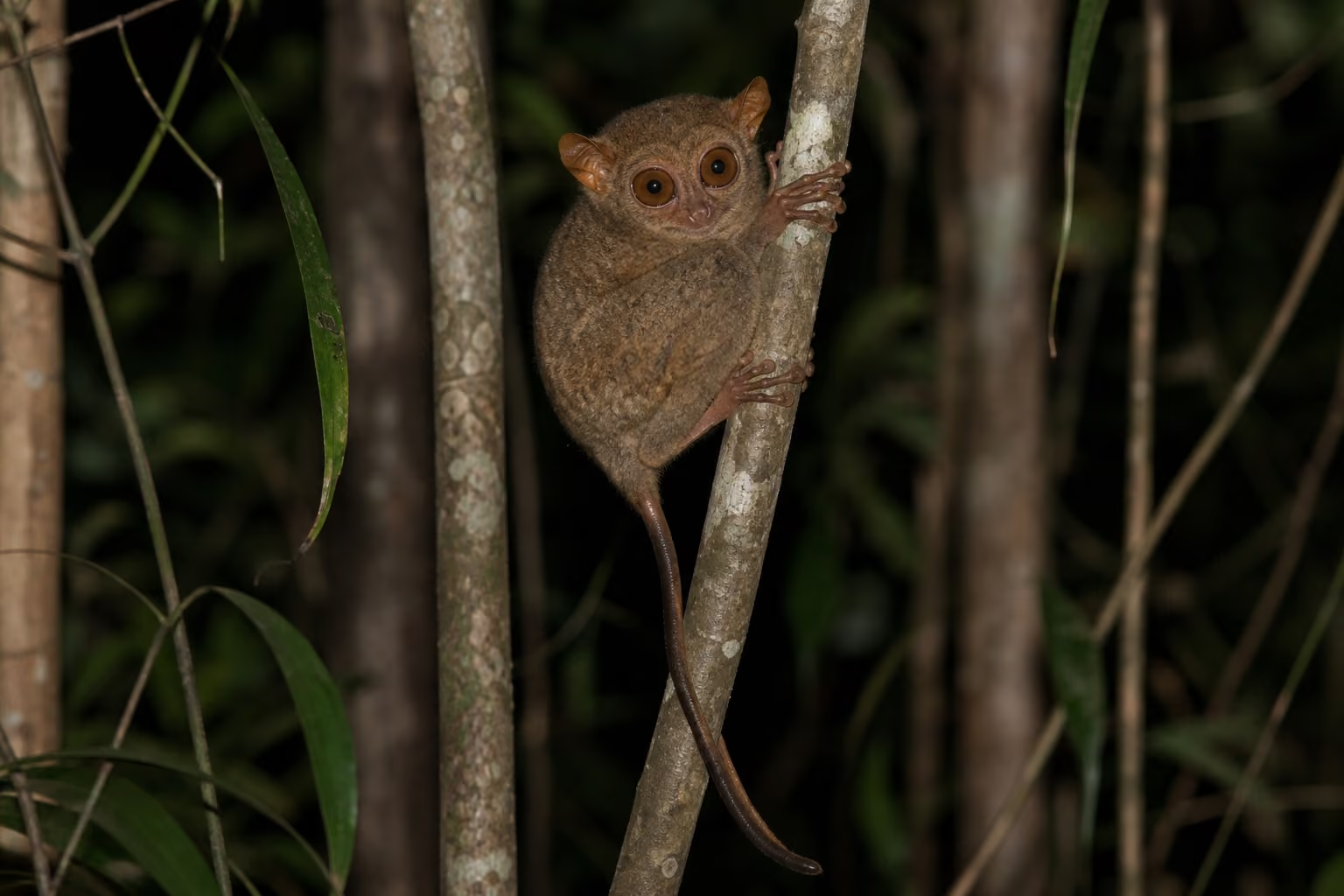
Spectral tarsier

Details

Spectral tarsier

Tarsius tarsier

Size
20–35 cm · 80–150 g
Diet
Carnivore
Activity
Nocturnal
Sociality
Pair
Lifespan

A small nocturnal primate from Sulawesi and nearby islands. Huge eyes, long hindlimbs, and vertical clinging-and-leaping define its appearance.
Range

Habitat range map
Native range Occasional / Transient
IndomalayanIndomalayanIndomalayanIndomalayanIndomalayanIndomalayanIndomalayanIndomalayanIndomalayanIndomalayanIndomalayanIndomalayanIndomalayanIndomalayanIndomalayanAustralasianAustralasianAustralasianAustralasianAustralasianAustralasianAustralasianAustralasianAustralasianAustralasianAustralasianAustralasianAustralasianAustralasianAustralasianAustralasianAustralasian

Map: Ecoregions 2017 © RESOLVE (CC BY 4.0) · Natural Earth (PD)

Details

Habitat

Spectral tarsiers use lowland forest, secondary forest, forest edges, and wooded farmland. Dense stems and abundant insects are important.

Appearance

They have enormous eyes, elongated hindlimbs, and a long tail. Because the eyes are fixed in the sockets, the head turns widely.

Behavior

They rest by day in vegetation or tree hollows. At night, they cling vertically to stems and leap toward insects and small prey.

Feeding

They are carnivorous, eating insects, spiders, and small vertebrates. Unlike most primates, they consume little or no plant material.

Reproduction

Pairs or small family groups are common. Females bear single, well-developed infants that can cling to branches early.

Notes

Large eyes support night vision, but the animals can be sensitive to light, noise, and disturbance at viewing sites.