040 Featured Specimen
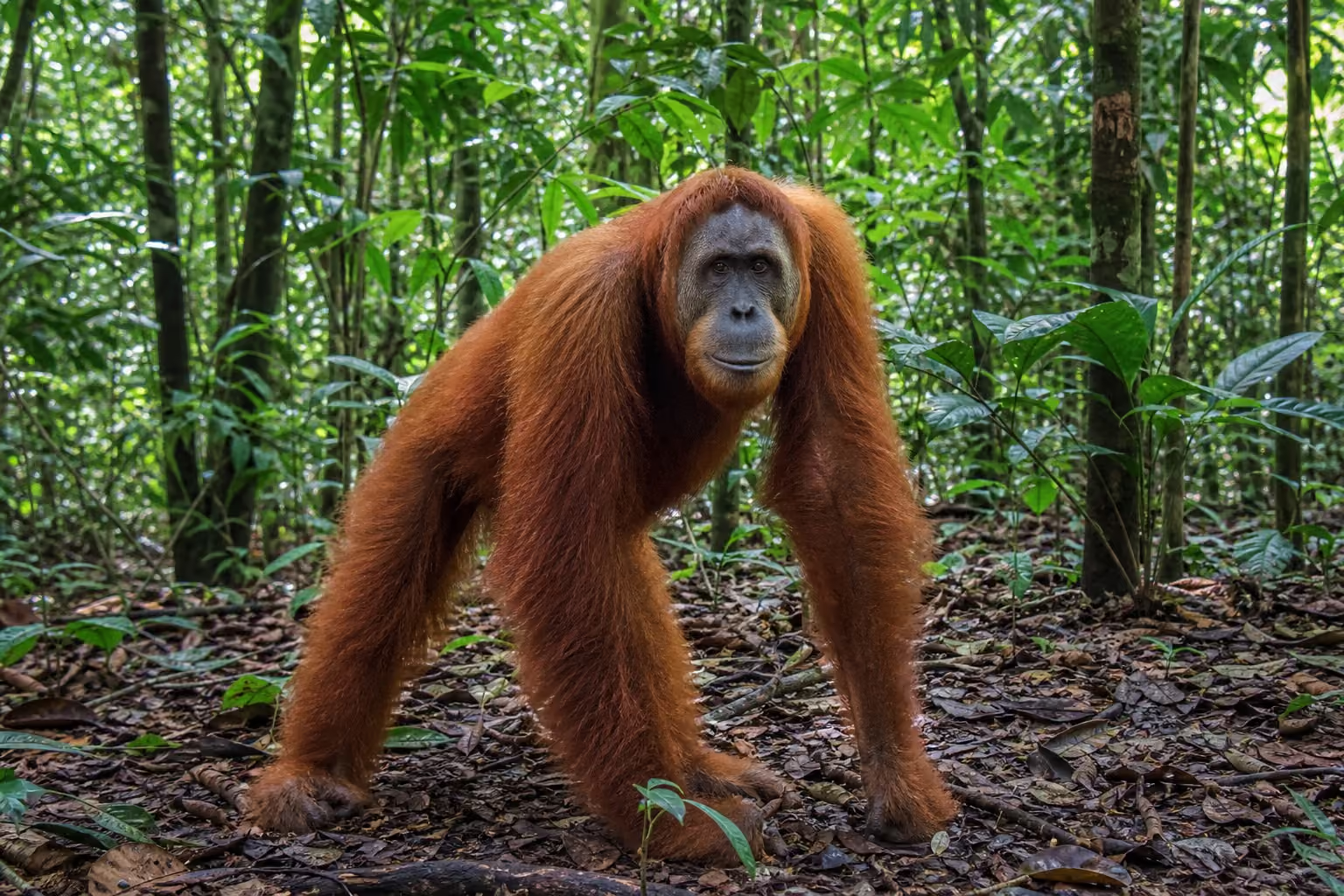
Orangutan

Details

Orangutan

Pongo pygmaeus

Size
1–1.5 m · 30–100 kg
Diet
Omnivore
Activity
Diurnal
Sociality
Solitary
Lifespan
30-40 years (wild)

A large, reddish-brown great ape found only on the island of Borneo, where it spends almost its entire life in the canopy. Swinging hand over hand on arms that span nearly two metres, it is the most solitary and one of the most intelligent of the great apes.
Range

Habitat range map
Native range Occasional / Transient

Map: Ecoregions 2017 © RESOLVE (CC BY 4.0) · Natural Earth (PD)

Details

Habitat

Endemic to Borneo, it lives in lowland dipterocarp forest, peat-swamp forest, and regenerating secondary forest. It ranges through tropical rainforest up to around 1,500 metres, reaching its highest densities in rich forests near freshwater and wetlands.

Appearance

Body length runs about 100 to 150 cm and weight from 30 to 100 kg. The coat is coarse and reddish-brown, and the arms, spanning close to two metres, are far longer than the legs. Males are much larger than females, and mature flanged males develop broad fatty cheek pads and a large throat sac.

Behavior

Active by day, it spends most of its waking hours feeding, resting, and moving slowly through the trees. It is strongly solitary, with lasting bonds forming mainly between a mother and her dependent offspring. Each night it weaves a fresh tree nest, and it uses tools such as leaves as umbrellas or sticks to probe food.

Feeding

An omnivore, it eats mostly fruit but also leaves, bark, honey, bird eggs, and insects. Fruit can make up more than half of its feeding time, with figs and durian among its favourites, and it sometimes uses sticks to extract seeds from spiny fruit.

Reproduction

Breeding occurs year-round, and females give birth for the first time at around fifteen years. Gestation lasts about nine months and usually yields a single infant. The young clings to its mother for years, and the interval between births, six to nine years, is the longest of any great ape.

Notes

Logging, conversion of forest to oil-palm plantations, hunting, and the illegal pet trade have sharply reduced its habitat and numbers. Highly intelligent and exquisitely adapted to arboreal life, its survival now depends heavily on human activity.