106 Featured Specimen
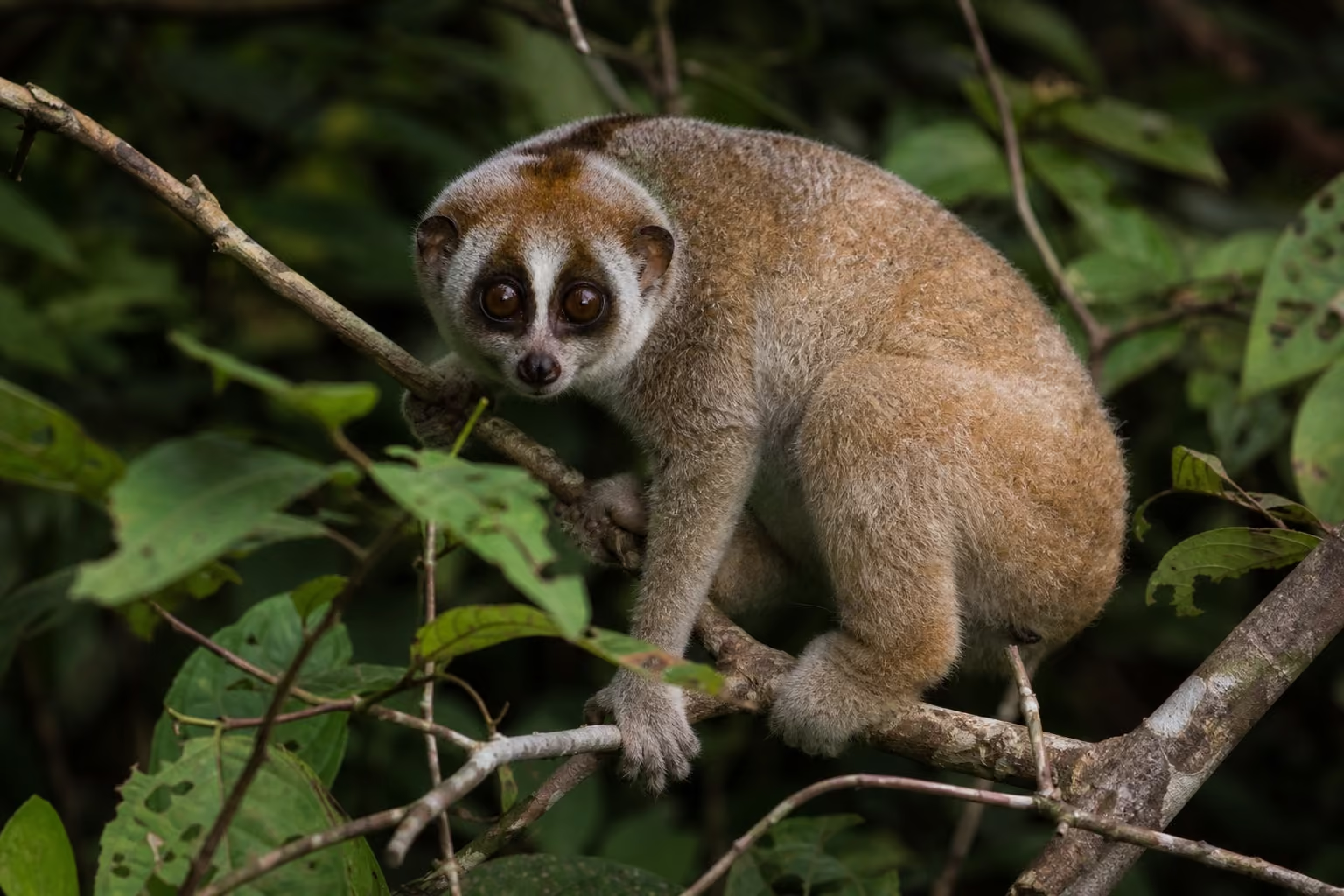
Bengal slow loris

Details

Bengal slow loris

Nycticebus bengalensis

Size
26–38 cm · 1–2.1 kg
Diet
Omnivore
Activity
Nocturnal
Sociality
Solitary
Lifespan
10-20 years

The Bengal slow loris is the largest of all slow lorises and one of the few venomous primates. It mixes secretion from a gland on its inner elbow with saliva to deliver a toxic bite in self-defense.
Range

Habitat range map
Native range Occasional / Transient
IndomalayanIndomalayanIndomalayanIndomalayanIndomalayanIndomalayanIndomalayanIndomalayanIndomalayanIndomalayanIndomalayanIndomalayanIndomalayanIndomalayanIndomalayan

Map: Ecoregions 2017 © RESOLVE (CC BY 4.0) · Natural Earth (PD)

Details

Habitat

It ranges widely across the Indomalayan realm, from Bangladesh and northeast India through Myanmar, southern China, Thailand and Vietnam. It favors evergreen and semi-evergreen forest with dense, continuous canopy, as well as bamboo groves, and has the largest geographic range of any slow loris.

Appearance

The biggest slow loris, it measures about 26 to 38 cm and weighs 1 to 2.1 kg. Dense, woolly fur is brown-gray to reddish on the back and whitish below, with a dark dorsal stripe running to the crown. It has a round head, short ears, a wet rhinarium, and only a vestigial tail.

Behavior

Nocturnal and arboreal, it climbs slowly and deliberately through the canopy, sleeping by day curled in a ball in dense vegetation or tree holes. It is largely solitary and scent-marks territory with urine. When threatened, it licks its brachial-gland secretion, mixing it with saliva for a venomous bite.

Feeding

Omnivorous, it relies heavily on plant exudates such as sap, gums, resins and nectar, especially in winter. It supplements this diet with fruit, insects, snails and small vertebrates.

Reproduction

Breeding is non-seasonal, with females reproducing every 12 to 18 months after a gestation of about six months. They typically give birth to a single infant, which the mother carries for roughly three months; sexual maturity is reached around 20 months.

Notes

Listed as Endangered on the IUCN Red List, it is threatened by the exotic pet trade, harvesting for traditional medicine, hunting and habitat loss. The genus is on CITES Appendix I, banning international commercial trade. Individuals can live up to about 20 years.