520 Featured Specimen
Sheltopusik

Details

Sheltopusik

Pseudopus apodus

Size
Total length 0.3–1.4 m
Diet
Carnivore
Activity
Diurnal
Sociality
Solitary
Lifespan

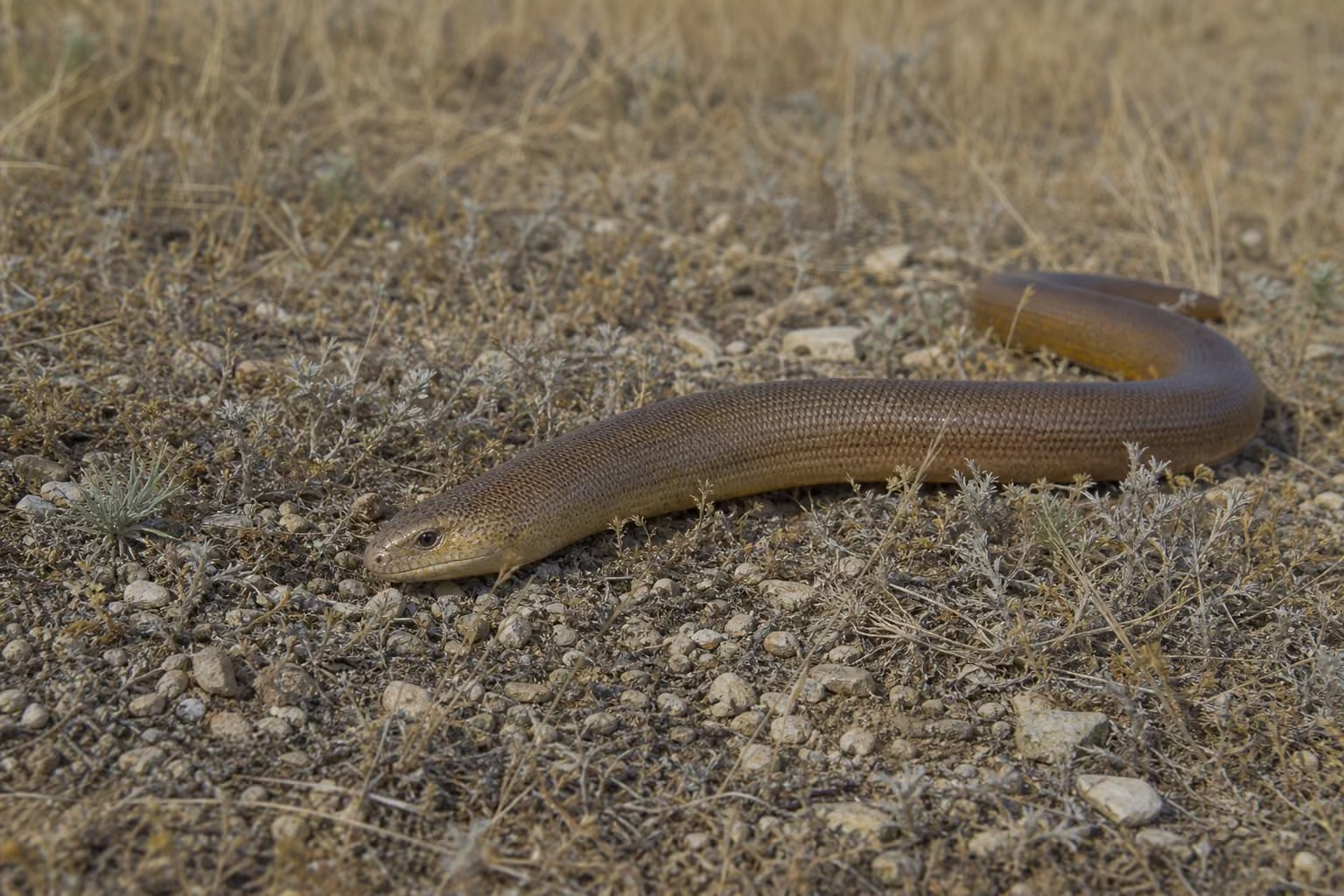
A large, limbless lizard of southeastern Europe and Central Asia that looks like a snake or a giant earthworm but keeps eyelids and ear openings. It is the largest member of the Anguidae, reaching well over a metre.
Range

Habitat range map
Native range Occasional / Transient
PalearcticPalearcticPalearcticPalearcticPalearcticPalearcticPalearcticPalearcticPalearcticPalearcticPalearcticPalearcticPalearcticPalearcticPalearcticPalearcticPalearcticPalearcticPalearcticPalearcticPalearcticPalearcticPalearcticPalearctic

Map: Ecoregions 2017 © RESOLVE (CC BY 4.0) · Natural Earth (PD)

Details

Habitat

Ranges across the Palearctic from the Balkans through the Caucasus into Central Asia. It favours open country — short grassland and sparsely wooded, rocky hillsides where sun and shade meet.

Appearance

Reaches up to 135 cm, the longest in its family. The body is tan, paler below, with a ringed, segmented look that recalls a huge earthworm. A deep fold runs along each flank, its scales expanding when a meal is swallowed, and tiny 2 mm vestiges of hind legs remain beside the vent.

Behavior

A solitary, day-active lizard that becomes especially lively in wet weather. Despite its sluggish look it can rear up using its tail, and when harassed it sheds the tail, hisses, bites, and releases a foul musk to escape.

Feeding

A carnivore that favours snails and slugs, crushing their shells with robust teeth and jaws. It also takes arthropods, earthworms, frogs, birds' eggs and nestlings, and small mammals.

Reproduction

Egg-laying, depositing around six to ten eggs in moist ground or under bark or a stone roughly ten weeks after mating. The female stays to guard the clutch, which hatches after 45–55 days into young about 15 cm long; the species is long-lived, with captives recorded past 50 years.

Notes

Listed as Least Concern. Hardy and adaptable, it appears in the exotic pet trade, though it is rarely captive-bred and most animals are wild-caught. Its bones turn up at Natufian sites in Israel, suggesting it was eaten by people there in prehistory.