519 Featured Specimen
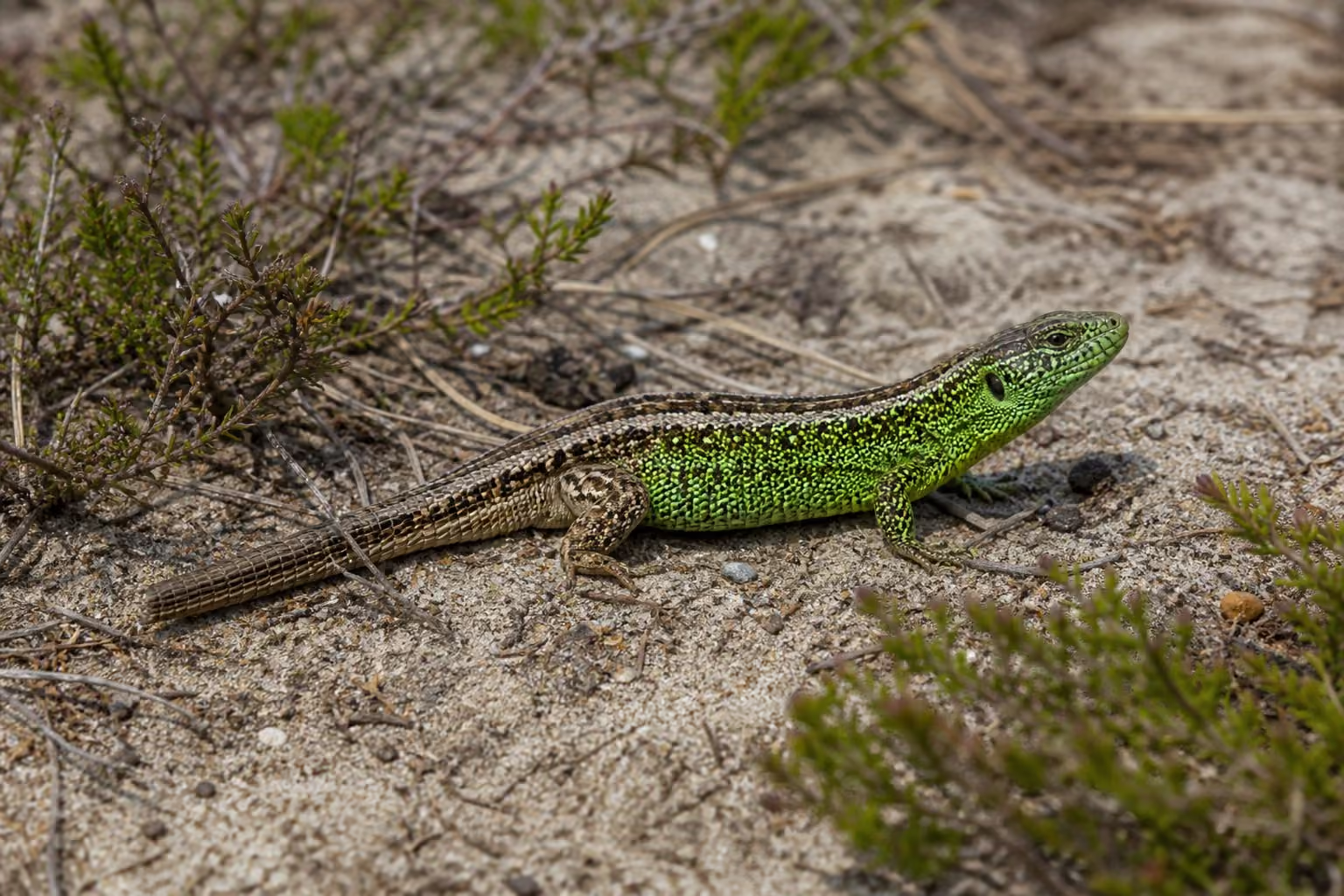
Sand lizard

Details

Sand lizard

Lacerta agilis

Size
Total length 15–24 cm
Diet
Carnivore
Activity
Diurnal
Sociality
Solitary
Lifespan

A widespread lacertid lizard ranging across Europe to Lake Baikal in Russia. In the brief spring breeding season the male's flanks flush vivid green, a striking courtship signal.

Range

Habitat range map
Native range Occasional / Transient
PalearcticPalearcticPalearcticPalearcticPalearcticPalearcticPalearcticPalearcticPalearcticPalearcticPalearcticPalearcticPalearcticPalearcticPalearcticPalearcticPalearcticPalearcticPalearcticPalearcticPalearcticPalearcticPalearcticPalearctic

Map: Ecoregions 2017 © RESOLVE (CC BY 4.0) · Natural Earth (PD)

Details

Habitat

Found patchily from continental Europe to Mongolia, though absent from Iberia and Turkey. It favours dry, open ground with loose sand and good sun: dunes, heathland, grassland and woodland edges. In cooler Britain it is confined to warm coastal sand that can incubate its eggs.

Appearance

Total length 15-24 cm. The back is brown to greyish, marked with rows of dark ocelli that have pale centres. Breeding males turn bright green along the flanks, fading by late summer, while females stay grey to brown.

Behavior

Diurnal and largely solitary, it basks on logs and stones to warm up before foraging. Males hold large, overlapping territories and fight fiercely over mates, biting rivals. When threatened it can shed its tail to escape, regrowing only a shorter replacement.

Feeding

A carnivore that preys on insects, spiders and other small invertebrates. It hunts by day, moving over the ground and through low vegetation to seize moving prey.

Reproduction

Egg-laying, with females producing just one clutch a year. Around June and July they bury about six to thirteen eggs in warm, loose sand, leaving the ground's heat to incubate them. There is no parental care, and hatchlings fend for themselves.

Notes

Its vast range means the IUCN lists it as Least Concern, but local fortunes vary widely. Habitat loss and fragmentation from urban, farm and tourism development, road deaths and predation by cats have reduced some populations, and it is legally protected across much of western Europe.