513 Featured Specimen
Common European adder

Details

Common European adder

Vipera berus

Size
Total length 50–90 cm · 50–180 g
Diet
Carnivore
Activity
Diurnal
Sociality
Solitary
Lifespan

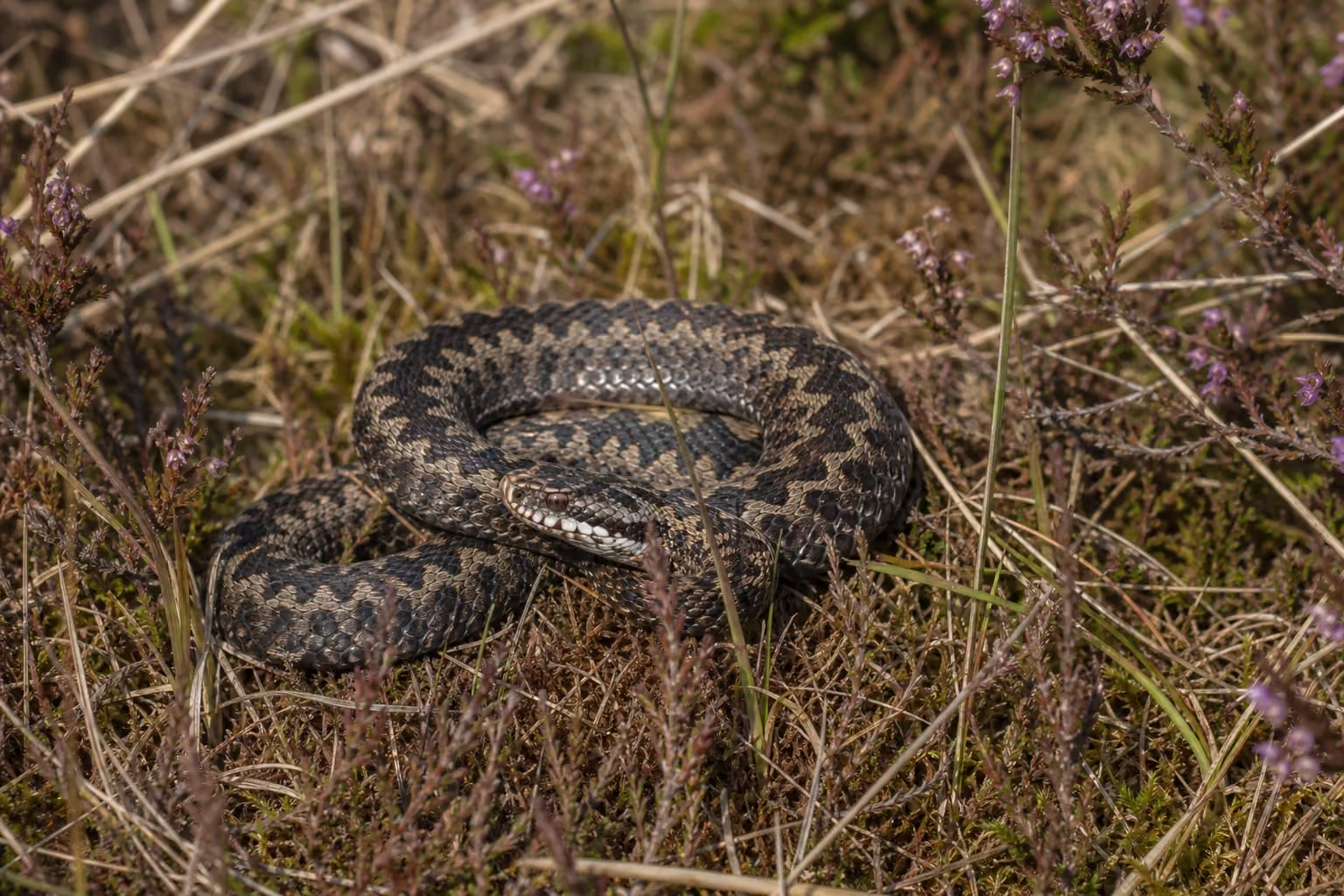
A venomous viper of northern Eurasia, the adder is the most northerly-ranging snake on Earth, reaching beyond the Arctic Circle. Its hallmark is a dark zigzag stripe running the full length of the back, paired with striking differences in colour between the sexes.
Range

Habitat range map
Native range Occasional / Transient
PalearcticPalearcticPalearcticPalearcticPalearcticPalearcticPalearcticPalearcticPalearcticPalearcticPalearcticPalearcticPalearcticPalearcticPalearcticPalearcticPalearcticPalearcticPalearcticPalearcticPalearcticPalearcticPalearcticPalearctic

Map: Ecoregions 2017 © RESOLVE (CC BY 4.0) · Natural Earth (PD)

Details

Habitat

It spans the temperate and boreal Eurasian land-mass from Britain east to Sakhalin and northern China, with the northernmost populations pushing past the Arctic Circle. It favours sunny, varied ground: woodland edges, meadows, heaths, moors and bogs, coastal dunes, and alpine slopes climbing to nearly 3,000 m.

Appearance

Adults run 50 to 90 cm long and weigh 50 to 180 g, with northern individuals the largest. The head is broad and distinct, marked with a dark V or X, and a dark zigzag pattern extends along almost the entire body. Sexes differ sharply: males are grey with black markings, females brown with darker brown markings, while all-black melanistic forms, lacking any pattern, are most often female.

Behavior

A solitary snake, it basks to raise its body temperature before becoming active and spends much of the year in hibernation in the north, around 150 days for males and 180 for females in Britain. It is timid rather than aggressive, biting only when cornered, trodden on, or seized, and when threatened it draws the front of its body into an S-shape ready to strike.

Feeding

It is carnivorous, taking small mammals such as mice and voles, lizards, and amphibians including frogs and newts. An ambush hunter, it strikes from cover and injects venom through its fangs to subdue prey.

Reproduction

The adder is live-bearing, and females breed only once every two years, or once every three where seasons are short. Rival males perform the so-called adder dance, rearing the fronts of their bodies and swaying against one another. Between three and 18 young are born in late summer or early autumn, already equipped with a fully functional venom apparatus.

Notes

Its venom is mainly haemotoxic, weaker than that of related vipers, and fatal bites are extremely rare though intensely painful and swelling. Although listed as Least Concern by the IUCN, the species is declining locally through habitat loss and fragmentation by intensive agriculture and collection for the pet and venom trades, and it is legally protected in Britain and parts of Scandinavia.