554 Featured Specimen
Rough-skinned newt

Details

Rough-skinned newt

Taricha granulosa

Size
Total length 11–18 cm
Diet
Carnivore
Activity
Seasonal
Sociality
Solitary
Lifespan

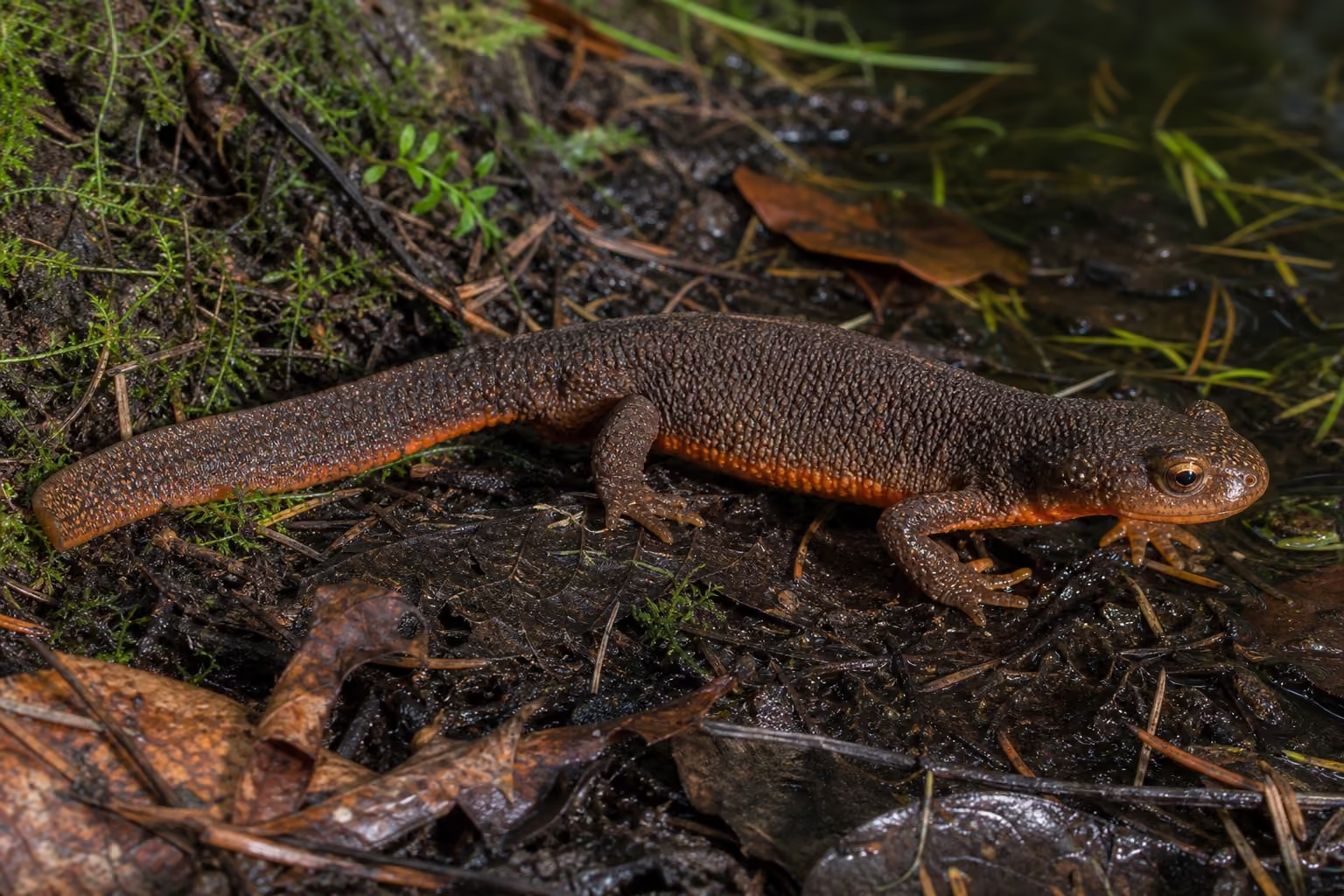
The rough-skinned newt is a Pacific Northwest salamander known for rough skin and potent tetrodotoxin. When threatened, it arches to show the bright warning color of its belly.
Range

Habitat range map
Native range Occasional / Transient
NearcticNearcticNearcticNearcticNearcticNearcticNearcticNearcticNearcticNearcticNearcticNearcticNearcticNearcticNearcticNearcticNearcticNearcticNearcticNearcticNearcticNearcticNearcticNearcticNearcticNearcticNearcticNearcticNearcticNearcticNearcticNearcticNearcticNearcticNearcticNearcticNearcticNearcticNearcticNearcticNearctic

Map: Ecoregions 2017 © RESOLVE (CC BY 4.0) · Natural Earth (PD)

Details

Habitat

It occurs from southeastern Alaska to California in forest, wetlands, ponds and slow water. Movement between rainy coastal forest and breeding ponds is central to its life cycle.

Appearance

Adults are about 11-18 cm in total length. The back is brown to dark brown and granular, while the belly is yellow to orange, with a sturdy body and rounded tail.

Behavior

Usually solitary, it walks overland in wet seasons and enters ponds or marshes to breed. Defensive posture raises the head and tail to expose the bright underside.

Feeding

Aquatic insects, worms, crustaceans, eggs and small amphibians are taken. The newt captures moving small animals in water and on land.

Reproduction

Breeding is mainly winter to spring in water. Females attach eggs singly to aquatic plants or submerged objects, and larvae develop in the pond.

Notes

The toxin is powerful, but observation without handling is low-risk. In some areas the species is famous for an evolutionary arms race with toxin-resistant garter snakes.