317 Featured Specimen
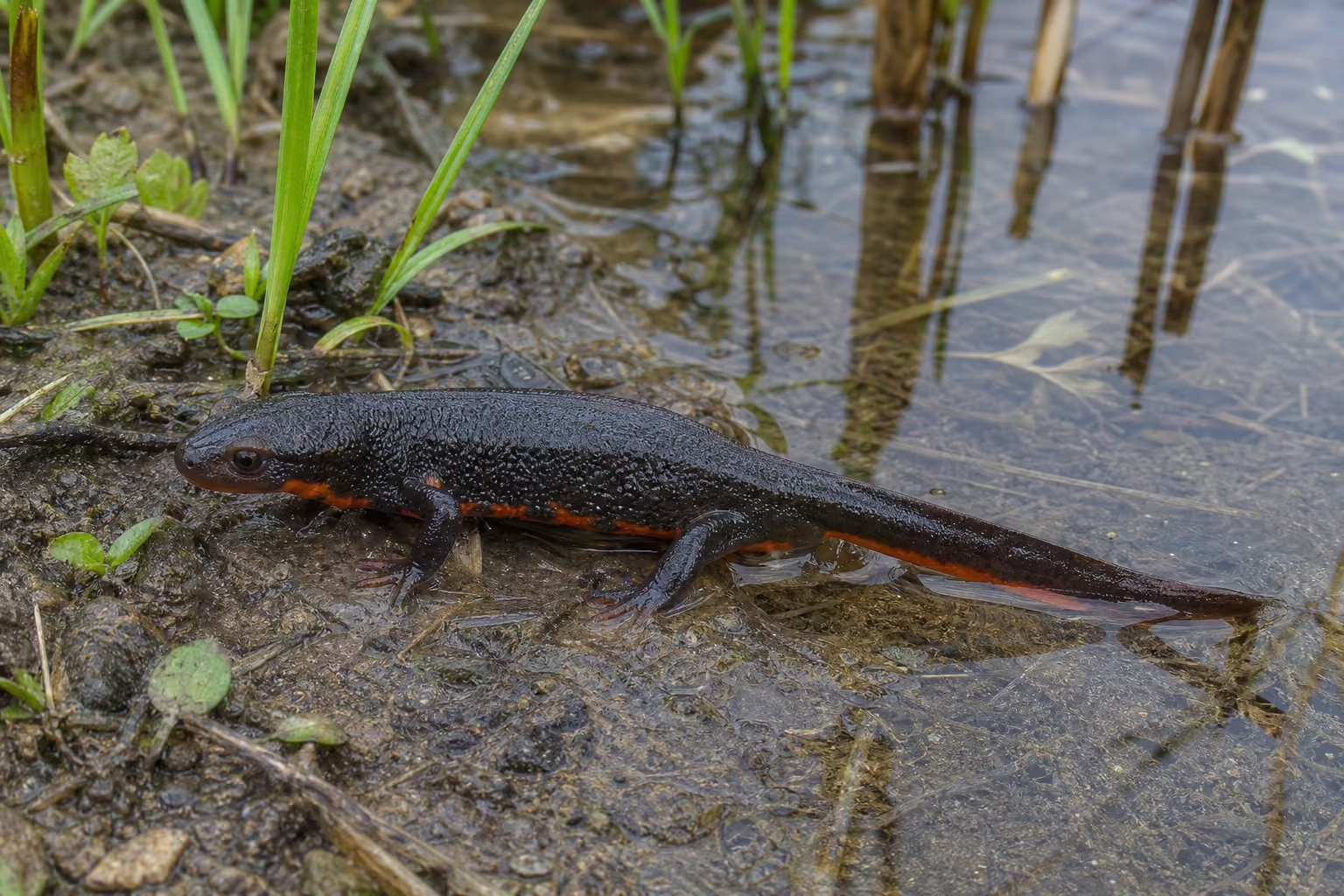
Japanese fire belly newt

Details

Japanese fire belly newt

Cynops pyrrhogaster

Size
8–13 cm · 8–20 g
Diet
Carnivore
Activity
Diurnal
Sociality
Loose group
Lifespan
20–30 years

The Japanese fire belly newt is a small newt of rice fields and wetlands in Japan. Its dark back and red belly are distinctive, and adults often gather loosely in daytime waters.
Range

Habitat range map
Native range Occasional / Transient
PalearcticPalearcticPalearcticPalearcticPalearcticPalearcticPalearcticPalearcticPalearcticPalearcticPalearcticPalearcticPalearcticPalearcticPalearcticPalearcticPalearcticPalearcticPalearcticPalearcticPalearcticPalearcticPalearcticPalearctic

Map: Ecoregions 2017 © RESOLVE (CC BY 4.0) · Natural Earth (PD)

Details

Habitat

It occurs in the Palearctic Japanese archipelago, using rice paddies, ponds, marshes, and slow channels. Adults breed in water and may move onto damp land outside the breeding season.

Appearance

Length is 8-13 cm and weight 8-20 g. The back is dark brown to black, the belly red to orange with dark markings, and the laterally flattened tail aids swimming.

Behavior

Diurnal animals walk slowly along shallow bottoms and among aquatic plants. Toxic skin secretions and the bright belly serve as warning signals to predators.

Feeding

A carnivore, it eats midge larvae, worms, small crustaceans, tadpoles, and similar prey. It searches the bottom and snaps up moving animals.

Reproduction

Breeding occurs in water from spring into early summer. Males court by fanning the tail, and females fold individual eggs into leaves of aquatic plants.

Notes

It is listed as Near Threatened. Changes in rice-field management, wetland loss, and introduced predators can reduce local populations.