315 Featured Specimen
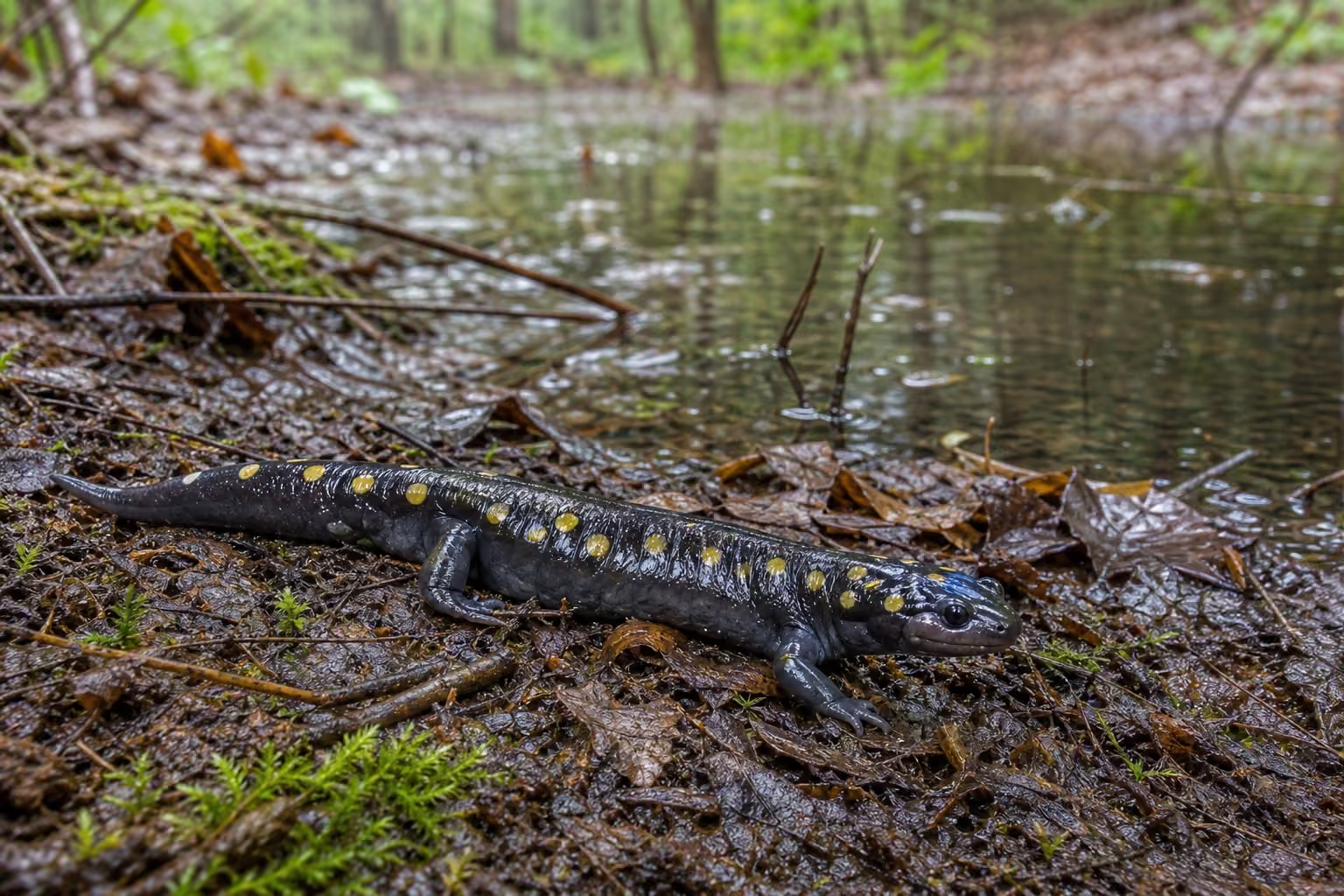
Spotted salamander

Details

Spotted salamander

Ambystoma maculatum

Size
15–25 cm · 20–45 g
Diet
Carnivore
Activity
Nocturnal
Sociality
Solitary
Lifespan
20–30 years

The spotted salamander is a large North American salamander marked by rows of yellow spots on a dark body. It spends most of its life hidden underground or beneath forest litter.
Range

Habitat range map
Native range Occasional / Transient
NearcticNearcticNearcticNearcticNearcticNearcticNearcticNearcticNearcticNearcticNearcticNearcticNearcticNearcticNearcticNearcticNearcticNearcticNearcticNearcticNearcticNearcticNearcticNearcticNearcticNearcticNearcticNearcticNearcticNearcticNearcticNearcticNearcticNearcticNearcticNearcticNearcticNearcticNearcticNearcticNearctic

Map: Ecoregions 2017 © RESOLVE (CC BY 4.0) · Natural Earth (PD)

Details

Habitat

It inhabits deciduous and mixed forests with damp soils in the Nearctic. Fish-free vernal pools and shallow wetlands are essential breeding sites.

Appearance

Length is 15-25 cm and weight 20-45 g. It has a thick body, rounded head, smooth moist skin, and two rows of yellow spots on a black to blue-black back.

Behavior

Nocturnal and solitary, it usually remains in burrows or under logs. On warm rainy spring nights, many adults may migrate to the same breeding pool.

Feeding

A carnivore, it eats earthworms, slugs, insect larvae, spiders, and other small animals. It searches slowly through soil and leaf litter.

Reproduction

Breeding takes place in spring pools, where females attach gelatinous egg masses to sticks or aquatic plants. Larvae develop in water before transforming and moving into the forest.

Notes

It is listed as Least Concern. Because adults migrate between woods and ponds, roads and wetland loss can still damage local populations.