098 Featured Specimen
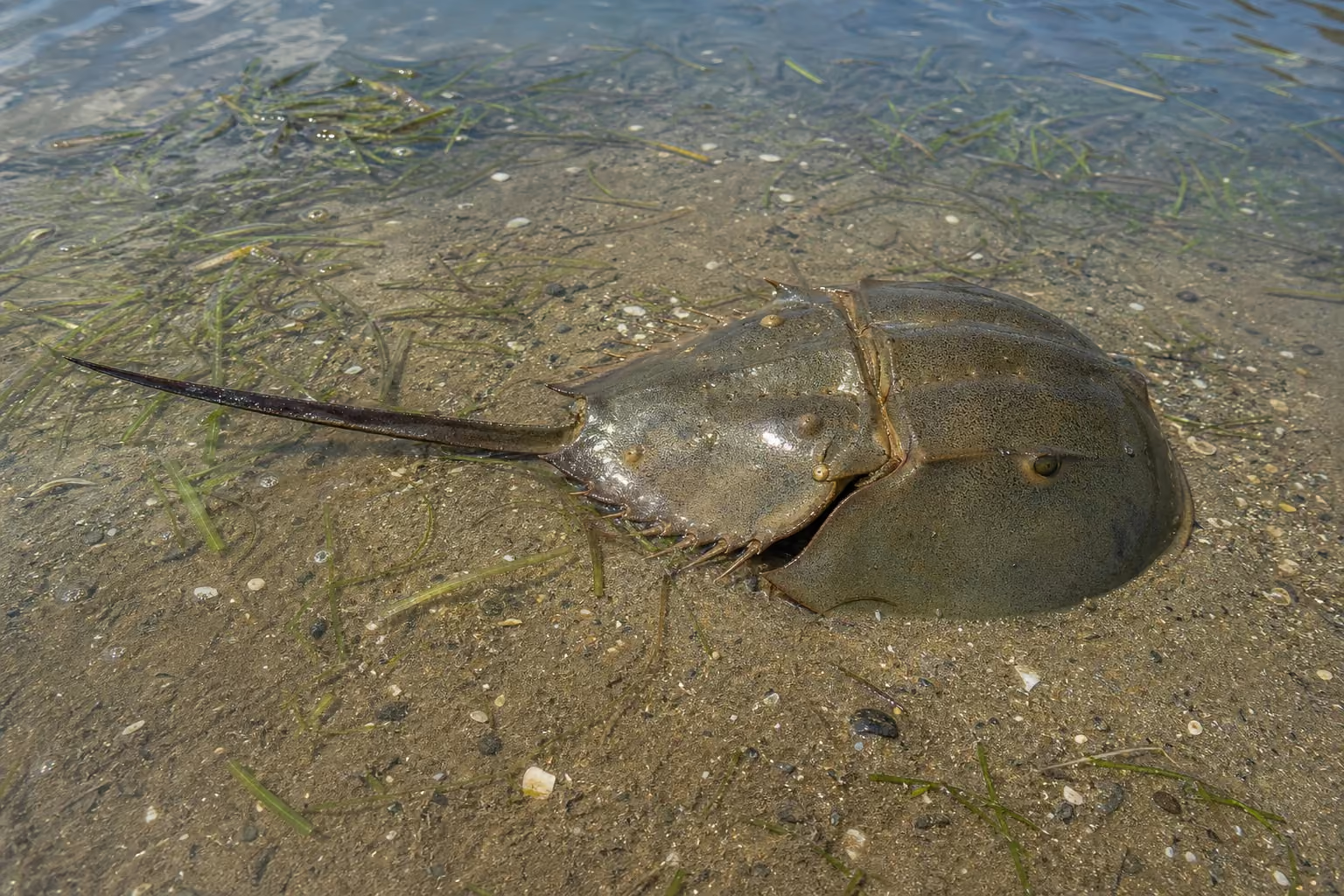
Atlantic horseshoe crab

Details

Atlantic horseshoe crab

Limulus polyphemus

Size
40–60 cm · 1–4.5 kg
Diet
Omnivore
Activity
Nocturnal
Sociality
Loose group
Lifespan
Varies by species and environment

A marine arthropod of the northwest Atlantic with a hard, dome-shaped carapace and a long, spike-like tail (telson). Despite its name it is no crab but an ancient relative of spiders and scorpions, famous for blood that is colorless without oxygen and turns deep blue on exposure to air.
Range

Habitat range map
Native range Occasional / Transient
Atlantic OceanAtlantic OceanAtlantic OceanAtlantic OceanAtlantic OceanNearcticNearcticNearcticNearcticNearcticNearcticNearcticNearcticNearcticNearcticNearcticNearcticNearcticNearcticNearcticNearcticNearcticNearcticNearcticNearcticNearcticNearcticNearcticNearcticNearcticNearcticNearcticNearcticNearcticNearcticNearcticNearcticNearcticNearcticNearcticNearcticNearcticNearcticNearcticNearcticNearctic

Map: Ecoregions 2017 © RESOLVE (CC BY 4.0) · Natural Earth (PD)

Details

Habitat

It lives along shallow coastal waters of the North American Atlantic seaboard and Gulf of Mexico, foraging over sandy and muddy bottoms. It winters on the continental shelf and crowds onto beaches to breed, with Delaware Bay serving as the great annual spawning ground.

Appearance

Body length runs 40-60 cm, with females 25-30% larger than males, and weight reaches 1-4.5 kg. The greenish-grey to dark-brown shell has three parts: prosoma, opisthosoma, and telson. It carries two compound eyes plus several simple eyes, with clawed chelicerae and five pairs of walking legs beneath.

Behavior

It moves in loose aggregations tightly tied to the tides. Around the new and full moons, vast numbers surge to the waterline on nighttime high tides to spawn. Males reach the beach first, and several often cling to a single female at once.

Feeding

An omnivore, it feeds mainly on benthic invertebrates such as mollusks and marine worms, taking bits of fish when available. Lacking jaws, it grinds food with bristles at the bases of its legs and a gizzard packed with sand and gravel.

Reproduction

A female buries 15,000 to 64,000 eggs in the sand at high tide. Larvae swim for about five to seven days before settling, then molt roughly 17 times on the way to maturity. Sexual maturity comes late, near age nine, and individuals may live 20 to 40 years.

Notes

Overharvesting and habitat loss have left it listed as Vulnerable by the IUCN. Its blood yields LAL (Limulus amebocyte lysate), essential for testing drugs for bacterial endotoxins, and the bleeding harvest is itself a threat. Its eggs are also a vital food for migrating shorebirds such as the red knot.