097 Featured Specimen
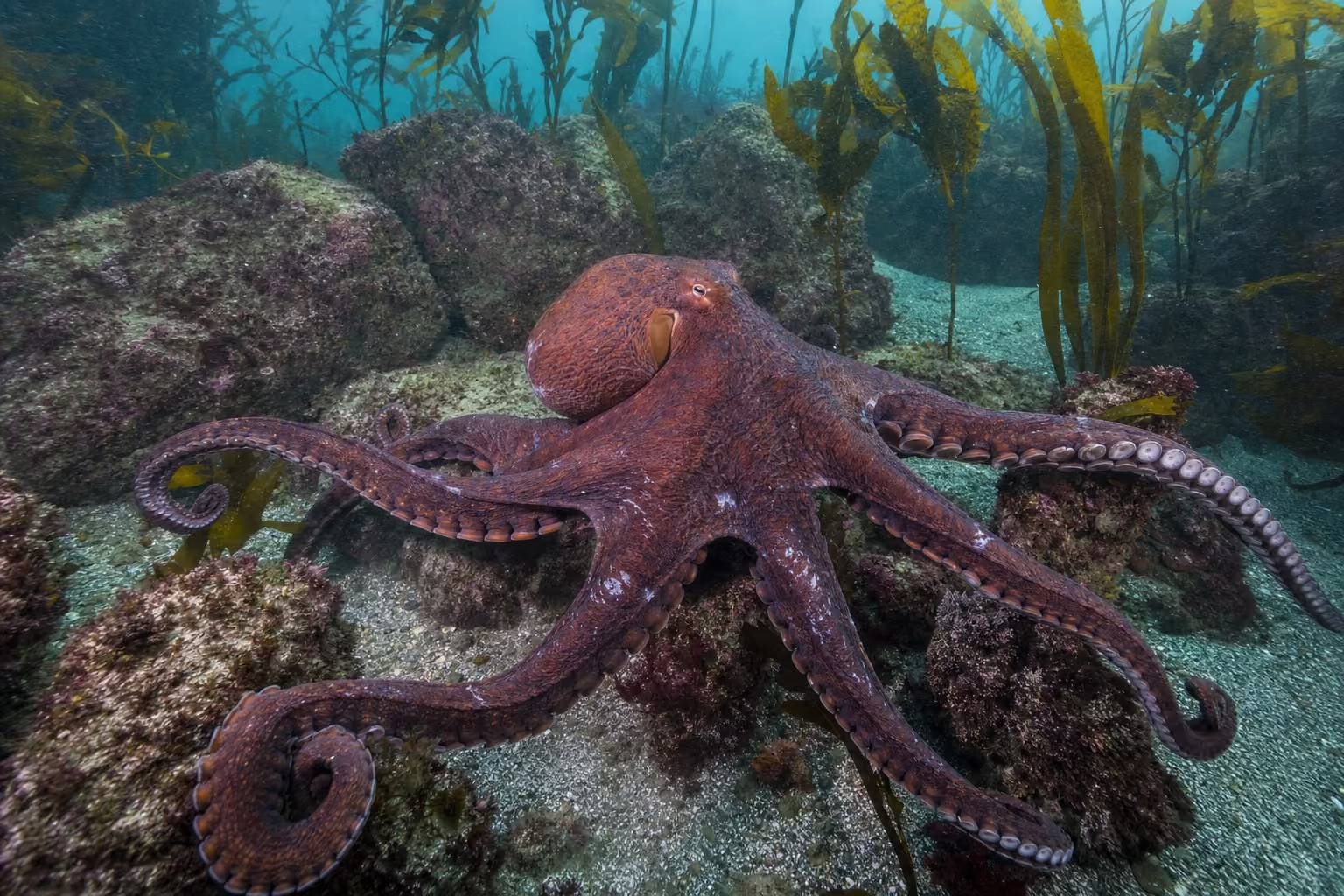
Giant Pacific octopus

Details

Giant Pacific octopus

Enteroctopus dofleini

Size
Total length 3–5 m · 10–50 kg
Diet
Carnivore
Activity
Nocturnal
Sociality
Solitary
Lifespan
Varies by species and environment

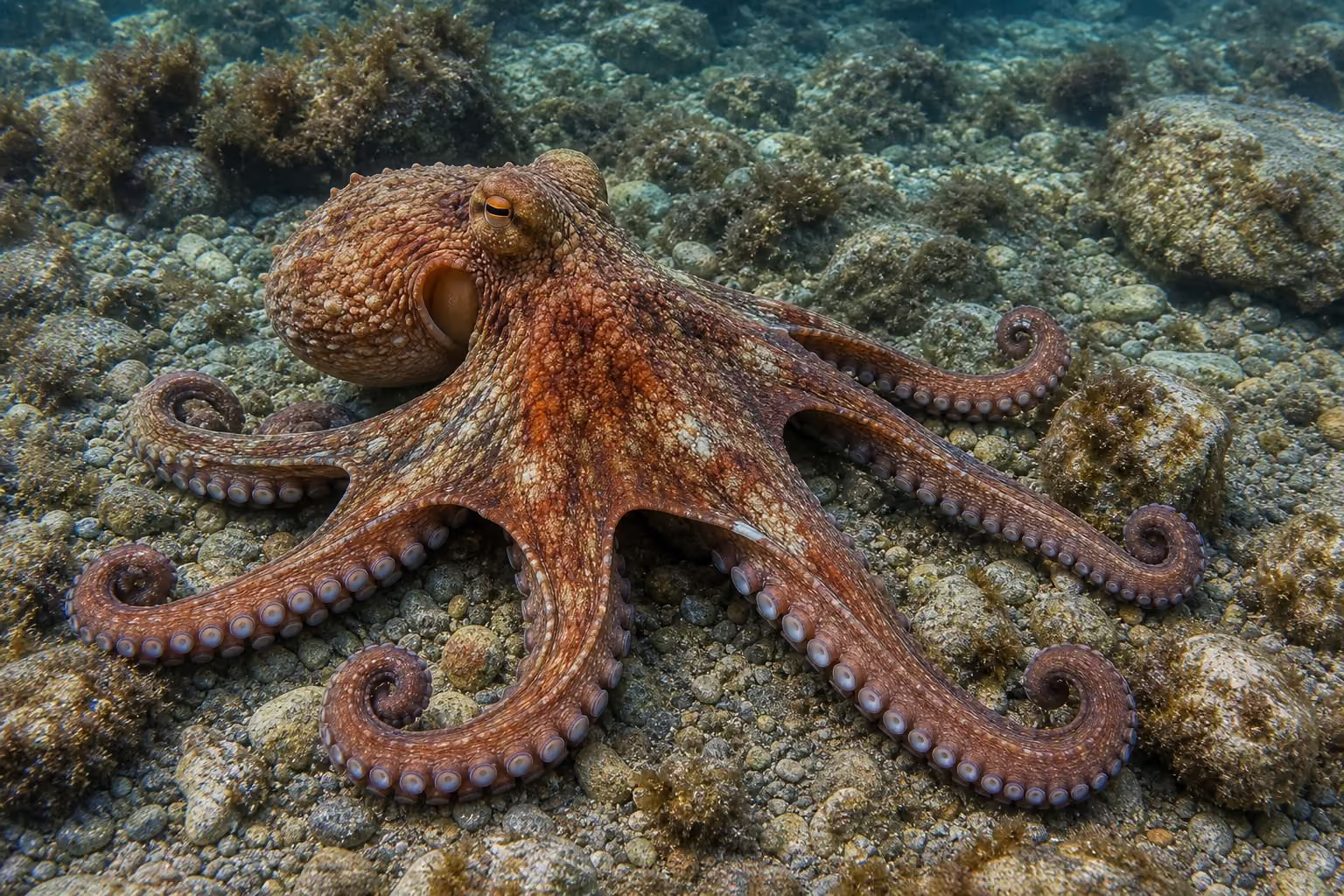
The largest octopus on Earth, found in the cold North Pacific. Its eight supple arms span 3 to 5 metres, and it can swiftly shift color and skin texture to vanish against rock. Widely regarded as the most intelligent of invertebrates.
Range

Habitat range map
Native range Occasional / Transient
Pacific OceanPacific OceanPacific OceanPalearcticPalearcticPalearcticPalearcticPalearcticPalearcticPalearcticPalearcticPalearcticPalearcticPalearcticPalearcticPalearcticPalearcticPalearcticPalearcticPalearcticPalearcticPalearcticPalearcticPalearcticPalearcticPalearcticPalearcticNearcticNearcticNearcticNearcticNearcticNearcticNearcticNearcticNearcticNearcticNearcticNearcticNearcticNearcticNearcticNearcticNearcticNearcticNearcticNearcticNearcticNearcticNearcticNearcticNearcticNearcticNearcticNearcticNearcticNearcticNearcticNearcticNearcticNearcticNearcticNearcticNearcticNearcticNearcticNearcticNearctic

Map: Ecoregions 2017 © RESOLVE (CC BY 4.0) · Natural Earth (PD)

Details

Habitat

It ranges across the cold, oxygen-rich coastal waters of the North Pacific, from Baja California up the West Coast to Alaska and across to the Russian Far East and Japan. It occurs from the intertidal zone down to about 2,000 m, shifting between shallow and deep water with the seasons.

Appearance

With an arm span of 3 to 5 m and a weight of 10 to 50 kg, it is the largest of all octopuses. Its body is almost entirely soft, powerful muscle, letting it squeeze through remarkably narrow gaps. The suckers are very large, and the mouth bears a hard, parrot-like beak.

Behavior

It dens in caves, rock crevices, or even human debris, staying hidden for most of the time. Largely solitary, it grows more active from midnight to early morning. It escapes through camouflage and ink, and shows striking intelligence, opening jars, solving mazes, and even recognising individual people.

Feeding

A carnivore, it takes a wide range of prey: large crabs such as king and hair crabs, plus fish, clams, scallops, urchins, squid, and other octopuses. It seizes prey with its suckers, carries it back to the den, and breaks it open with its beak. Large individuals have been known to attack sharks.

Reproduction

It breeds only once in its life. The female attaches between 120,000 and 400,000 eggs to a hard surface and tends them for roughly six months, ceaselessly fanning water over them and never leaving to feed. She dies once they hatch. Lifespan is short, about three to five years.

Notes

Listed as Least Concern by the IUCN, it is nonetheless widely fished, and in Japan it features in sashimi, sushi, takoyaki, and many other dishes. Hokkaido lands the largest catch, and overfishing has raised concern about declining populations.