099 Featured Specimen
Common starfish

Details

Common starfish

Asterias rubens

Size
10–30 cm · 20–200 g
Diet
Carnivore
Activity
Cathemeral
Sociality
Solitary
Lifespan
Varies by species and environment

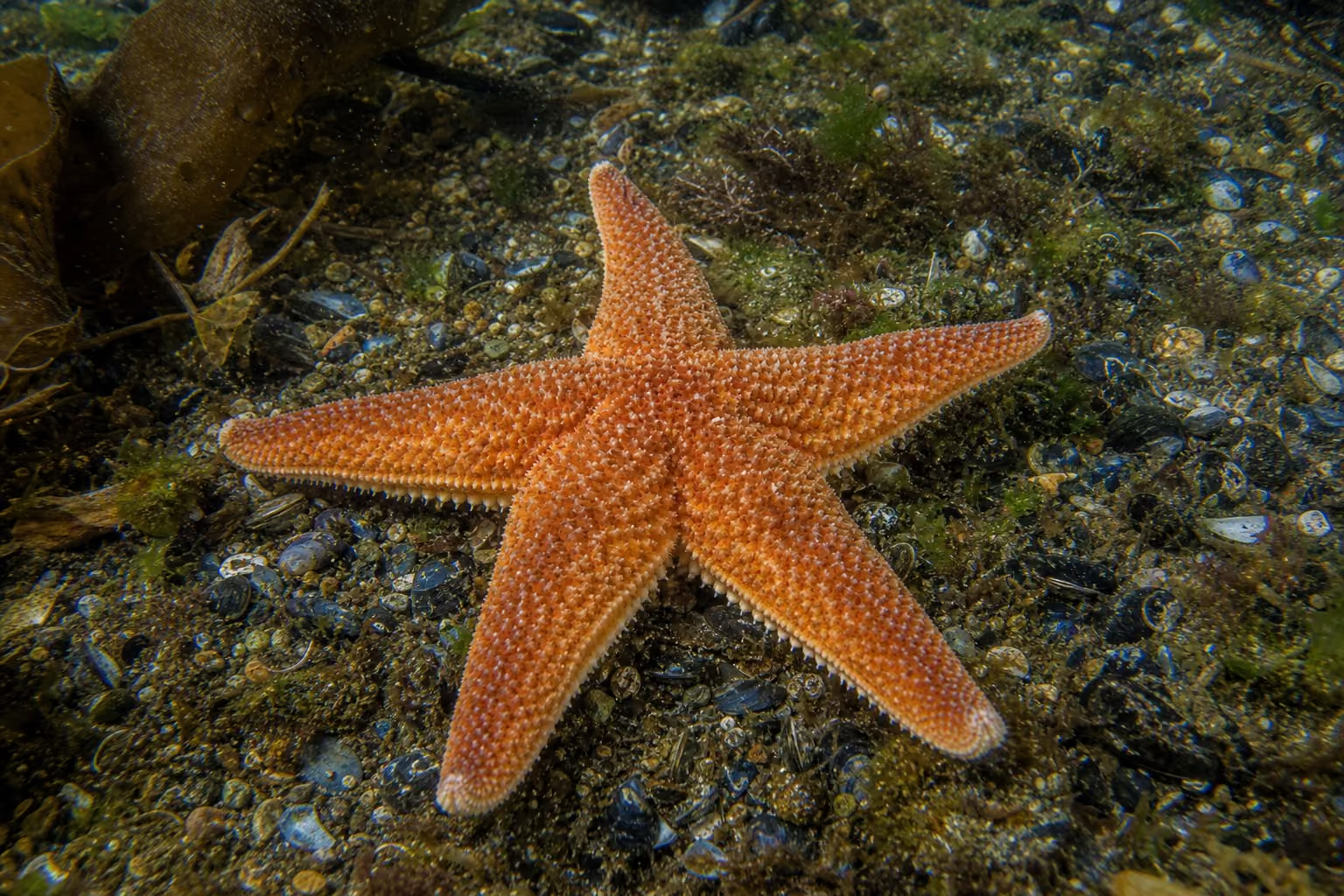
A five-armed sea star of the northeast Atlantic, brick-red above with a single row of short white spines down each arm. It is famous for prising open mussels and everting its stomach to digest prey outside its body.
Range

Habitat range map
Native range Occasional / Transient
Atlantic OceanAtlantic OceanAtlantic OceanAtlantic OceanAtlantic OceanPalearcticPalearcticPalearcticPalearcticPalearcticPalearcticPalearcticPalearcticPalearcticPalearcticPalearcticPalearcticPalearcticPalearcticPalearcticPalearcticPalearcticPalearcticPalearcticPalearcticPalearcticPalearcticPalearcticPalearctic

Map: Ecoregions 2017 © RESOLVE (CC BY 4.0) · Natural Earth (PD)

Details

Habitat

It ranges through the northeast Atlantic from Norway and Sweden across the North Sea around Britain, France and Iberia south to Senegal, and in the western Atlantic from Labrador to Florida. It favours rocky and gravelly seabeds and tolerates brackish water.

Appearance

It usually has five arms that are broad at the base and taper to a point, most specimens spanning 10–30 cm though some exceed 50 cm. The upper surface is orange to brick-red with a central line of short white spines flanked by soft papulae, while paler purples and browns also occur.

Behavior

It lives a solitary life with no fixed daily rhythm, creeping slowly over rock on countless tube feet on its underside. It can regenerate lost arms and takes evasive action when it detects the scent of a predator.

Feeding

A generalist carnivore, it eats bivalves, gastropods, barnacles, polychaete worms, other echinoderms and carrion. It pries shells apart with its tube feet, pushes its everted stomach through a gap as narrow as a millimetre, and digests the prey externally, homing in by smell.

Reproduction

Sexes are separate and spawning occurs in spring, a moderate-sized female releasing an estimated 2.5 million eggs. Fertilisation happens in open water and the planktonic larvae drift for about 87 days before settling; there is no parental care. Lifespan is roughly seven to eight years.

Notes

An abundant and familiar shore animal, it secretes a saponin-like substance that repels predators and warns prey such as whelks. Mass strandings sometimes wash large numbers ashore for reasons that often remain unclear.