027 Featured Specimen
Moon jellyfish

Details

Moon jellyfish

Aurelia aurita

Size
Bell diameter 10–40 cm
Diet
Carnivore
Activity
Cathemeral
Sociality
Loose group
Lifespan
A few months to about 1 year

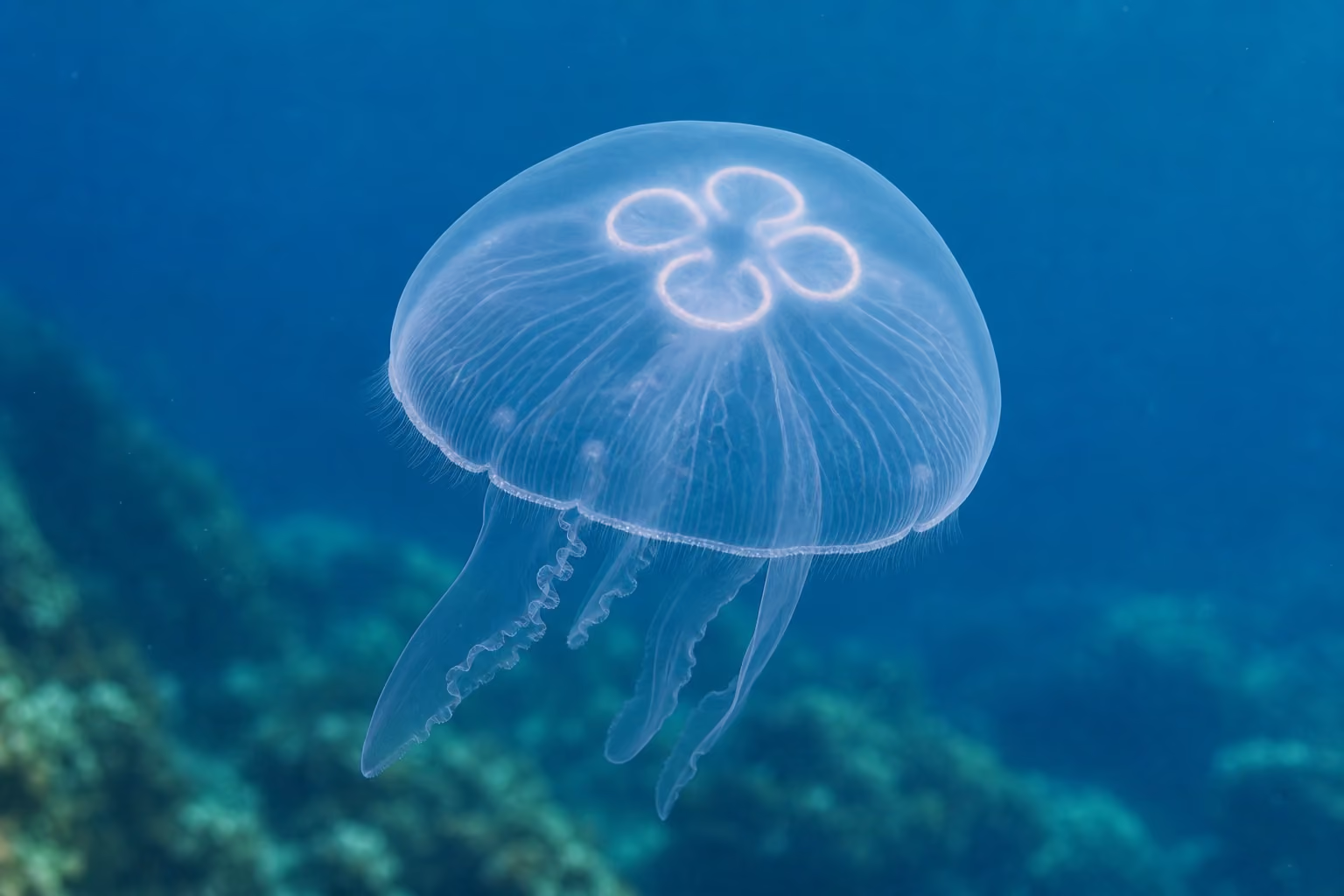
A translucent, dome-shaped jelly instantly known by the four horseshoe-shaped gonads visible through the top of its bell. A weak swimmer, it pulses its bell but drifts largely with the current, and is one of the most familiar jellyfish in coastal seas.
Range

Habitat range map
Native range Occasional / Transient
Pacific OceanPacific OceanPacific OceanAtlantic OceanAtlantic OceanAtlantic OceanAtlantic OceanAtlantic OceanIndian Ocean

Map: Ecoregions 2017 © RESOLVE (CC BY 4.0) · Natural Earth (PD)

Details

Habitat

It ranges through temperate and subtropical coastal waters of the Pacific, Atlantic and Indian oceans, drifting in the calm surface layers of bays and harbours. It tolerates the lowered salinity of estuaries and sheltered inlets.

Appearance

The bell measures roughly 10 to 40 cm across. The body is almost entirely transparent and fourfold-symmetrical, its standout feature being the four horseshoe-shaped gonads showing through the bell. The rim bears countless short, fine tentacles.

Behavior

It swims by opening and closing its bell but moves feebly, so much of its travel depends on water currents. Individuals often gather into loose aggregations and, under the right conditions, form large blooms, shifting their depth over the day.

Feeding

A carnivore, it feeds mainly on zooplankton. Pulsing the bell draws water through the fringe of fine tentacles, which strain out and sting small plankton, mollusc larvae and occasionally fish larvae before passing them into the body to digest.

Reproduction

It alternates generations. The fertilised egg becomes a planula larva about 0.2 mm long that settles and grows into a polyp, which multiplies by budding. Seasonal cues such as temperature trigger strobilation, releasing flower-like ephyrae about 3 mm across that mature into young medusae.

Notes

Its sting carries short nematocysts that barely penetrate human skin, so most people feel little or no effect. Large blooms can damage fishing nets and clog power-plant cooling intakes, and the species is an aquarium favourite.