522 Featured Specimen
Hermann's tortoise

Details

Hermann's tortoise

Testudo hermanni

Size
Total length 13–28 cm · 0.8–4 kg
Diet
Herbivore
Activity
Diurnal
Sociality
Solitary
Lifespan

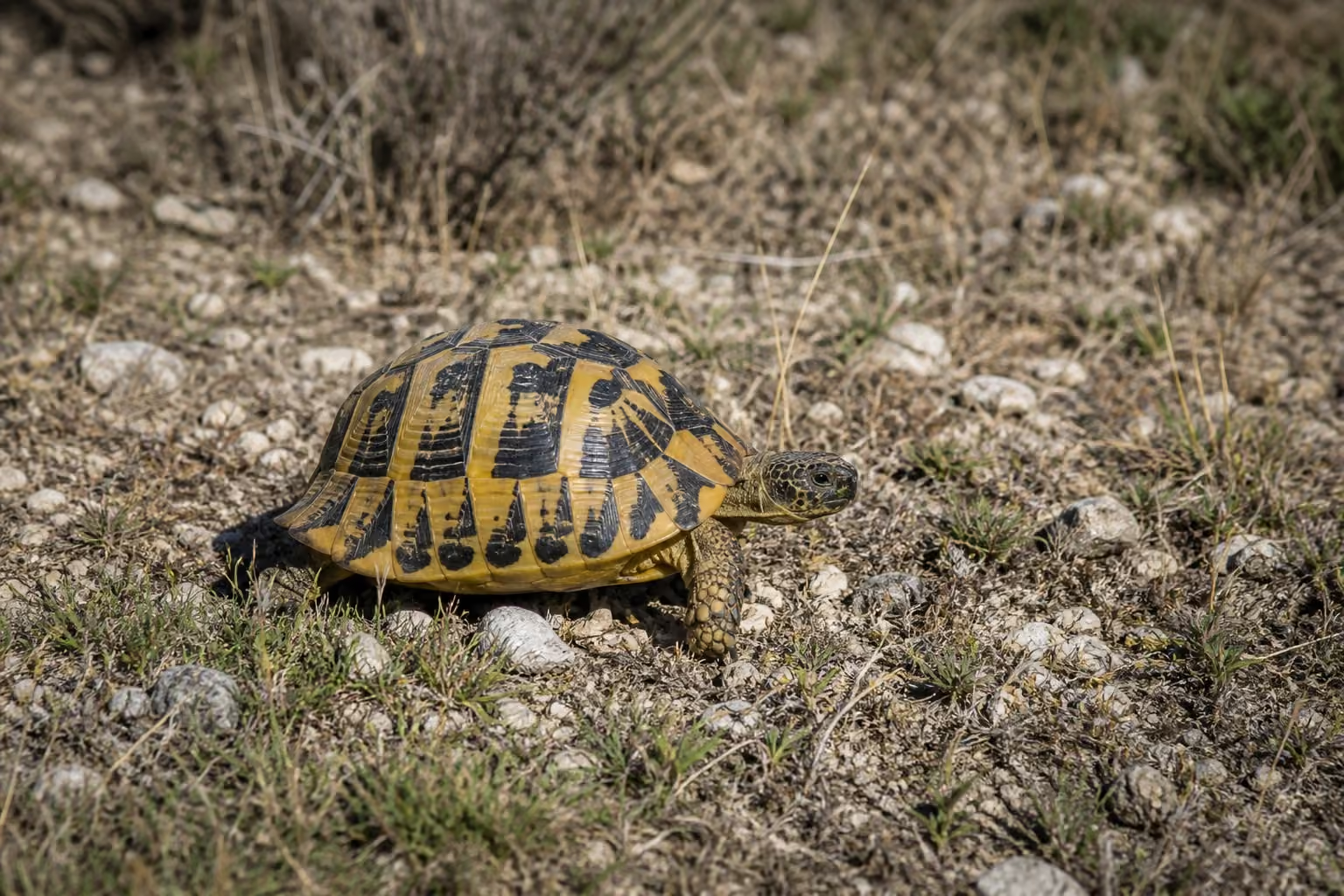
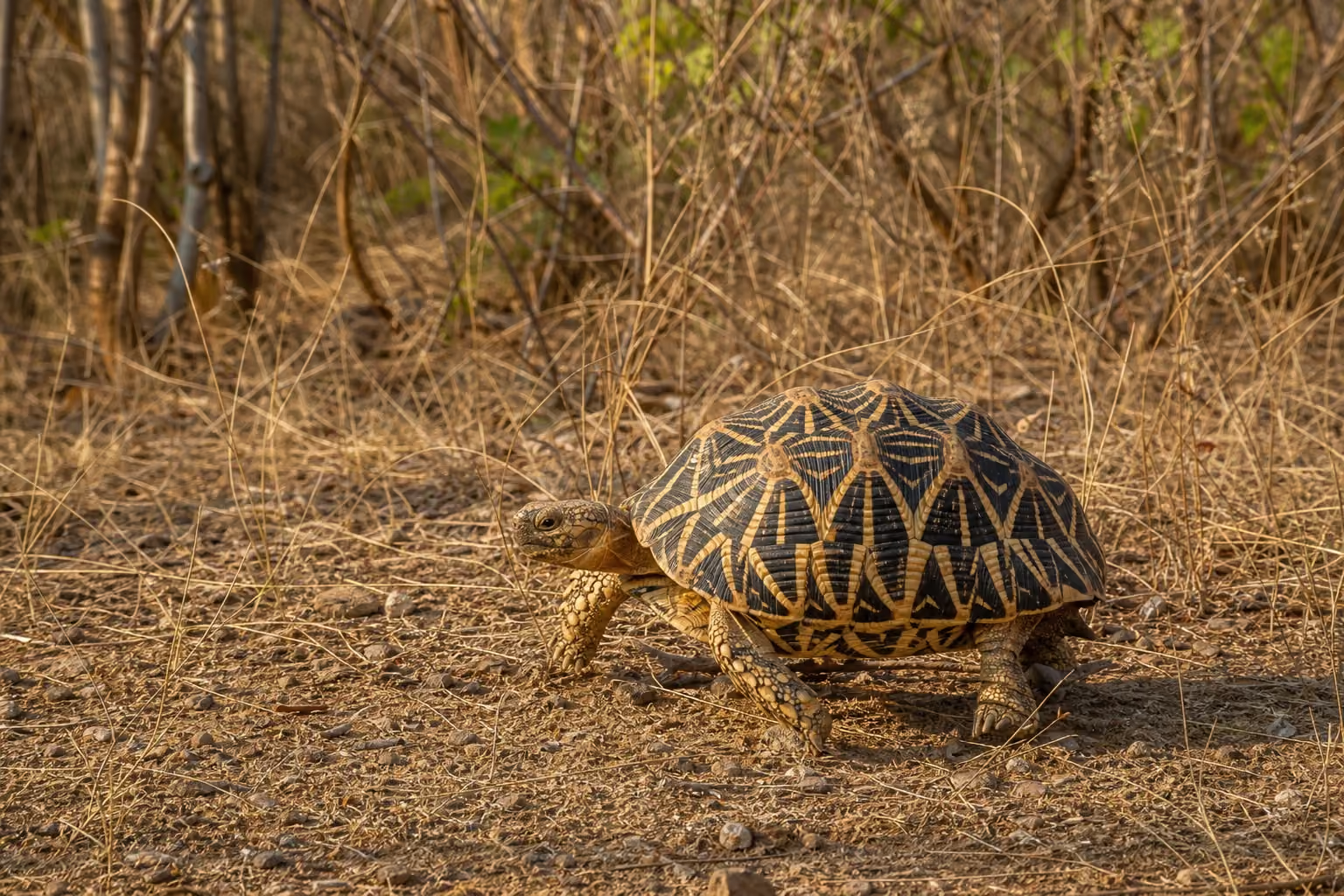
A small Mediterranean tortoise instantly known by its black-and-yellow mosaic shell and the horny spur at the tip of its tail. Two subspecies are recognised, the western and the larger eastern form, making it one of Europe's signature land tortoises.
Range

Habitat range map
Native range Occasional / Transient
PalearcticPalearcticPalearcticPalearcticPalearcticPalearcticPalearcticPalearcticPalearcticPalearcticPalearcticPalearcticPalearcticPalearcticPalearcticPalearcticPalearcticPalearcticPalearcticPalearcticPalearcticPalearcticPalearcticPalearctic

Map: Ecoregions 2017 © RESOLVE (CC BY 4.0) · Natural Earth (PD)

Details

Habitat

Found across southern Europe and the Balkans, it favours low-elevation dry evergreen woodland and scrub-dotted meadows and hillsides. It is well suited to Mediterranean landscapes that offer both open basking spots and dense cover.

Appearance

The carapace measures about 13 to 28 cm, with weights of 800 to 4000 g; eastern animals run largest. The shell is yellow boldly marked with black, brightest in the young and fading with age. Males have a longer, thicker tail tipped with a pronounced horny spur.

Behavior

It lives alone, emerging early to bask and warm up before foraging, then retreating into vegetation through the midday heat. In winter it burrows under soil and leaf litter to hibernate for several months, and it navigates using the sun, the earth's magnetic field, and landmarks.

Feeding

A herbivore, it feeds mainly on wildflowers, leaves, and succulent plants, occasionally taking fruit. It selects food largely by smell while ambling slowly across Mediterranean grassland.

Reproduction

Mating follows emergence from hibernation in spring, after which the female lays two to twelve eggs in a flask-shaped nest. Eggs hatch in roughly 90 days, and nest temperature determines sex, with cooler nests yielding males and warmer ones females. Hatchlings stay near the nest for several years, and adults can live more than 30 years.

Notes

Listed as Near Threatened, it has declined sharply, and the western subspecies in particular is regarded as endangered. Habitat loss to agriculture, road deaths, and collection for the pet trade are the main threats, and trade is regulated under CITES Appendix II.