086 Featured Specimen
Galapagos tortoise

Details

Galapagos tortoise

Chelonoidis niger

Size
1.2–1.5 m · 100–250 kg
Diet
Herbivore
Activity
Diurnal
Sociality
Solitary
Lifespan
Varies by species and environment

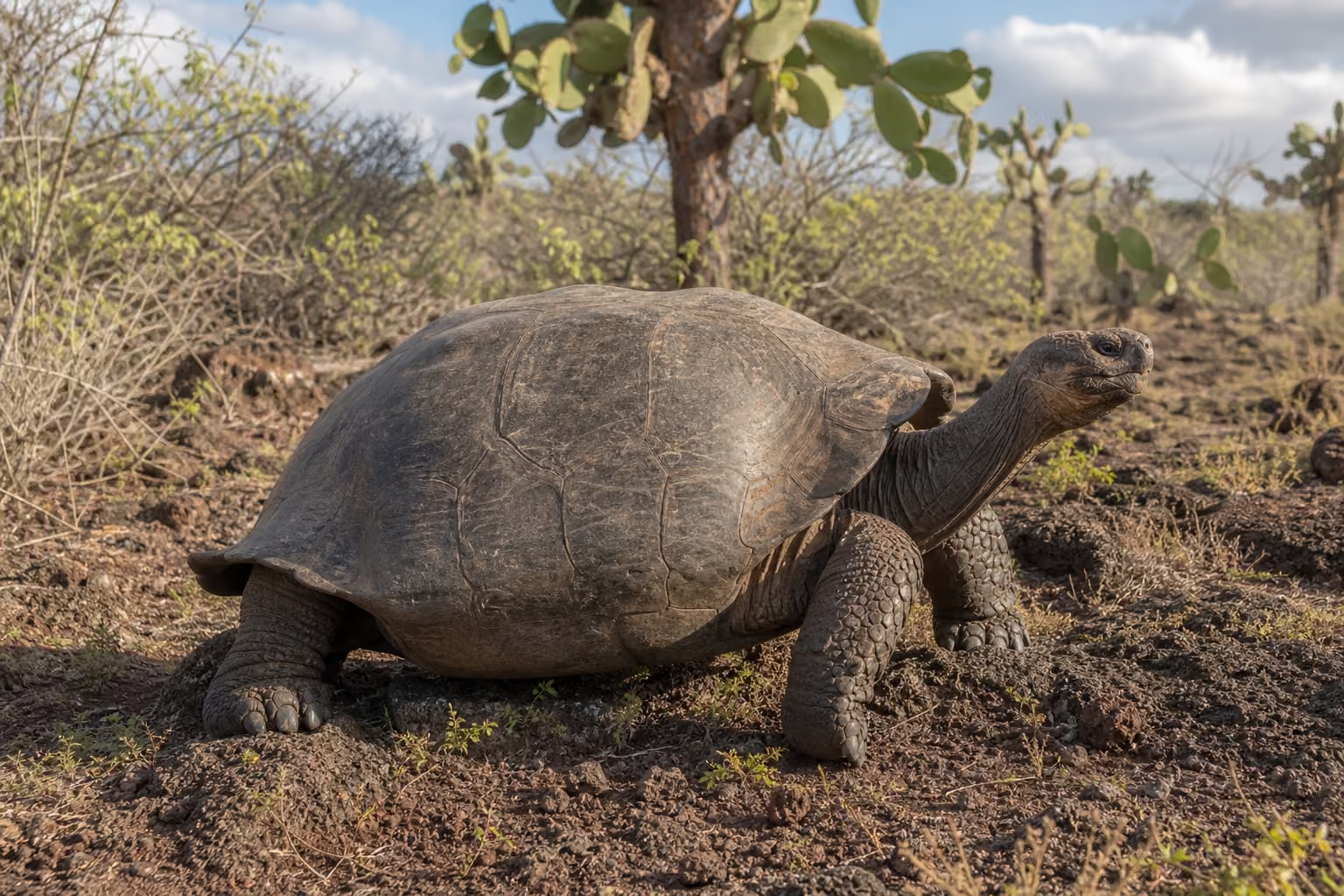
A giant land tortoise found only on the Galapagos Islands and among the largest in the world. Shell shape varies with island and elevation, from saddle-backed forms with a high front edge on dry lowlands to dome-shaped forms in humid highlands, and the species is famous for lifespans exceeding a century.
Range

Habitat range map
Native range Occasional / Transient
Pacific OceanPacific OceanPacific OceanNeotropicalNeotropicalNeotropicalNeotropicalNeotropicalNeotropicalNeotropicalNeotropical

Map: Ecoregions 2017 © RESOLVE (CC BY 4.0) · Natural Earth (PD)

Details

Habitat

Endemic to the Galapagos Islands of Ecuador, where it is native to seven of the islands. It ranges across varied vegetation zones, from arid coastal lowlands to cool, humid highlands above 800 metres.

Appearance

A massive tortoise reaching 120 to 150 centimetres in carapace length and weighing 100 to 250 kilograms. The dull brown or grey shell often carries lichens, and comes in two contrasting forms: a saddle-backed type with an upswept front edge for reaching tall plants, and a rounded domed type, each matched to its island's wet or dry conditions.

Behavior

It basks for an hour or two after dawn to warm up, then forages through much of the day. It wallows in mud or rain pools to cool off and shed parasites, and follows well-worn paths between lowlands and highlands. It is largely solitary in its movements.

Feeding

A herbivore that eats grasses, cacti such as Opuntia, leaves, fruit, flowers and lichens. It draws water from dew and plant sap, can go more than six months without drinking, and survives long periods deprived of both food and water.

Reproduction

Mating happens in the humid uplands, after which females travel to dry, sandy ground and dig a nest with their hind legs, laying up to about sixteen hard-shelled eggs. The clutch incubates for several months in the sun-warmed soil, with cooler nests yielding more males and warmer nests more females, and there is no parental care.

Notes

From the 16th century onward, whalers and sailors took tortoises by the hundreds of thousands for food, and introduced pigs, rats and cats devastated the survivors, driving several subspecies extinct. The Pinta Island lineage ended in 2012 with the death of Lonesome George, while captive breeding has helped populations such as Espanola's recover.