532 Featured Specimen
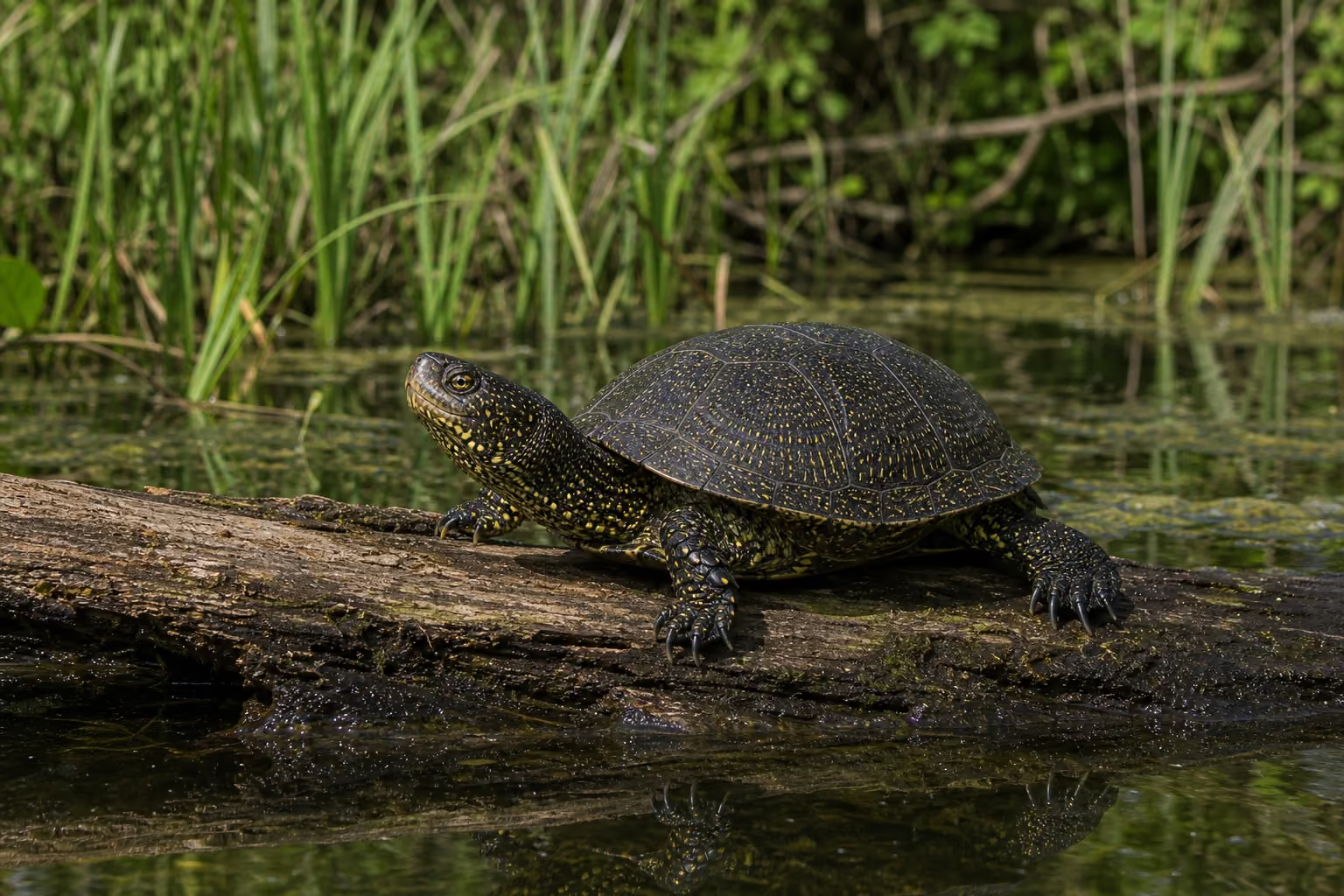
European pond turtle

Details

European pond turtle

Emys orbicularis

Size
Total length 12–38 cm · 0.3–1.2 kg
Diet
Omnivore
Activity
Diurnal
Sociality
Solitary
Lifespan

The European pond turtle is a long-lived freshwater turtle of the western Palearctic. Its dark shell and yellow spotting mark one of Europe's native wetland reptiles.
Range

Habitat range map
Native range Occasional / Transient
PalearcticPalearcticPalearcticPalearcticPalearcticPalearcticPalearcticPalearcticPalearcticPalearcticPalearcticPalearcticPalearcticPalearcticPalearcticPalearcticPalearcticPalearcticPalearcticPalearcticPalearcticPalearcticPalearcticPalearctic

Map: Ecoregions 2017 © RESOLVE (CC BY 4.0) · Natural Earth (PD)

Details

Habitat

It occurs in southern, central and eastern Europe, western Asia and parts of North Africa. Ponds, marshes, wooded wetlands and slow channels are typical habitats.

Appearance

Shell length ranges from 12-38 cm, with body mass around 300-1200 g. The shell is dark brown to blackish, and the head and limbs carry yellow speckles.

Behavior

It basks by day and moves between water and land. Nesting females may travel far from water while searching for warm open soil.

Feeding

Young turtles eat mostly animal prey, while adults add more plant material. Aquatic insects, mollusks, carrion and water plants all feature in the diet.

Reproduction

Females dig nests in dry ground and lay eggs on land. Incubation temperature influences sex, making nest exposure important for recruitment.

Notes

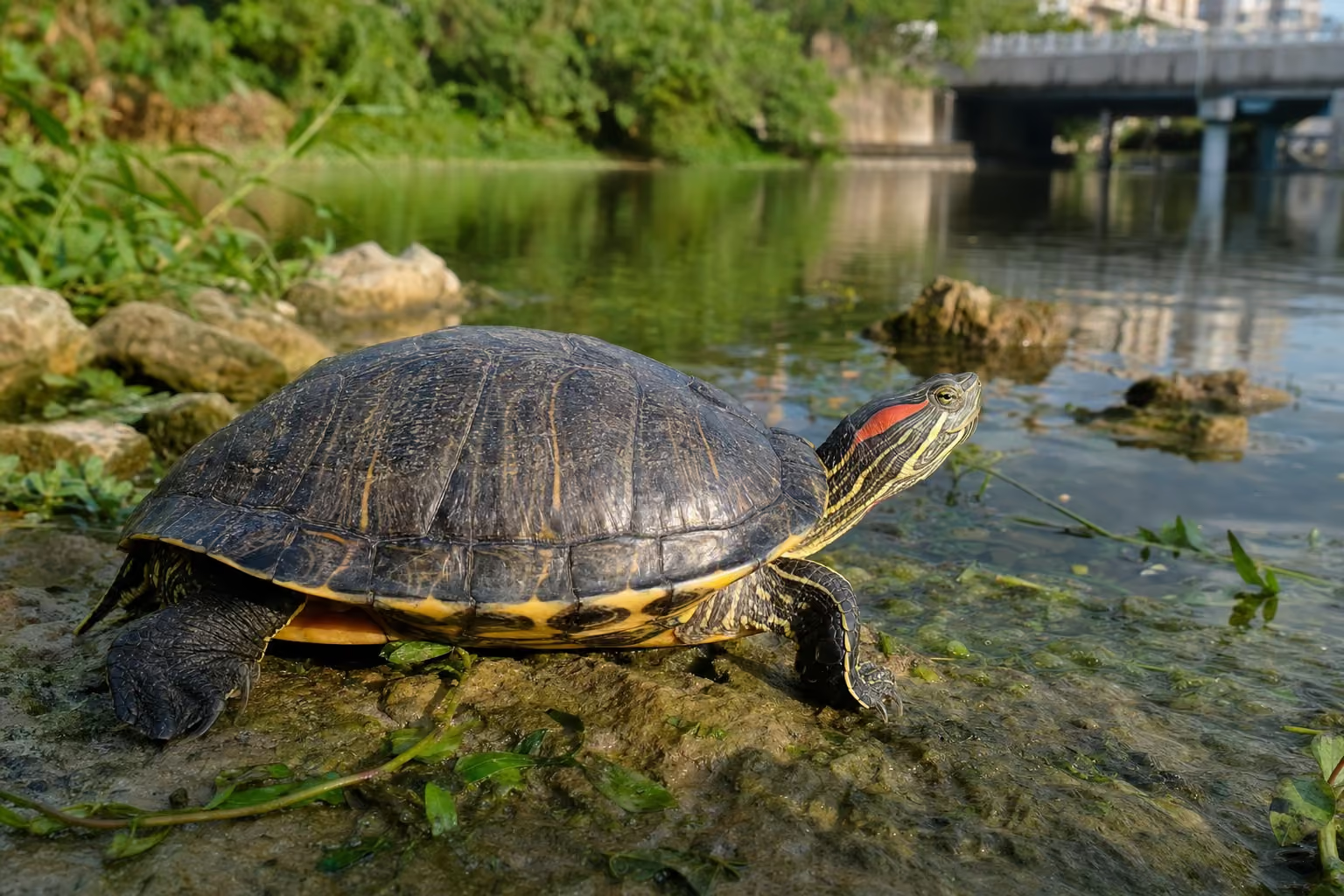
Road mortality, wetland loss and competition with introduced sliders have reduced many populations. Reintroduction and wetland restoration are now used in parts of its range.