512 Featured Specimen
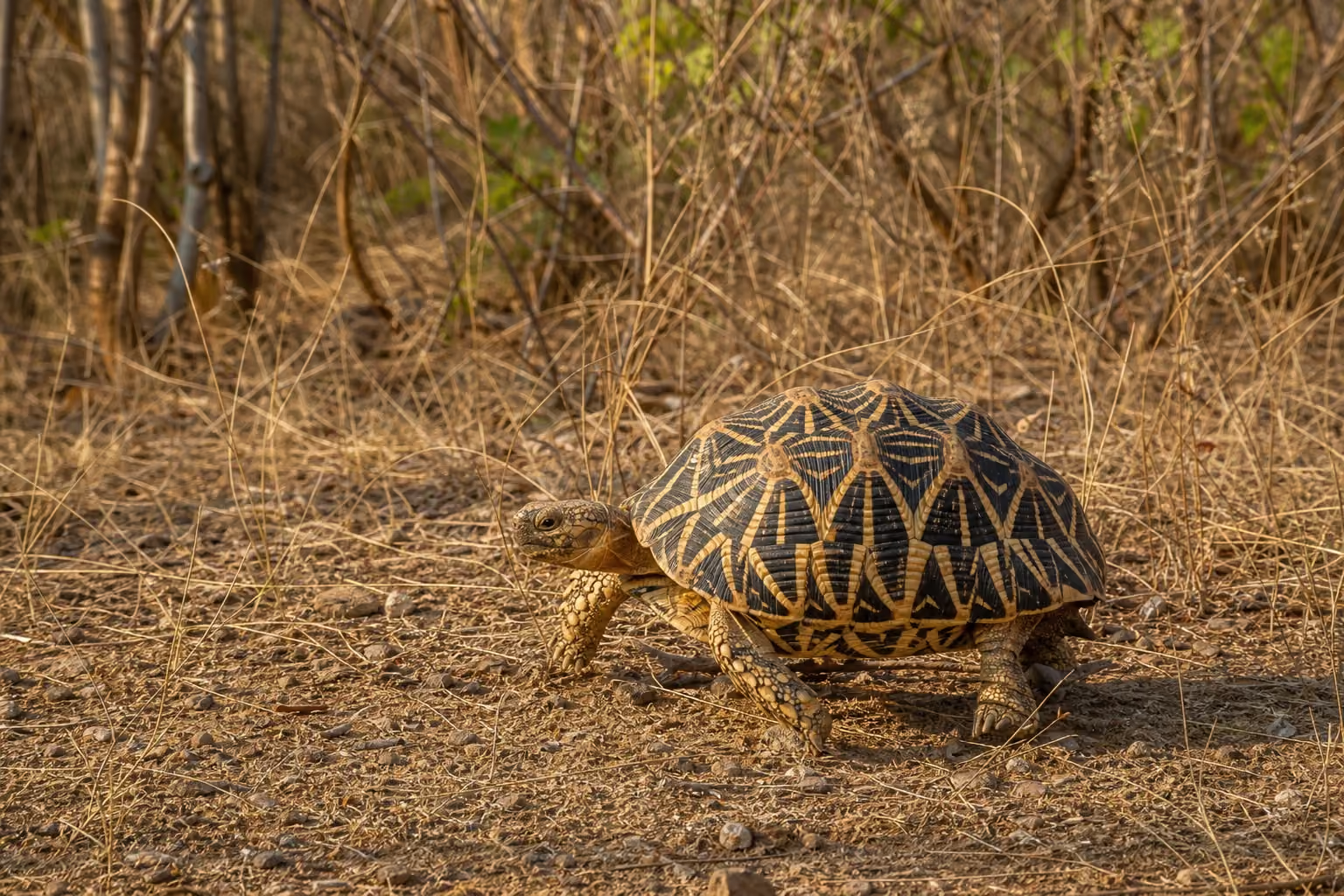
Indian star tortoise

Details

Indian star tortoise

Geochelone elegans

Size
Total length 15–38 cm
Diet
Herbivore
Activity
Seasonal
Sociality
Solitary
Lifespan

A small land tortoise famous for the radiating yellow star pattern that covers its shell. Each scute swells into a hump, giving the high-domed carapace a knobbly profile, and it ranges across the dry grasslands and scrub of India and Sri Lanka.
Range

Habitat range map
Native range Occasional / Transient
IndomalayanIndomalayanIndomalayanIndomalayanIndomalayanIndomalayanIndomalayanIndomalayanIndomalayanIndomalayanIndomalayanIndomalayanIndomalayanIndomalayanIndomalayan

Map: Ecoregions 2017 © RESOLVE (CC BY 4.0) · Natural Earth (PD)

Details

Habitat

Native to western and southeastern India, Sri Lanka, and southeastern Pakistan, favouring lowlands below about 200 m. It occupies dry grassland, savanna, scrub and semi-desert steppe, moving into rainy deciduous forest in the wet season and spilling into fields and plantations.

Appearance

The carapace measures roughly 15 to 38 cm, with females distinctly larger than males, which rarely exceed about 20 cm. The shell is strongly domed, each scute raised into a hump. On a black or dark-brown ground, yellow areolae send out 6 to 12 radiating streaks, forming the namesake star.

Behavior

Solitary, with an activity pattern that shifts strongly by season. It moves about by day during the rains but switches to the cooler dawn and dusk hours in the dry, hottest months to avoid midday heat. The humped shell lets an overturned animal right itself.

Feeding

Herbivorous, browsing on grasses, leaves, succulent plants, fallen fruit, flowers and fungi. It readily takes fruit dropped to the ground, and has occasionally been recorded eating land snails or the dung of grazing livestock.

Reproduction

Mating occurs in the warm, wet months. A female lays one to ten eggs per clutch and may produce several clutches a year. Eggs hatch after roughly 95 to 157 days, and sex is set by incubation temperature; there is no parental care once they are laid.

Notes

The IUCN lists it as Vulnerable (VU), and in 2019 it was uplisted to CITES Appendix I. Its beautiful star pattern makes it a prime target for the illegal pet trade, with large numbers taken from the wild each year, compounding habitat loss from development and clearing.