025 Featured Specimen
Coelacanth

Details

Coelacanth

Latimeria chalumnae

Size
1–2 m · 25–90 kg
Diet
Carnivore
Activity
Nocturnal
Sociality
Solitary
Lifespan
Several decades or more

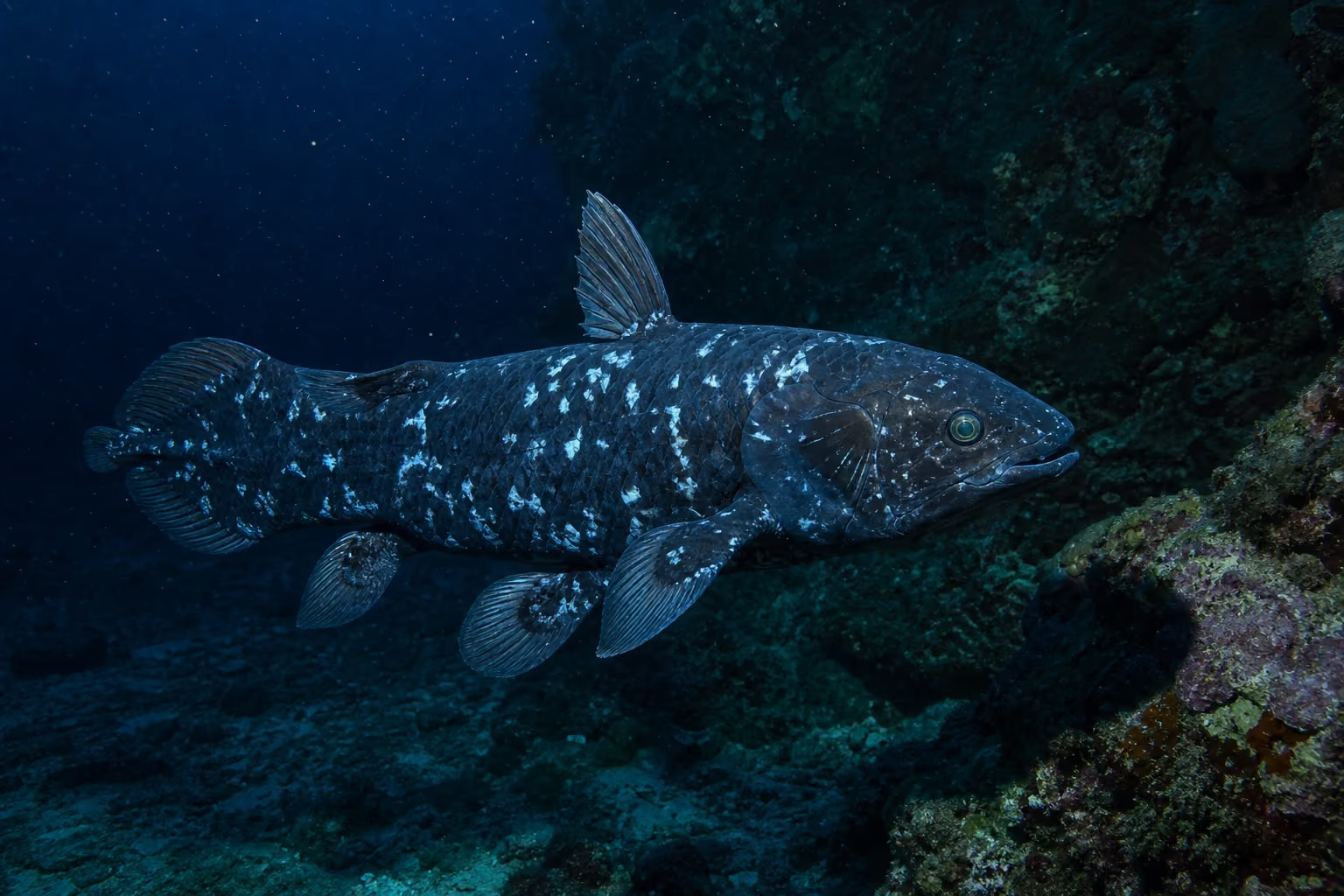
A large deep-sea fish from an ancient lineage, rediscovered off South Africa in 1938 and hailed as a "living fossil." It drifts slowly through the deep, sculling with its fleshy, limb-like lobed fins.
Range

Habitat range map
Native range Occasional / Transient
Indian Ocean

Map: Ecoregions 2017 © RESOLVE (CC BY 4.0) · Natural Earth (PD)

Details

Habitat

It ranges across the western Indian Ocean, from the East African coast to the Comoro Islands and Madagascar. It favours steep rocky slopes at depths of roughly 70 to 140 metres, sheltering by day in caves carved from volcanic lava.

Appearance

A heavy fish reaching about 1 to 2 metres long and 25 to 90 kilograms. Its deep royal-blue body is flecked with white spots that camouflage it in the gloom. The paired fins are fleshy lobes set on scaled, muscular bases, and a rostral organ in the snout detects the faint electric fields of prey.

Behavior

Nocturnal, it rests in caves through the day and emerges at night to feed. It is largely solitary, though several individuals may share a single cave, and it moves by drifting on its supple fins rather than swimming actively.

Feeding

A carnivore and opportunistic drift-hunter, it takes deep-sea fish, squid and cuttlefish, snipe eels, and even small sharks. It has been seen performing "headstands," nosing into crevices to slurp prey from cracks in the lava caves.

Reproduction

Ovoviviparous, it retains its eggs internally until they hatch and then gives birth to live young. Research in 2021 suggests a gestation of up to five years, with five to 25 pups per litter, each able to fend for itself from birth.

Notes

Accidental capture in deep-sea trawl fisheries is the main threat, and only a small relict population is thought to survive. Scale studies indicate a lifespan approaching 100 years, and such a slow life cycle makes recovery especially difficult.