069 Featured Specimen
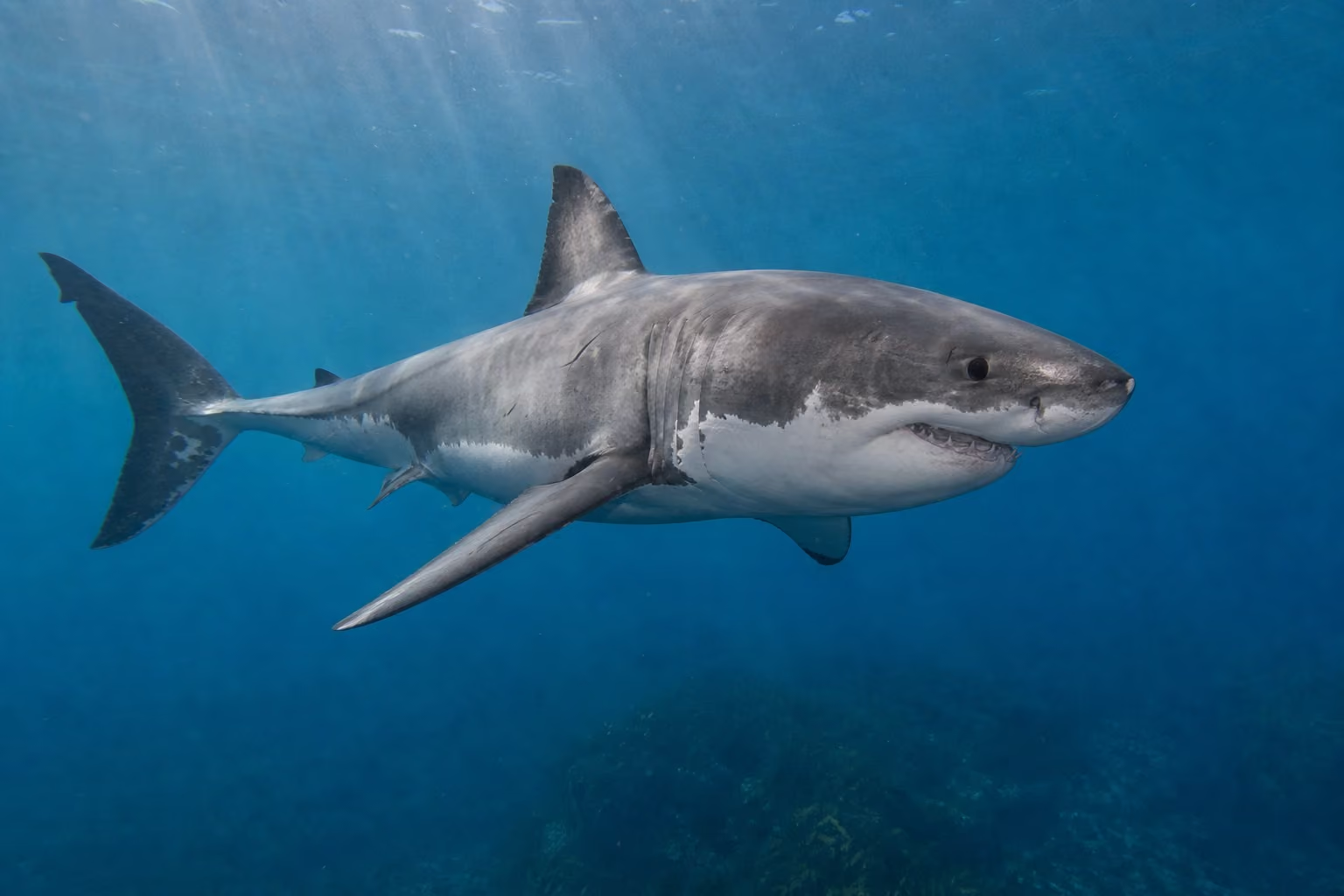
Great white shark

Details

Great white shark

Carcharodon carcharias

Size
4–6 m · 0.7–2 t
Diet
Carnivore
Activity
Cathemeral
Sociality
Solitary
Lifespan
Varies by species and environment

One of the largest predatory sharks, found in temperate and subtropical seas worldwide. Its torpedo-shaped body, roughly 300 serrated triangular teeth, and warm-blooded core let it hunt powerfully even in cold water.
Range

Habitat range map
Native range Occasional / Transient
Pacific OceanPacific OceanPacific OceanAtlantic OceanAtlantic OceanAtlantic OceanAtlantic OceanAtlantic OceanIndian Ocean

Map: Ecoregions 2017 © RESOLVE (CC BY 4.0) · Natural Earth (PD)

Details

Habitat

It ranges through the temperate and subtropical waters of the Pacific, Atlantic and Indian Oceans, using the coastal surface zone out to the open ocean. It can dive to about 1,300 m, while juveniles favour shallow coastal water of 14–24°C.

Appearance

Adults reach about 4–6 m and 700 kg to 2 tonnes, with the largest reliably measured at over 6 m. Countershaded dark grey above and white below, with black-tipped pectoral fins, it carries serrated triangular teeth up to 7.5 cm long in conveyor-belt rows.

Behavior

A highly migratory shark active by day and night, it ranges alone over vast distances; one individual travelled 20,000 km in under nine months. Regional endothermy keeps its body warmer than the surrounding sea, and it breaches clear of the surface.

Feeding

This carnivore feeds chiefly on marine mammals such as seals, sea lions and dolphins, also taking fish, squid, seabirds and whale carcasses. It typically ambushes prey from below, striking at speed and breaching with the catch in its jaws.

Reproduction

It is ovoviviparous: embryos hatch inside the uterus and grow by eating unfertilised eggs (oophagy). After a gestation of about 12 months, females bear 2–10 pups measuring 1.2–1.5 m. Maturity is very late, with females breeding only after around 30 years.

Notes

Listed as Vulnerable on the IUCN Red List, it is declining through accidental bycatch, shark-control nets and fishing. It does not regard humans as natural prey, and most bites are thought to be exploratory or cases of mistaken identity; lifespan may exceed 70 years.