024 Featured Specimen
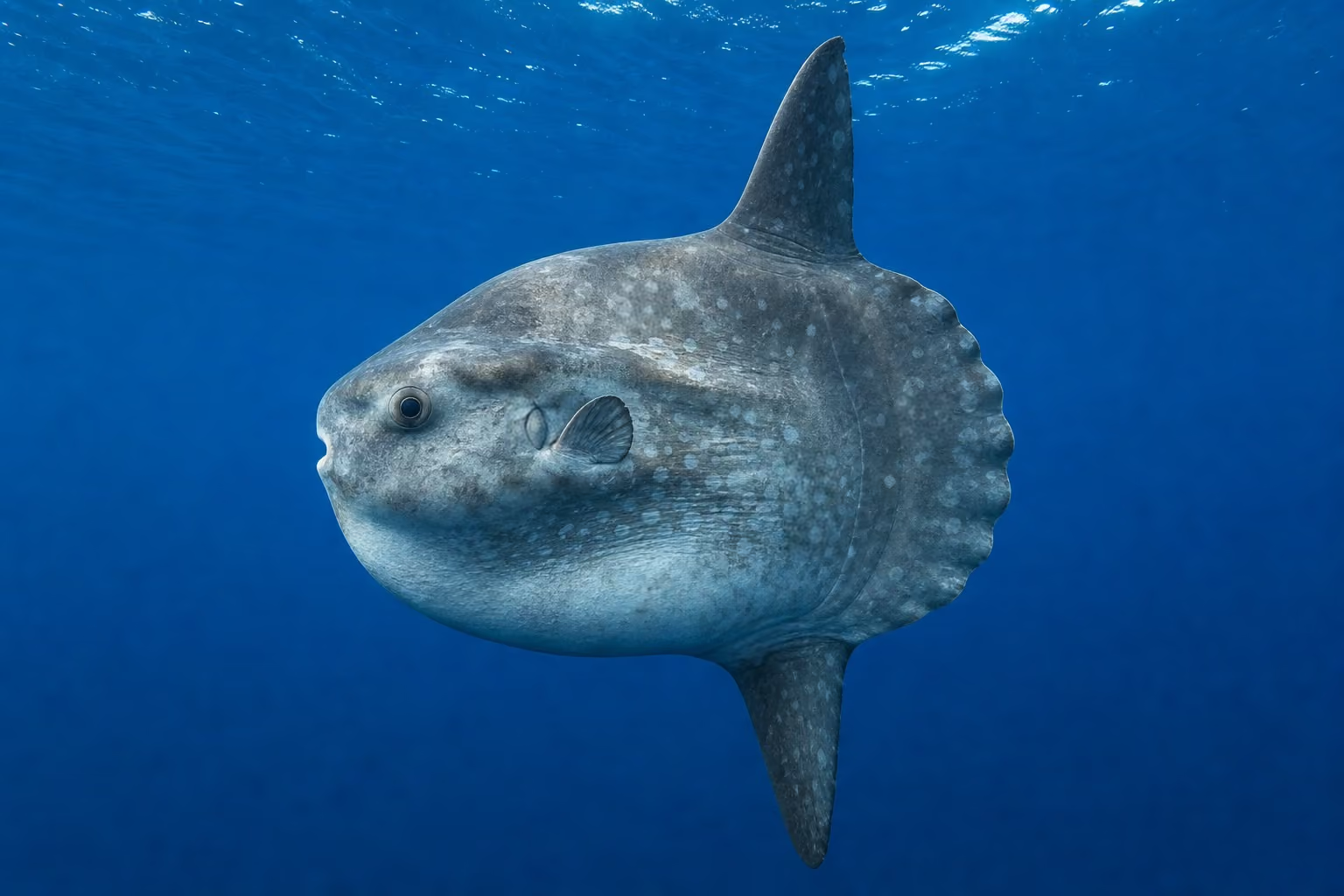
Ocean sunfish

Details

Ocean sunfish

Mola mola

Size
1.8–3.3 m · 0.2–2 t
Diet
Carnivore
Activity
Diurnal
Sociality
Solitary
Lifespan
10 years or more

The ocean sunfish is one of the heaviest bony fishes, with a flattened body that looks almost unfinished at the tail. Though famous for basking sideways at the surface, it also dives deep in search of prey.
Range

Habitat range map
Native range Occasional / Transient
Pacific OceanPacific OceanPacific OceanAtlantic OceanAtlantic OceanAtlantic OceanAtlantic OceanAtlantic OceanIndian Ocean

Map: Ecoregions 2017 © RESOLVE (CC BY 4.0) · Natural Earth (PD)

Details

Habitat

It ranges through temperate and tropical waters of the Pacific, Atlantic, and Indian oceans, sometimes approaching coasts. Individuals move between sunlit surface layers and colder deeper water.

Appearance

Adults measure about 180-330 cm and weigh from 247 kg to as much as 2 tonnes. The body is deep, laterally flattened, and ends in a rudder-like clavus instead of a normal tail fin. Tall dorsal and anal fins power its slow, distinctive swimming.

Behavior

Usually solitary, it moves vertically through the water column during the day. At the surface it may lie on its side to warm up or allow seabirds and fishes to remove parasites.

Feeding

Carnivorous, it feeds heavily on jellyfish and other gelatinous animals, but also takes salps, crustaceans, squid, and small fish. A small mouth sucks in soft prey, so it must consume large quantities.

Reproduction

Its breeding behaviour is still poorly known in the wild, but females release enormous numbers of tiny eggs. Larvae look very different from adults and pass through striking shape changes as they grow.

Notes

Bycatch, plastic ingestion, and boat strikes are important threats, and the species is conservation-dependent in many waters. Satellite tracking has shown that this seemingly passive fish makes broad oceanic movements.