023 Featured Specimen
Whale shark

Details

Whale shark

Rhincodon typus

Size
10–18 m · 20 t
Diet
Carnivore
Activity
Cathemeral
Sociality
Solitary
Lifespan
70 years or more

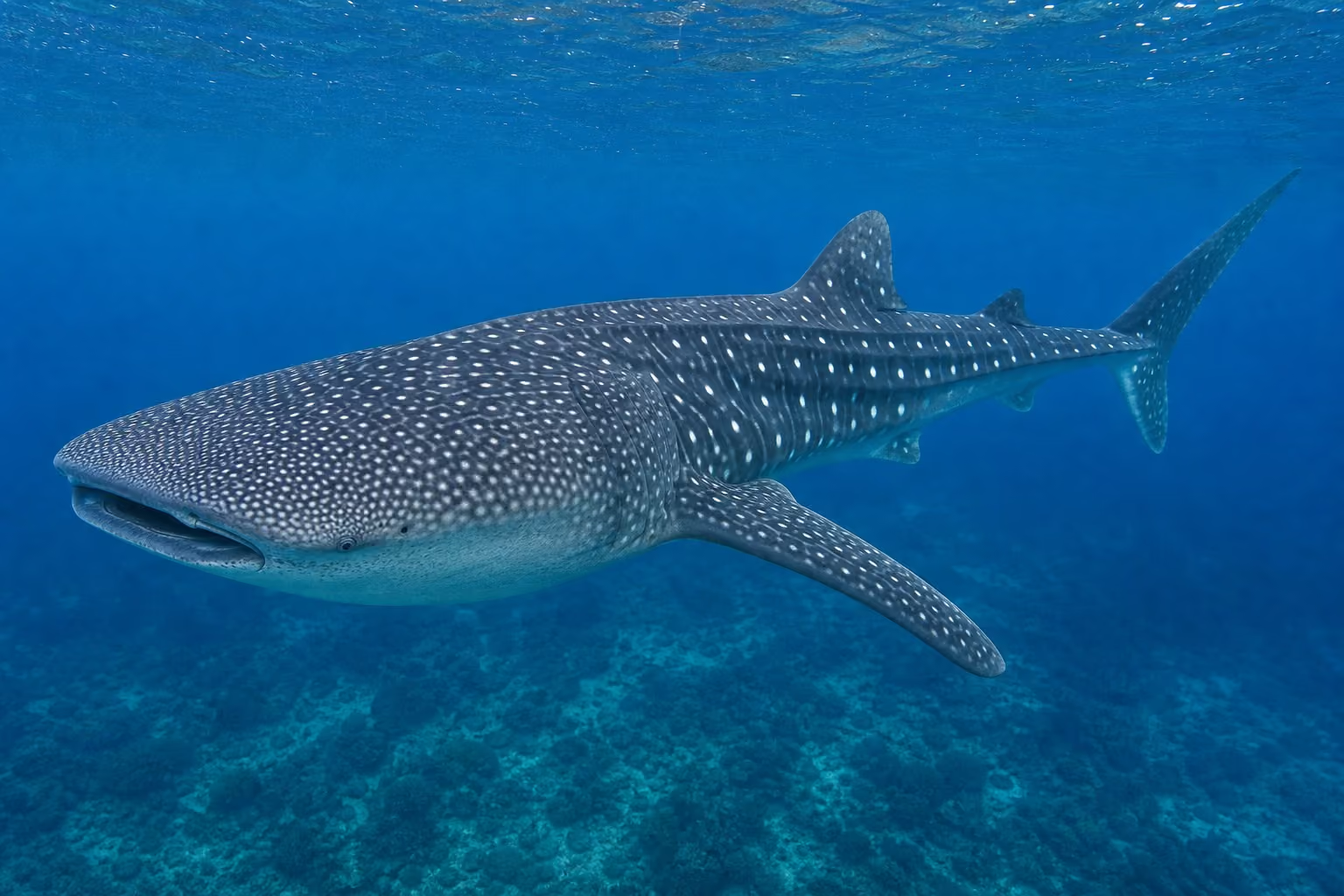
The largest fish in the world, reaching up to 18 metres and around 20 tonnes. A gentle filter-feeder, it cruises warm seas drawing plankton-laden water through its vast mouth. The white spots scattered over its slate-grey body form a unique pattern, allowing each individual to be identified like a fingerprint.
Range

Habitat range map
Native range Occasional / Transient
Pacific OceanPacific OceanPacific OceanAtlantic OceanAtlantic OceanAtlantic OceanAtlantic OceanAtlantic OceanIndian Ocean

Map: Ecoregions 2017 © RESOLVE (CC BY 4.0) · Natural Earth (PD)

Details

Habitat

It ranges through tropical, subtropical and warm-temperate surface waters worldwide, within about 30 degrees of the equator, across the Pacific, Atlantic and Indian Oceans. Equally at home along coasts and in the open ocean, it visits Japanese waters from early summer into autumn.

Appearance

It measures 10 to 18 metres long and weighs roughly 20 tonnes. The belly is pale while the back is dark grey-blue, marked with a distinctive checkerboard of white and pale-yellow spots. The head is broad and flattened, and the mouth, unusually for a shark, opens at the very front of the face and can be up to 1.5 metres wide.

Behavior

It is largely solitary, gathering only where food is abundant. A slow swimmer averaging about 4 km/h, it nonetheless migrates over vast distances to reach seasonal feeding grounds and makes deep dives that can exceed 1,900 metres.

Feeding

A filter-feeding carnivore, it eats krill and other small crustaceans, fish eggs and small schooling fish. It sucks prey in along with seawater, expelling the water through filter pads on its gills and swallowing what remains; it also strains food by swimming forward with its mouth open.

Reproduction

It is ovoviviparous, hatching eggs internally and giving birth to live young. One pregnant female was found carrying more than 300 near-term pups about 60 cm long, suggesting very large broods. Maturity takes roughly 30 years, and lifespan is thought to run from many decades to over a century.

Notes

Listed as Endangered on the IUCN Red List, its global numbers have fallen sharply through targeted fishing, bycatch and vessel strikes, with fins and meat driving the hunt. Harmless and placid toward people, it has become a prized draw for divers and a valuable focus of marine ecotourism.