413 Featured Specimen
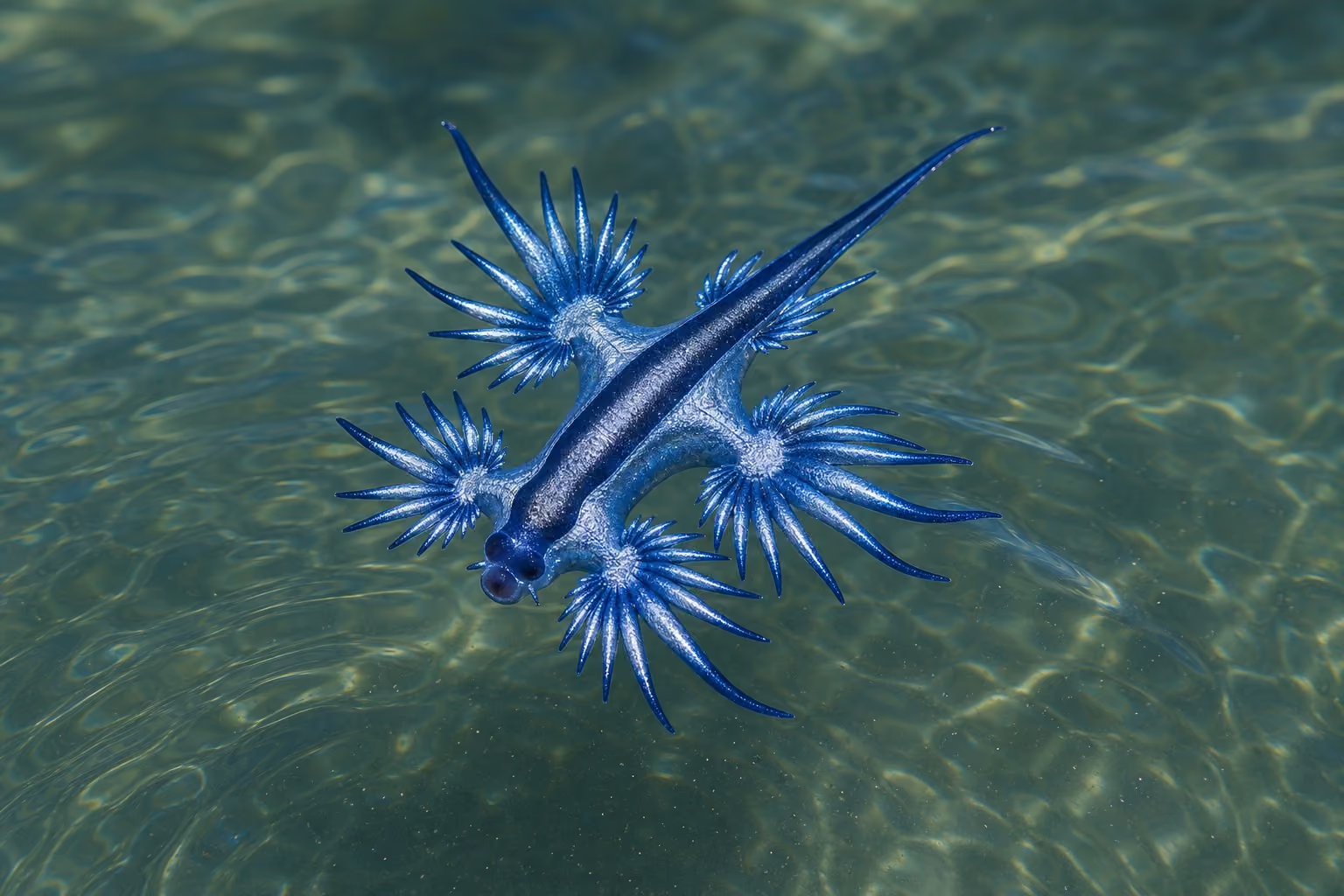
Blue glaucus

Details

Blue glaucus

Glaucus atlanticus

Size
2–4 cm · 0.1–3 g
Diet
Carnivore
Activity
Cathemeral
Sociality
Solitary
Lifespan
up to 1 year

The blue glaucus is a tiny nudibranch that floats near the sea surface with blue, winglike lobes. It eats stinging animals and stores their defenses in its own body.
Range

Habitat range map
Native range Occasional / Transient
Pacific OceanPacific OceanPacific OceanAtlantic OceanAtlantic OceanAtlantic OceanAtlantic OceanAtlantic OceanIndian Ocean

Map: Ecoregions 2017 © RESOLVE (CC BY 4.0) · Natural Earth (PD)

Details

Habitat

It drifts in warm surface waters of the Atlantic, Pacific, and Indian oceans, both offshore and near coasts. Winds and currents sometimes strand it on beaches.

Appearance

Length 2-4 cm; weight 0.1-3 g. A deep blue underside and silvery back provide countershading at the surface. Fingerlike cerata spread from the sides, giving it a starry outline.

Behavior

Cathemeral and solitary, it floats upside down by holding air in the body. Waves and surface currents carry it between patches of prey.

Feeding

A carnivore, it feeds on floating cnidarians such as Portuguese man-of-war. Stinging cells from prey are stored in the cerata and reused for defense.

Reproduction

Individuals are hermaphrodites and lay strings of eggs after mating. Eggs may be attached to floating material or prey remains, and larvae drift in the plankton.

Notes

It is listed as Least Concern, but it can still sting through stored nematocysts. Stranded animals should not be handled bare-handed.