426 Featured Specimen
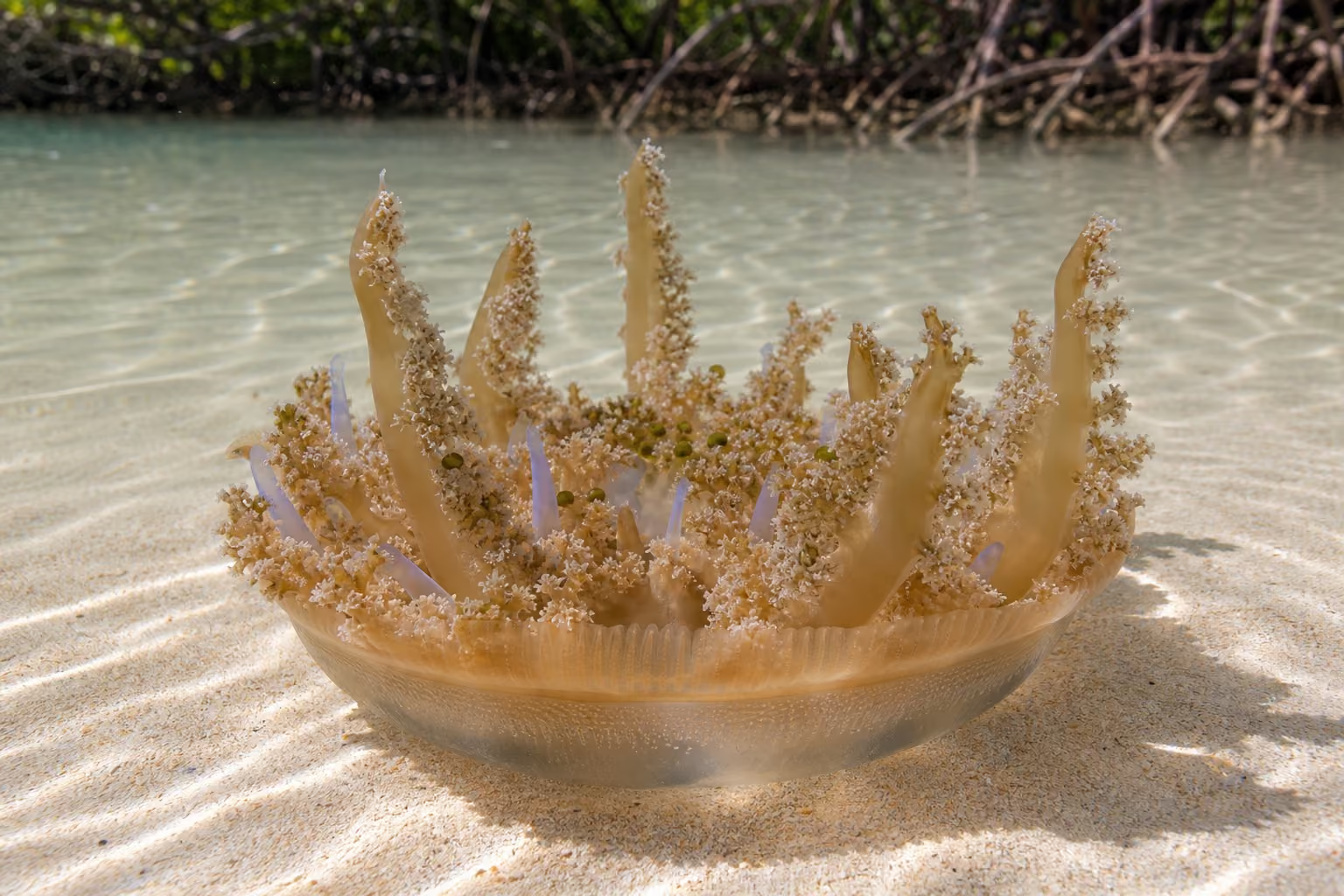
Upside-down jellyfish

Details

Upside-down jellyfish

Cassiopea andromeda

Size
8–30 cm · 20–500 g
Diet
Filter Feeder
Activity
Diurnal
Sociality
Loose group
Lifespan
about 1 year

The upside-down jellyfish rests bell-down on shallow bottoms. Its upward-facing arms hold symbiotic algae, letting it use both sunlight and suspended food.
Range

Habitat range map
Native range Occasional / Transient
Pacific OceanPacific OceanPacific OceanAtlantic OceanAtlantic OceanAtlantic OceanAtlantic OceanAtlantic OceanIndian Ocean

Map: Ecoregions 2017 © RESOLVE (CC BY 4.0) · Natural Earth (PD)

Details

Habitat

It inhabits warm coasts, lagoons, mangrove shallows, and reefs in the Indian, Pacific, and Atlantic oceans. Sunlit, sheltered sand or mud is typical.

Appearance

Bell diameter 8-30 cm; weight 20-500 g. The flattened bell lies downward while branching oral arms spread upward. Brown or green tones come largely from symbiotic algae.

Behavior

Diurnal and loosely gregarious, it lies inverted to expose algae to light. Pulsing moves water, and mucus can be released into the surrounding water.

Feeding

A filter-feeder, it catches tiny particles and plankton with oral arms and mucus. Photosynthetic products from algae also provide major nutrition.

Reproduction

Sexual reproduction produces larvae that settle as polyps. Polyps release small jellyfish that grow on shallow bottoms.

Notes

It is listed as Least Concern. Dense blooms can cause mild stinging sensations for swimmers in shallow water.