108 Featured Specimen
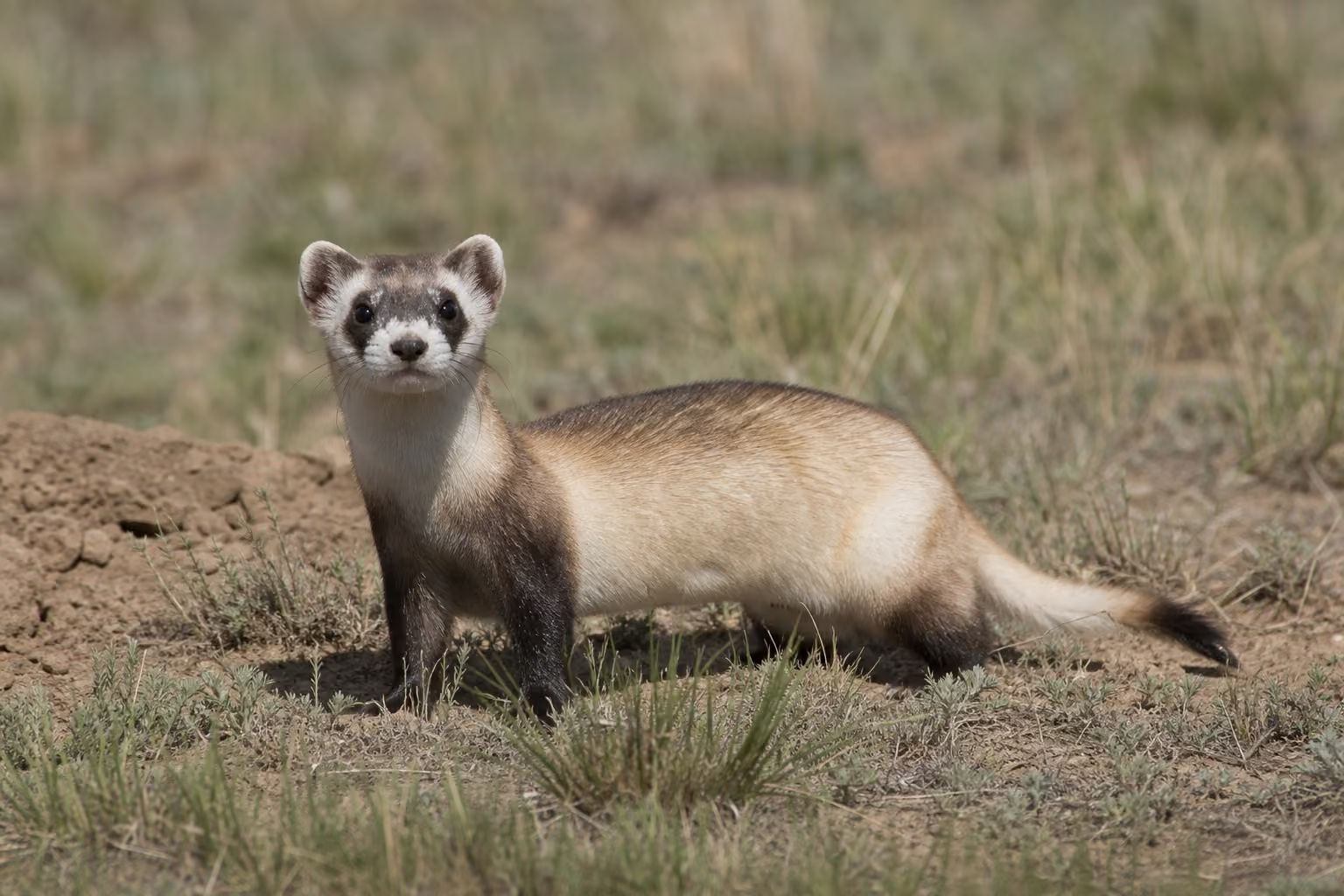
Black-footed ferret

Details

Black-footed ferret

Mustela nigripes

Size
38–50 cm · 0.7–1.4 kg
Diet
Carnivore
Activity
Nocturnal
Sociality
Solitary
Lifespan
10-20 years

The black-footed ferret is a slender, mink-sized weasel of the North American prairie, marked by a sooty black mask across the eyes and black feet and tail-tip. It is the only ferret native to the continent and lives almost entirely off prairie dogs and their burrows.
Range

Habitat range map
Native range Occasional / Transient
NearcticNearcticNearcticNearcticNearcticNearcticNearcticNearcticNearcticNearcticNearcticNearcticNearcticNearcticNearcticNearcticNearcticNearcticNearcticNearcticNearcticNearcticNearcticNearcticNearcticNearcticNearcticNearcticNearcticNearcticNearcticNearcticNearcticNearcticNearcticNearcticNearcticNearcticNearcticNearcticNearctic

Map: Ecoregions 2017 © RESOLVE (CC BY 4.0) · Natural Earth (PD)

Details

Habitat

It ranges across the grasslands of the Nearctic, inhabiting shortgrass and mixed-grass prairie, desert grassland, and sagebrush steppe. It depends heavily on prairie dog colonies, using their burrows for shelter and for raising young, so its distribution tracks that of its prey.

Appearance

About the size of a mink, it measures roughly 38–50 cm in body length and weighs 650–1,400 g, with females somewhat smaller than males. The pale yellowish coat is set off by a broad band of sooty black across the face including the eyes, and by the black feet and tail-tip that give the species its name.

Behavior

Largely nocturnal and solitary, it keeps to itself except when breeding or raising a litter. It spends much of its time underground and emerges to move between burrows in search of prey through the night.

Feeding

A specialized carnivore, it draws up to 90 percent of its diet from prairie dogs, supplemented by small rodents and lagomorphs. It hunts by entering burrows and seizing sleeping prairie dogs in their own dens.

Reproduction

Mating takes place in February and March, after a gestation of about 42–45 days. Litters number one to five kits, which emerge above ground at around six weeks old and become independent between late summer and autumn, reaching sexual maturity at one year.

Notes

Devastated through the 20th century, the species was declared extinct in 1979, but a small wild population rediscovered at Meeteetse, Wyoming in 1981 became the foundation for captive breeding and reintroduction. Sylvatic plague and canine distemper, which ravage prairie dog colonies, remain major threats, and the species has recently become one of the first to be cloned.