048 Featured Specimen
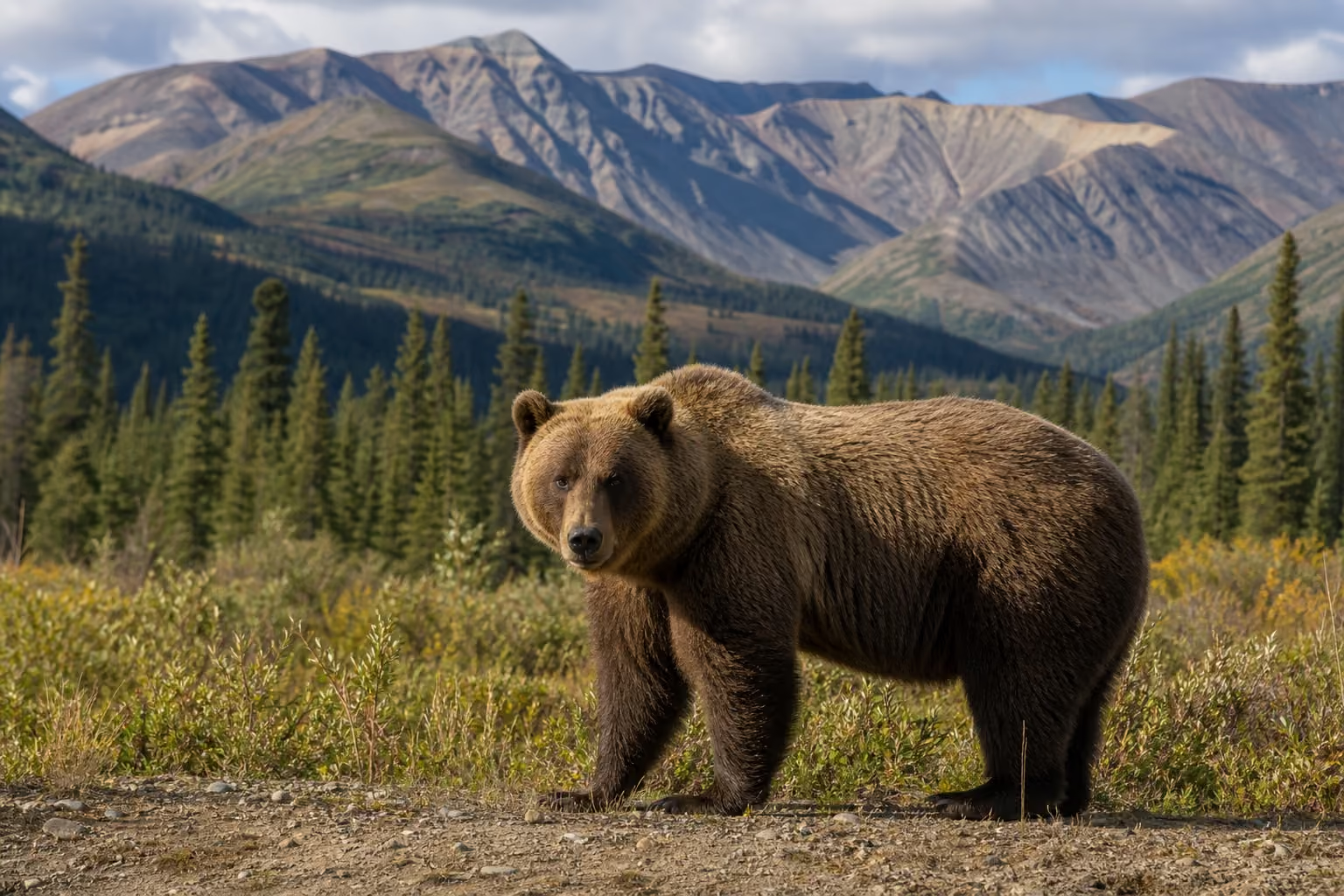
Brown bear

Details

Brown bear

Ursus arctos

Size
1.5–2.8 m · 80–600 kg
Diet
Omnivore
Activity
Cathemeral
Sociality
Solitary
Lifespan
20-30 years

The most widely adapted of living bears, ranging across the Northern Hemisphere. A muscular shoulder hump powers its digging, and it draws on an enormous diet from berries to large mammals.
Range

Habitat range map
Native range Occasional / Transient
PalearcticPalearcticPalearcticPalearcticPalearcticPalearcticPalearcticPalearcticPalearcticPalearcticPalearcticPalearcticPalearcticPalearcticPalearcticPalearcticPalearcticPalearcticPalearcticPalearcticPalearcticPalearcticPalearcticPalearcticNearcticNearcticNearcticNearcticNearcticNearcticNearcticNearcticNearcticNearcticNearcticNearcticNearcticNearcticNearcticNearcticNearcticNearcticNearcticNearcticNearcticNearcticNearcticNearcticNearcticNearcticNearcticNearcticNearcticNearcticNearcticNearcticNearcticNearcticNearcticNearcticNearcticNearcticNearcticNearcticNearctic

Map: Ecoregions 2017 © RESOLVE (CC BY 4.0) · Natural Earth (PD)

Details

Habitat

Found across Eurasia and North America, and on Japan's Hokkaido, from coastal lowlands to 5,000 m in the Himalayas. It favours semi-open country with scattered vegetation, along with forest, mountain and grassland.

Appearance

Length spans roughly 150-280 cm and weight 80-600 kg, varying greatly by population, with males notably larger than females. Fur runs from cream to dark brown; North American grizzlies show whitish-tipped, grizzled coats. A muscle hump over the shoulders is its hallmark.

Behavior

Mostly solitary, it gathers only at rich food sources such as salmon runs or during the breeding season. In cold regions it spends winter dormant in a den, but with only a light slowing of heartbeat and breathing it wakes easily and is not a true hibernator.

Feeding

An omnivore that draws most of its food energy from plants, eating berries, grasses, roots, acorns and mushrooms. Strong forelimbs and long claws dig out tough roots; on the coast it hunts salmon, and it also takes insects, rodents and ungulates.

Reproduction

Mating runs from mid-May to early July. Through delayed implantation the egg stays unattached for months, and cubs are born during winter dormancy. Litters hold one to three cubs (rarely up to six), each born blind, toothless and 350-510 g; young stay with the mother about 2.5 years.

Notes

Listed as Least Concern by the IUCN, though some local populations face habitat loss, fragmentation and poaching. Wild bears live around 20-30 years. On Hokkaido the species is both a symbol of nature tourism and a source of conflict with people and farming.