033 Featured Specimen
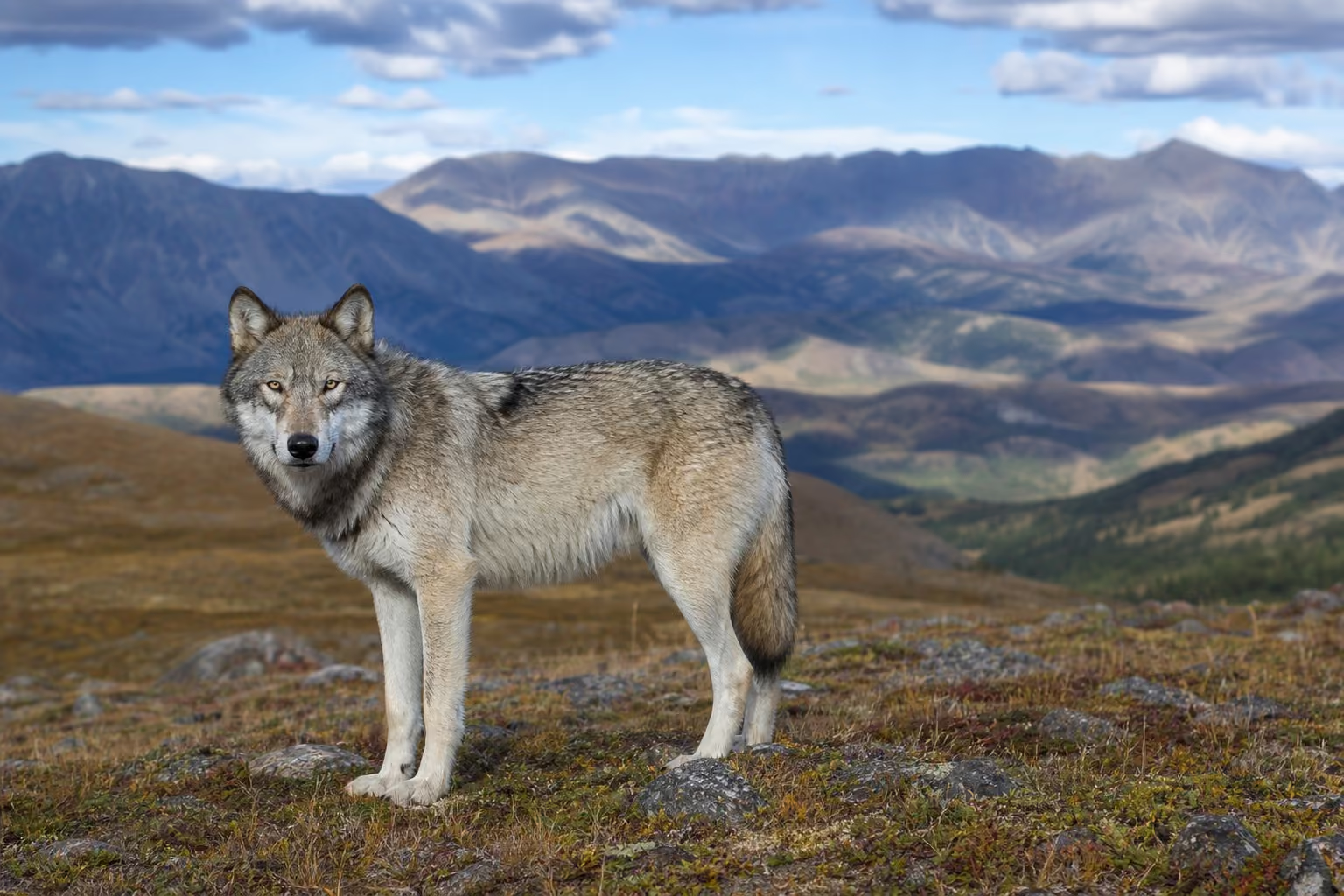
Gray wolf

Details

Gray wolf

Canis lupus

Size
1–1.6 m · 23–80 kg
Diet
Carnivore
Activity
Cathemeral
Sociality
Social
Lifespan
6-8 years (wild)

The largest living member of the dog family, ranging across the Northern Hemisphere. Wolves live in family packs built around a breeding pair and cooperate to bring down large hoofed prey, staying in contact through long-carrying howls.
Range

Habitat range map
Native range Occasional / Transient
PalearcticPalearcticPalearcticPalearcticPalearcticPalearcticPalearcticPalearcticPalearcticPalearcticPalearcticPalearcticPalearcticPalearcticPalearcticPalearcticPalearcticPalearcticPalearcticPalearcticPalearcticPalearcticPalearcticPalearcticNearcticNearcticNearcticNearcticNearcticNearcticNearcticNearcticNearcticNearcticNearcticNearcticNearcticNearcticNearcticNearcticNearcticNearcticNearcticNearcticNearcticNearcticNearcticNearcticNearcticNearcticNearcticNearcticNearcticNearcticNearcticNearcticNearcticNearcticNearcticNearcticNearcticNearcticNearcticNearcticNearctic

Map: Ecoregions 2017 © RESOLVE (CC BY 4.0) · Natural Earth (PD)

Details

Habitat

It occupies forests, grasslands, mountains, wetlands and Arctic tundra across Eurasia and North America, reaching elevations of about 3,000 metres. Deliberate persecution has cut its range to roughly a third of its former extent, erasing it from much of Western Europe and from Japan.

Appearance

Measuring around 100-160 cm long and weighing 23-80 kg, it is the largest wild canid. Its dense winter coat combines a short undercoat with long, coarse guard hairs, ranging from white through grey and brown to black, with Arctic animals nearly all white and northern wolves tending to be larger.

Behavior

Wolves form social packs of typically four to eight, centred on a mated pair and their offspring, each holding a large territory. Howling assembles the pack, advertises territory and carries over long distances, supplemented by body posture and scent. Territorial fights are a leading cause of mortality.

Feeding

A carnivore, it specialises in hoofed mammals such as elk, moose, caribou, deer and wild boar. Packs cooperate to chase down prey, though lone wolves and pairs can have higher success rates; small mammals, birds, fish and even berries round out the diet.

Reproduction

Breeding pairs are monogamous, the female producing a single annual litter of roughly four to eight pups after a gestation of about two months, usually in spring. Newborns weigh only 300-500 grams, and the whole pack helps to feed and raise them.

Notes

Listed as Least Concern by the IUCN, the wolf has rebounded in many regions since the 1970s through legal protection and reintroduction. Conflict with people over livestock persists, yet wolves are increasingly valued for the trophic cascades they trigger, as famously seen at Yellowstone.