002 Featured Specimen
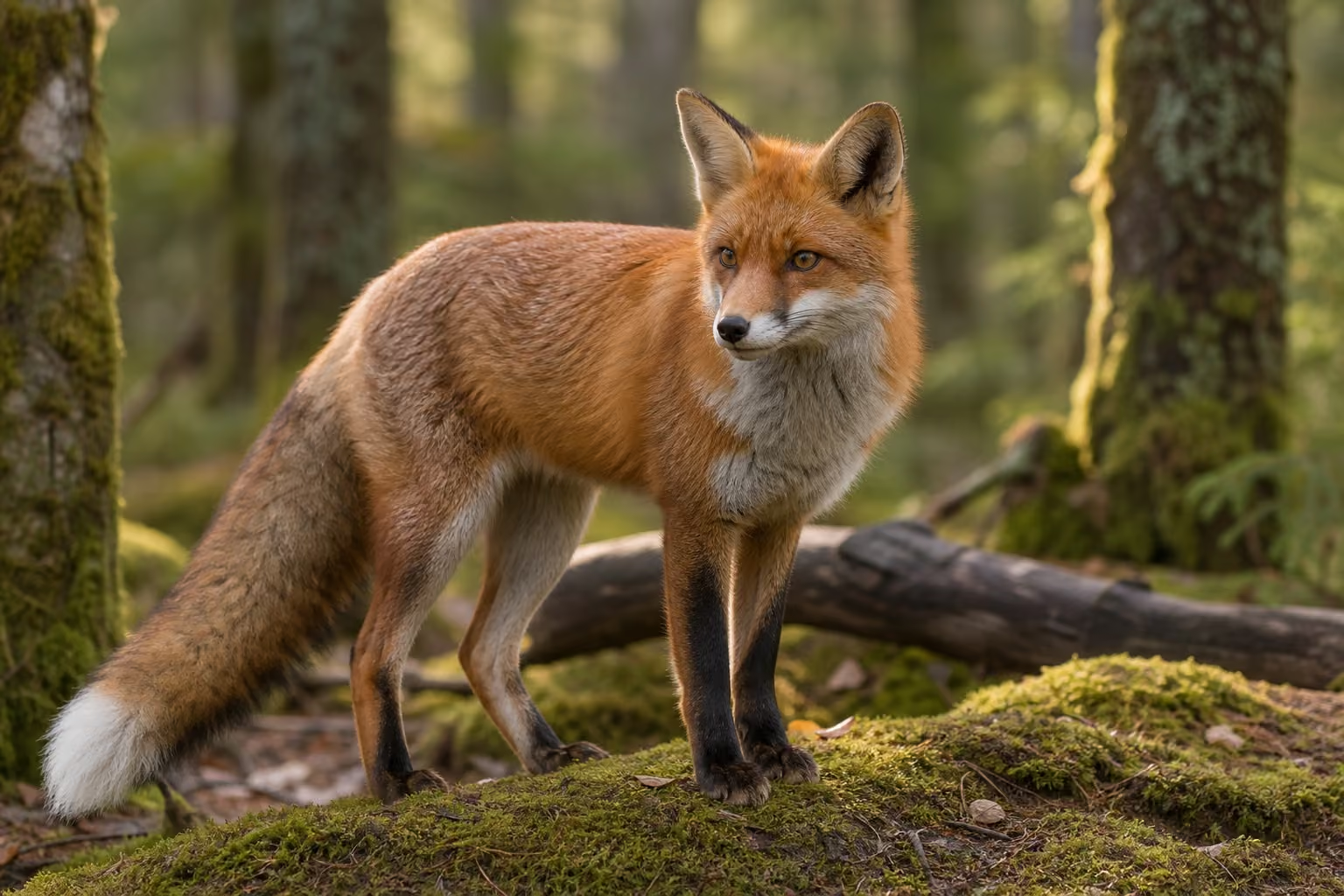
Red fox

Details

Red fox

Vulpes vulpes

Size
45–90 cm · 3–14 kg
Diet
Omnivore
Activity
Crepuscular
Sociality
Solitary
Lifespan
2–5 years (wild)

The most widely distributed carnivoran in the Northern Hemisphere, ranging across the Palearctic and Nearctic. Marked by its bright rust-red coat and white-tipped tail, it is famously adaptable, slipping into farmland and city streets alike.
Range

Habitat range map
Native range Occasional / Transient
PalearcticPalearcticPalearcticPalearcticPalearcticPalearcticPalearcticPalearcticPalearcticPalearcticPalearcticPalearcticPalearcticPalearcticPalearcticPalearcticPalearcticPalearcticPalearcticPalearcticPalearcticPalearcticPalearcticPalearcticNearcticNearcticNearcticNearcticNearcticNearcticNearcticNearcticNearcticNearcticNearcticNearcticNearcticNearcticNearcticNearcticNearcticNearcticNearcticNearcticNearcticNearcticNearcticNearcticNearcticNearcticNearcticNearcticNearcticNearcticNearcticNearcticNearcticNearcticNearcticNearcticNearcticNearcticNearcticNearcticNearctic

Map: Ecoregions 2017 © RESOLVE (CC BY 4.0) · Natural Earth (PD)

Details

Habitat

It occupies an enormous range from tundra and forest to grassland and semi-desert across the northern Palearctic and Nearctic. Among the most cosmopolitan of carnivores, it readily colonises suburbs and city centres.

Appearance

Bodies run 45-90 cm long and 3-14 kg, with European foxes tending larger than North American ones. The back is reddish-rust while the chin, throat and tail tip are white, with black ears and legs. A bushy tail exceeding half the body length and vertically slit pupils are diagnostic.

Behavior

Most active at dawn and dusk, it shifts toward nocturnal habits where people are common. Largely solitary, it pairs only to hold a territory through the breeding season. Its acute hearing can pick out a mouse squeaking 100 m away.

Feeding

An omnivore, it feeds chiefly on small rodents but also takes rabbits, birds, insects, earthworms, eggs and fruit. It eats roughly 0.5-1 kg a day and caches surplus food by burying it for later.

Reproduction

Mating timing varies with latitude, falling in winter in the south and spring in the north. After a gestation of about 52 days the vixen bears an average of five kits, up to thirteen. Young stay with the parents through their first year, sometimes helped by non-breeding vixens.

Notes

The IUCN lists it as Least Concern, with stable, widespread populations. In Australia, however, it is a damaging invasive species blamed for declines in native marsupials and ranks among the world's 100 worst invasive species.