031 Featured Specimen
Axolotl

Details

Axolotl

Ambystoma mexicanum

Size
15–30 cm
Diet
Carnivore
Activity
Nocturnal
Sociality
Solitary
Lifespan
10–15 years

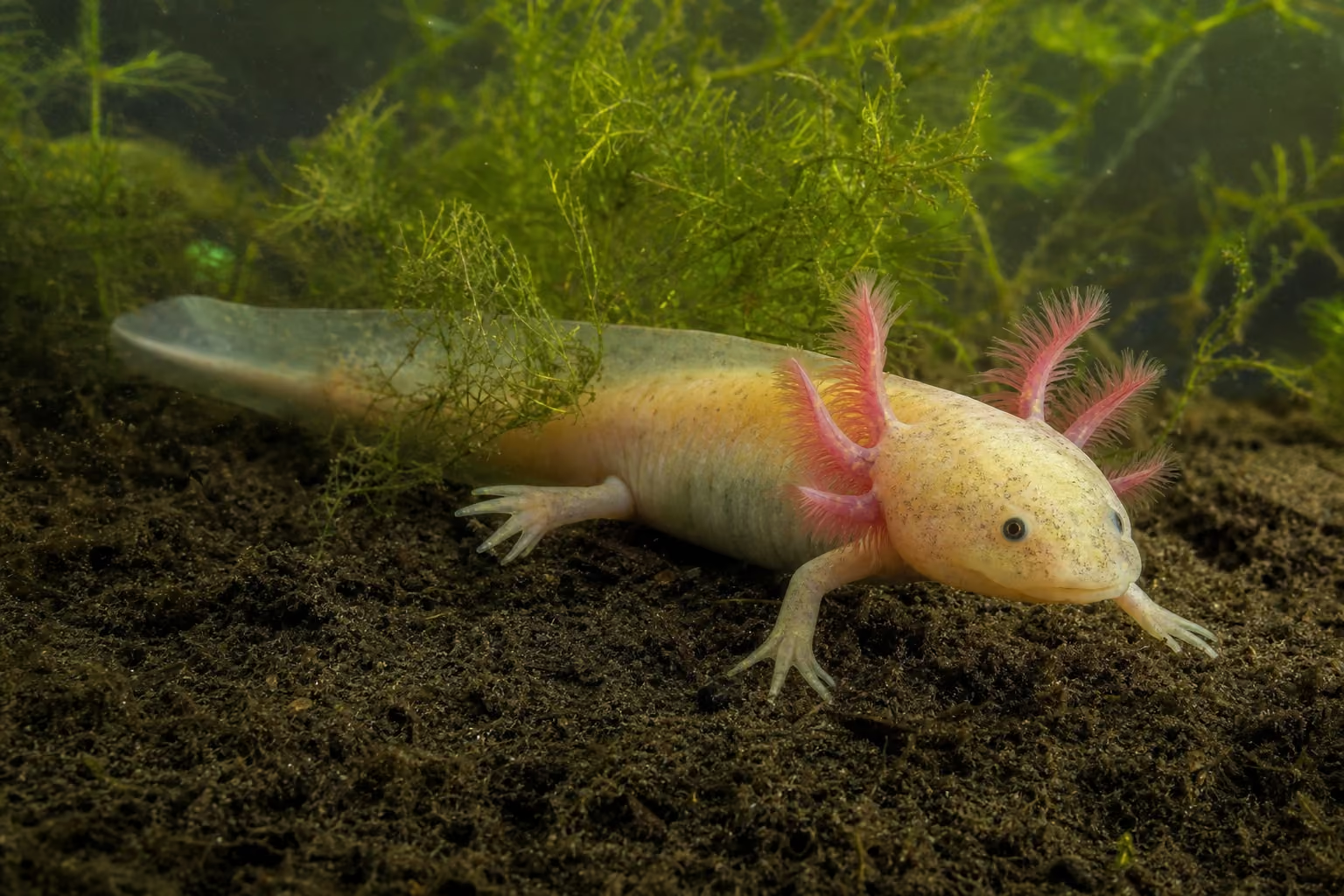
The axolotl is a Mexican salamander that matures while keeping its larval gills and aquatic form. It is famous both as a wild survivor of ancient lake systems and as a laboratory model for regeneration.
Range

Habitat range map
Native range Occasional / Transient

Map: Ecoregions 2017 © RESOLVE (CC BY 4.0) · Natural Earth (PD)

Details

Habitat

Wild axolotls are now largely confined to the Xochimilco lake and canal system in the Basin of Mexico. They use vegetated freshwater, but urban growth, pollution, and introduced fishes have greatly reduced suitable habitat.

Appearance

Adults are about 15-30 cm long. A broad head carries three feathery external gills on each side, and the slender body has a fin-edged tail. Wild types are dark and mottled, while captive lines include white, golden, and other colour forms.

Behavior

Nocturnal and solitary, it shelters on the bottom or among aquatic plants. It normally does not metamorphose, retaining gills and fins while becoming sexually mature. Lost limbs, tail, gills, and some tissues can regenerate.

Feeding

Carnivorous, it eats small crustaceans, insect larvae, worms, and small fish. Prey is taken by a rapid suction strike, with the broad mouth drawing in food and water together.

Reproduction

Breeding takes place underwater: the male deposits spermatophores and the female picks them up for internal fertilization. She attaches many individual eggs to plants and other surfaces; hatching follows after several weeks depending on temperature.

Notes

The species is Critically Endangered in the wild despite being common in captivity and research. Introduced fish, polluted water, and continuing development remain major pressures on the remnant native population.