092 Featured Specimen
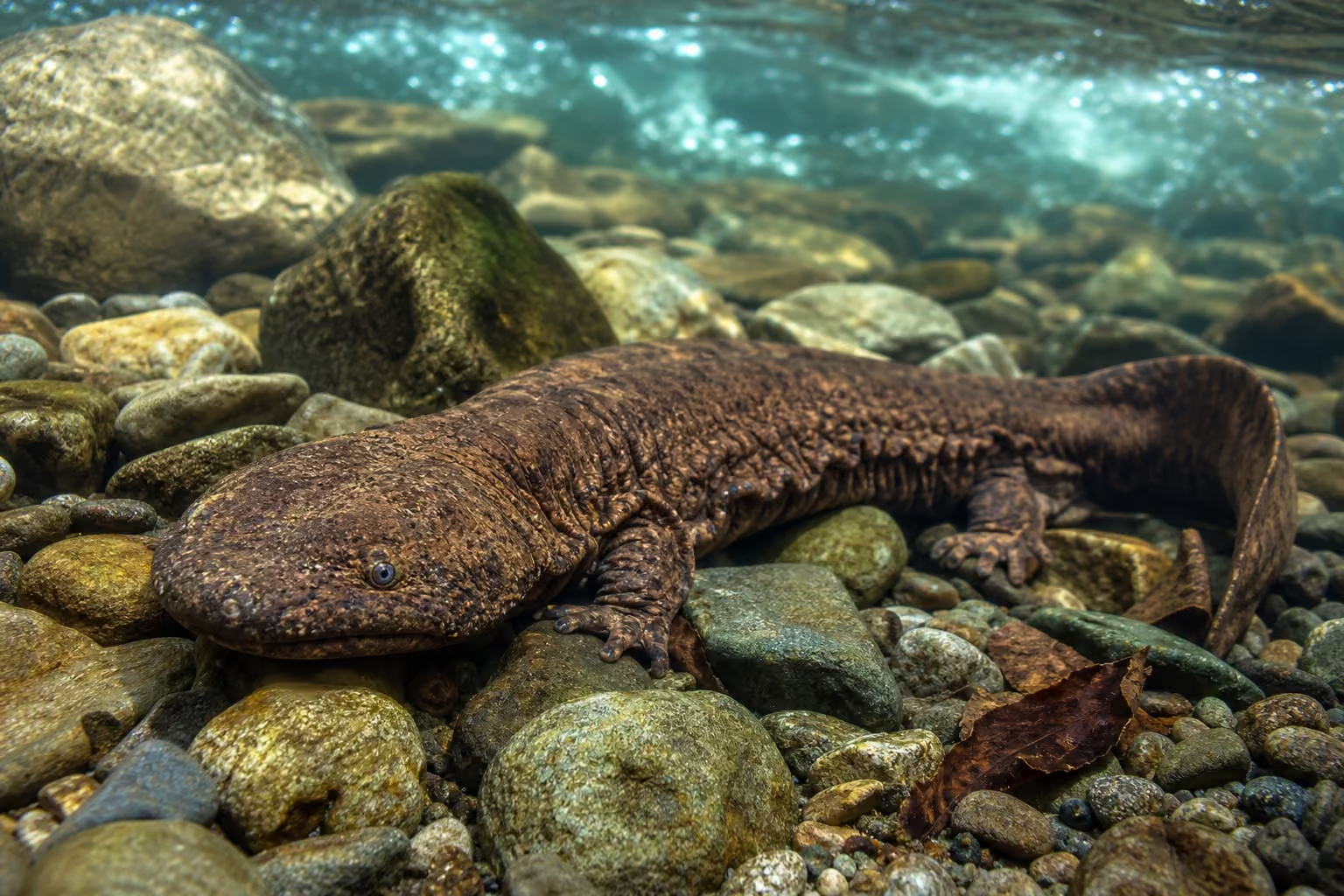
Hellbender

Details

Hellbender

Cryptobranchus alleganiensis

Size
30–74 cm · 1.5–2.5 kg
Diet
Carnivore
Activity
Nocturnal
Sociality
Solitary
Lifespan
Varies by species and environment

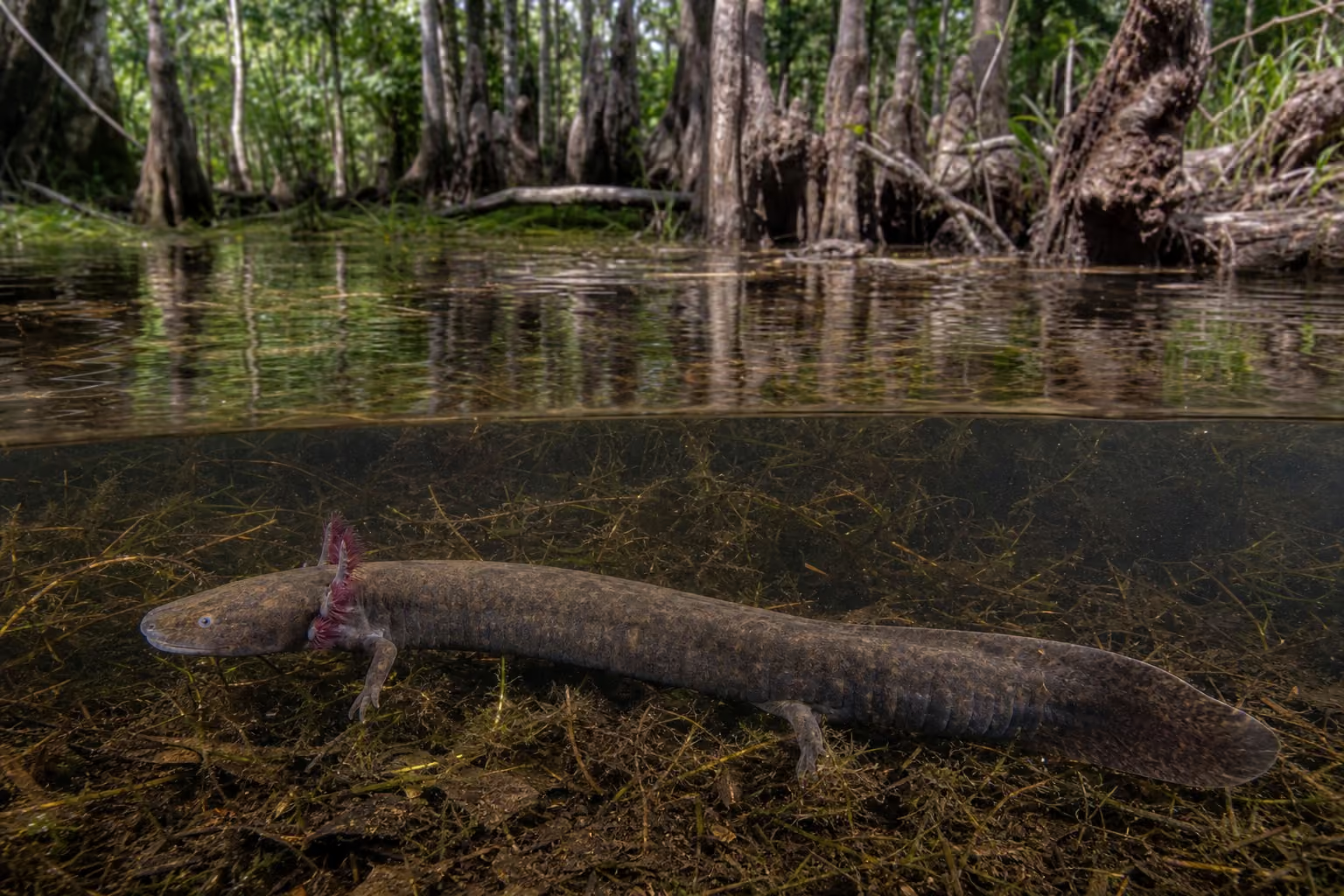
North America's largest salamander, a fully aquatic giant of cold, clear eastern streams. Its flattened body and wavy lateral skin folds let it slip beneath rocks, where it spends almost its entire life.
Range

Habitat range map
Native range Occasional / Transient
NearcticNearcticNearcticNearcticNearcticNearcticNearcticNearcticNearcticNearcticNearcticNearcticNearcticNearcticNearcticNearcticNearcticNearcticNearcticNearcticNearcticNearcticNearcticNearcticNearcticNearcticNearcticNearcticNearcticNearcticNearcticNearcticNearcticNearcticNearcticNearcticNearcticNearcticNearcticNearcticNearctic

Map: Ecoregions 2017 © RESOLVE (CC BY 4.0) · Natural Earth (PD)

Details

Habitat

It lives in swift, rocky streams from southern New York to northern Georgia and west into Missouri, favoring cold, well-oxygenated clear water. It is highly sensitive to pollution and silt, thriving only where the riverbed stays clean.

Appearance

A heavy-bodied amphibian reaching 30 to 74 cm long and 1.5 to 2.5 kg, with blotchy brown to red-brown skin. The body and head are flattened, and prominent wavy skin folds run from neck to tail base; oxygen is absorbed through capillaries in these frills rather than through lungs. The eyes are small and set on top of the head.

Behavior

Largely nocturnal, it is most active a couple of hours after dark and again at dawn. It is solitary and stays close to a chosen den beneath a rock, defending that territory from rivals and rarely moving except to breed.

Feeding

A carnivore, it preys mainly on crayfish and small fish, but also takes insects, worms, snails, tadpoles and smaller salamanders. It hunts largely by smell, following scent trails through the water to its food.

Reproduction

Breeding runs from late summer into November. The male excavates a saucer-shaped depression under a rock or log, where a female lays 150 to 500 eggs; fertilization is external. The male then guards the clutch alone, fanning fresh water over the eggs until they hatch after 45 to 75 days. Larvae take one to two years to transform and mature at five to eight years.

Notes

Habitat degradation is the chief threat, with dams, siltation, logging and mining driving steep declines in some regions. Emerging diseases such as chytrid fungus and warming streams that lower dissolved oxygen add further pressure, and the species serves as a sensitive indicator of clean-stream health.