042 Featured Specimen
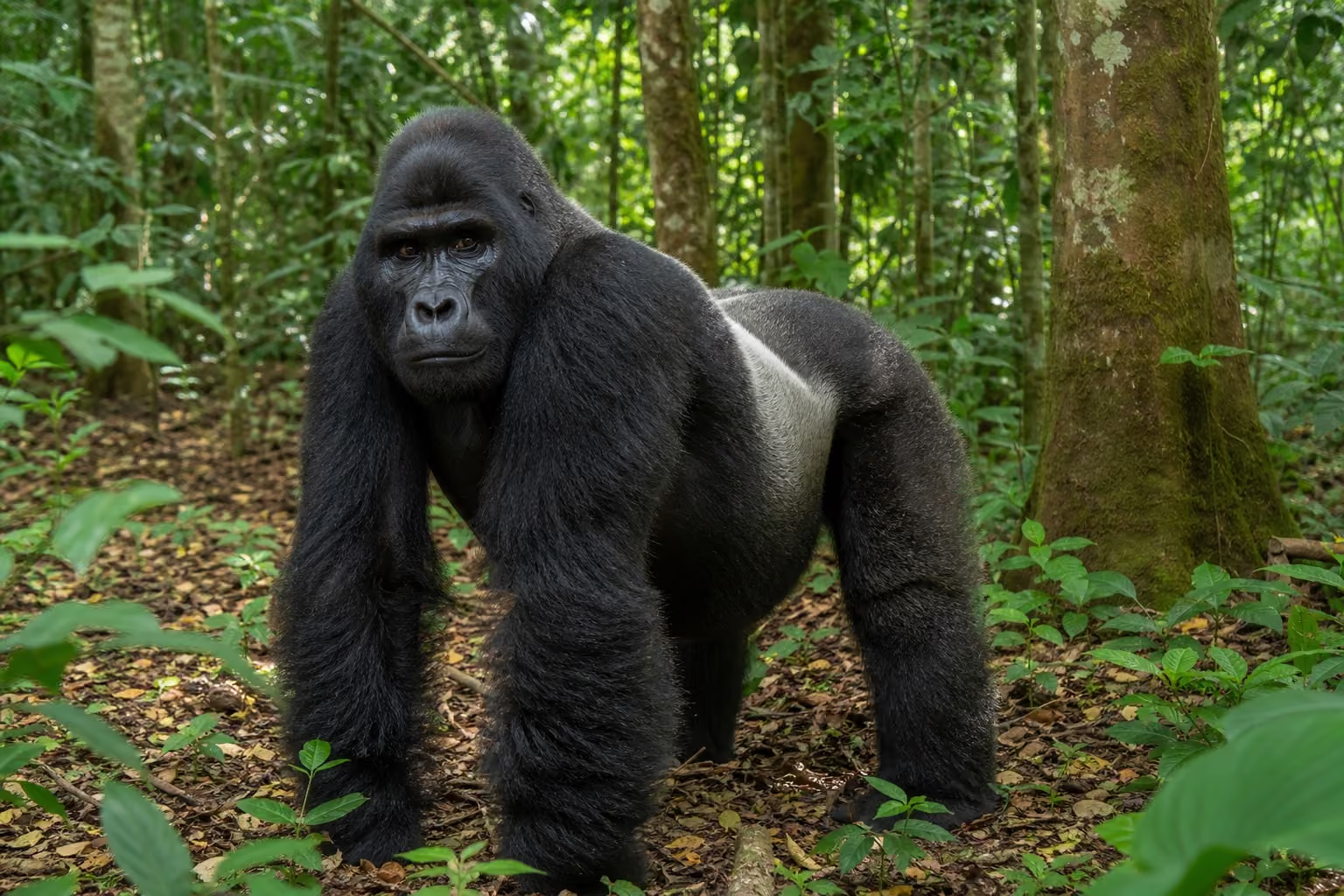
Western gorilla

Details

Western gorilla

Gorilla gorilla

Size
1.2–1.8 m · 68–180 kg
Diet
Herbivore
Activity
Diurnal
Sociality
Social
Lifespan
35-40 years

One of the largest living primates, native to the rainforests of west-central Africa. A mature male develops a saddle of silvery-white hair across his back, becoming a silverback who leads a family group on a largely fruit-based plant diet.
Range

Habitat range map
Native range Occasional / Transient
AfrotropicalAfrotropicalAfrotropicalAfrotropical

Map: Ecoregions 2017 © RESOLVE (CC BY 4.0) · Natural Earth (PD)

Details

Habitat

Lives in the tropical forests of west-central Africa centred on the Congo Basin, ranging across Gabon, Cameroon, the Republic of the Congo, Equatorial Guinea and the Central African Republic. It uses a wide range of forest, from lowland primary and secondary forest to swamp forest and coastal thicket.

Appearance

It measures roughly 120-180 cm and weighs about 68-180 kg, with males much larger than females. The coat is black to dark grey or brown-grey with a brownish forehead, and is paler than that of eastern gorillas. A dominant male grows the silvery-white back that gives the silverback its name.

Behavior

Active by day, it lives in family groups of about 2-20 led by a single silverback. Groups roam home ranges of up to 30 km2 and build fresh nests of branches and foliage on the ground or in trees each night; wild individuals have even been seen using tools.

Feeding

A plant-eater that favours fruit above all, it also takes leaves, stems, pith, flowers and bark. When fruit is plentiful it feeds on it heavily, and it has been recorded eating more than ninety different plant species.

Reproduction

Females begin breeding at around 8-9 years and usually bear a single infant at a time. A mother cares for her young for three to four years, so surviving offspring arrive only once every six to eight years, making population growth slow.

Notes

The IUCN lists it as Critically Endangered. Poaching, habitat loss from commercial logging and civil conflict are major threats, and the Ebola virus has caused severe declines in some populations. In the wild it can live to about 40 years.