047 Featured Specimen
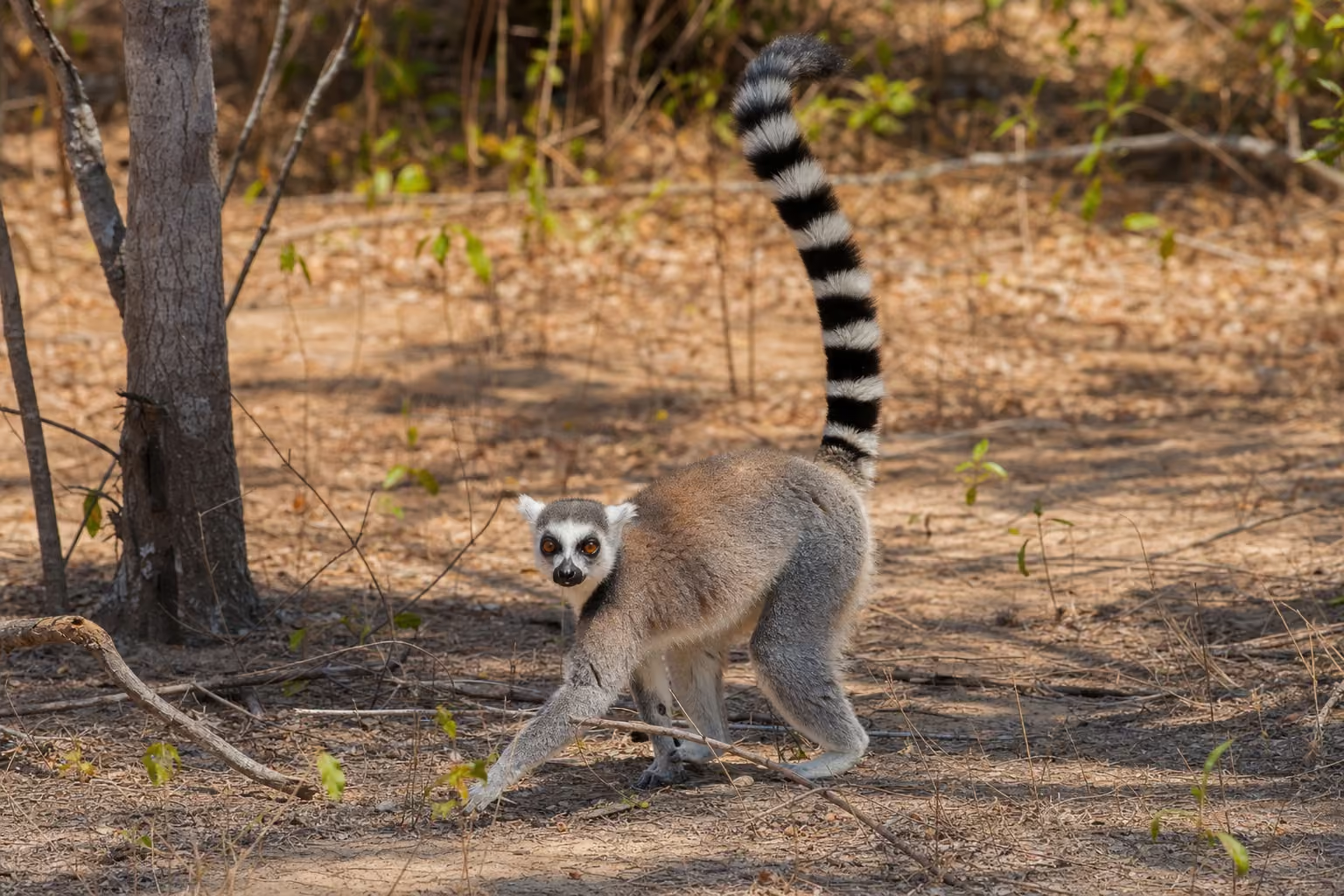
Ring-tailed lemur

Details

Ring-tailed lemur

Lemur catta

Size
39–46 cm · 2.2–3.5 kg
Diet
Omnivore
Activity
Diurnal
Sociality
Social
Lifespan
15-20 years

A Madagascar lemur instantly known for its long tail banded in alternating black-and-white rings. Highly terrestrial and social, it moves about by day in cohesive troops and is an icon of the island.
Range

Habitat range map
Native range Occasional / Transient

Map: Ecoregions 2017 © RESOLVE (CC BY 4.0) · Natural Earth (PD)

Details

Habitat

Endemic to southern and southwestern Madagascar, it occupies a wide range of habitats from gallery and dry deciduous forests to scrub and even montane forest. It tolerates extreme temperature swings in the arid south.

Appearance

Head and body measure 39-46 cm, with a weight of about 2.2-3.5 kg. The coat is gray to rosy-brown above and pale below, with black triangular patches around the eyes. Its hallmark is the long, bushy tail ringed in some 13 alternating black-and-white bands.

Behavior

Diurnal and social, it lives in troops averaging around a dozen or more animals. Females dominate the group, and members often sunbathe with arms spread toward the morning sun. Males settle disputes with "stink fights," anointing their tails with scent and wafting it at rivals.

Feeding

An omnivore, it eats fruit, leaves, flowers, herbs, bark, and insects. Tamarind is a mainstay, sometimes making up nearly half the diet during the dry season.

Reproduction

Breeding runs from mid-April to mid-May, with gestation lasting about 135 days. A single infant (occasionally twins) is born around September or October, weighing roughly 70 g, and is weaned after about five months.

Notes

Madagascar's national animal and a familiar figure in tourism and research, it has nonetheless declined sharply in the wild from habitat loss, hunting, and the pet trade, with most of the island's original forest already gone.