041 Featured Specimen
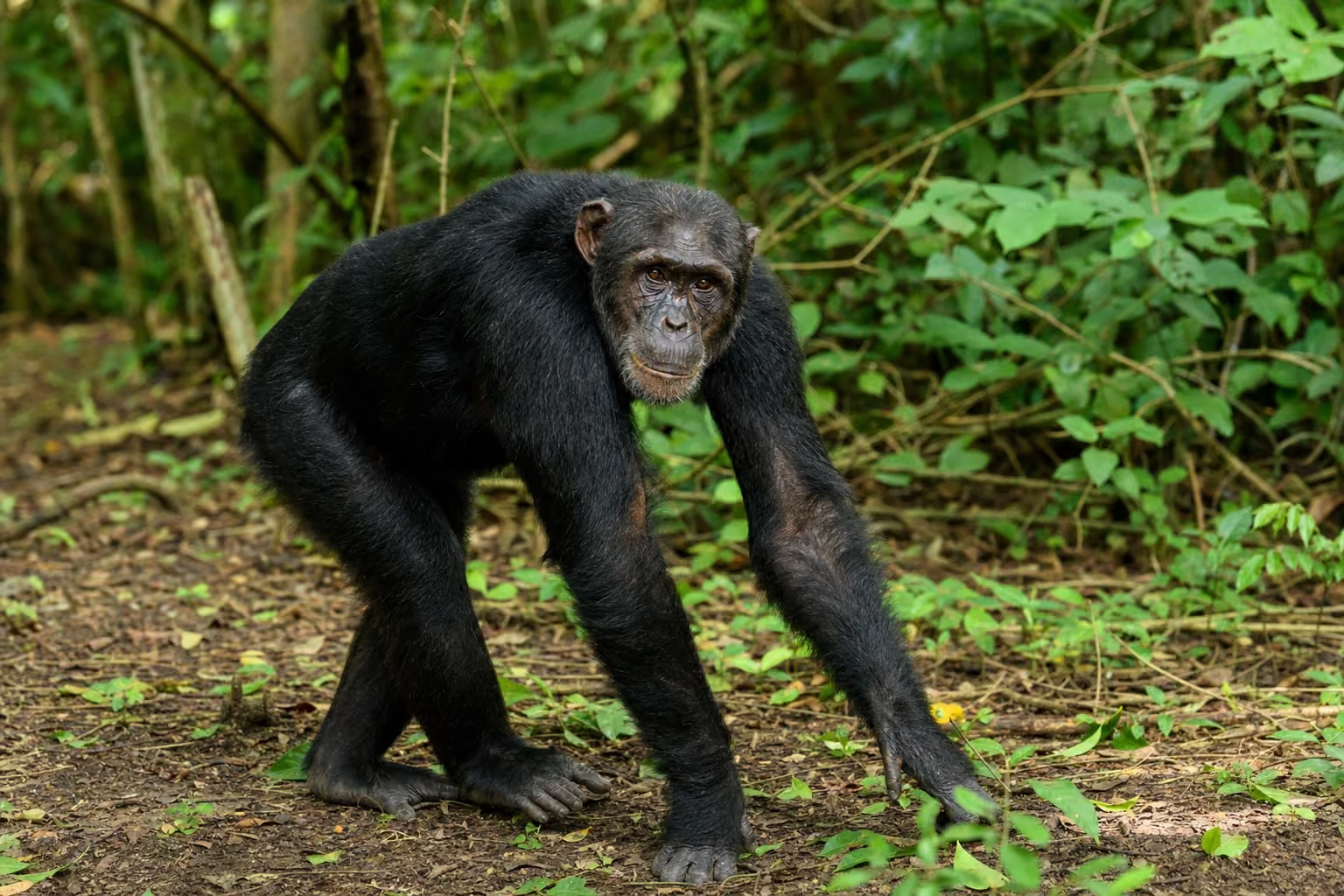
Chimpanzee

Details

Chimpanzee

Pan troglodytes

Size
0.7–1 m · 26–70 kg
Diet
Omnivore
Activity
Diurnal
Sociality
Social
Lifespan
30-40 years

A highly intelligent African great ape and one of humanity's closest living relatives. It is renowned for making and using tools and for living in complex, ever-shifting fission-fusion societies.
Range

Habitat range map
Native range Occasional / Transient
AfrotropicalAfrotropicalAfrotropicalAfrotropical

Map: Ecoregions 2017 © RESOLVE (CC BY 4.0) · Natural Earth (PD)

Details

Habitat

Ranges widely across equatorial Africa, occupying everything from evergreen rainforest and montane and swamp forest to dry woodland and savanna-forest mosaics.

Appearance

Roughly 70-100 cm long and weighing 26-70 kg, with coarse black hair over most of the body but a bare face, fingers, palms and soles. Coats turn brown or grey and the forehead balds with age; males are larger and have sharper canines than females.

Behavior

Diurnal, spending the day feeding and travelling and building a fresh tree nest each night. Communities of about 15-150 split into smaller temporary parties and run a linear male dominance hierarchy; males stay in their birth group while females usually emigrate at adolescence.

Feeding

An omnivore that relies heavily on fruit but also eats leaves, seeds, blossoms, bark, honey and insects. It uses tools such as twigs to fish for termites and stones to crack nuts, and males cooperatively hunt red colobus monkeys, sharing the meat.

Reproduction

Gestation lasts about eight months and a single infant is the norm. Young are weaned around three years old but keep close maternal bonds long after, taking several years to reach maturity.

Notes

Listed as Endangered by the IUCN. Habitat loss, poaching for bushmeat and the pet trade, and diseases such as Ebola are driving declines across its range.