089 Featured Specimen
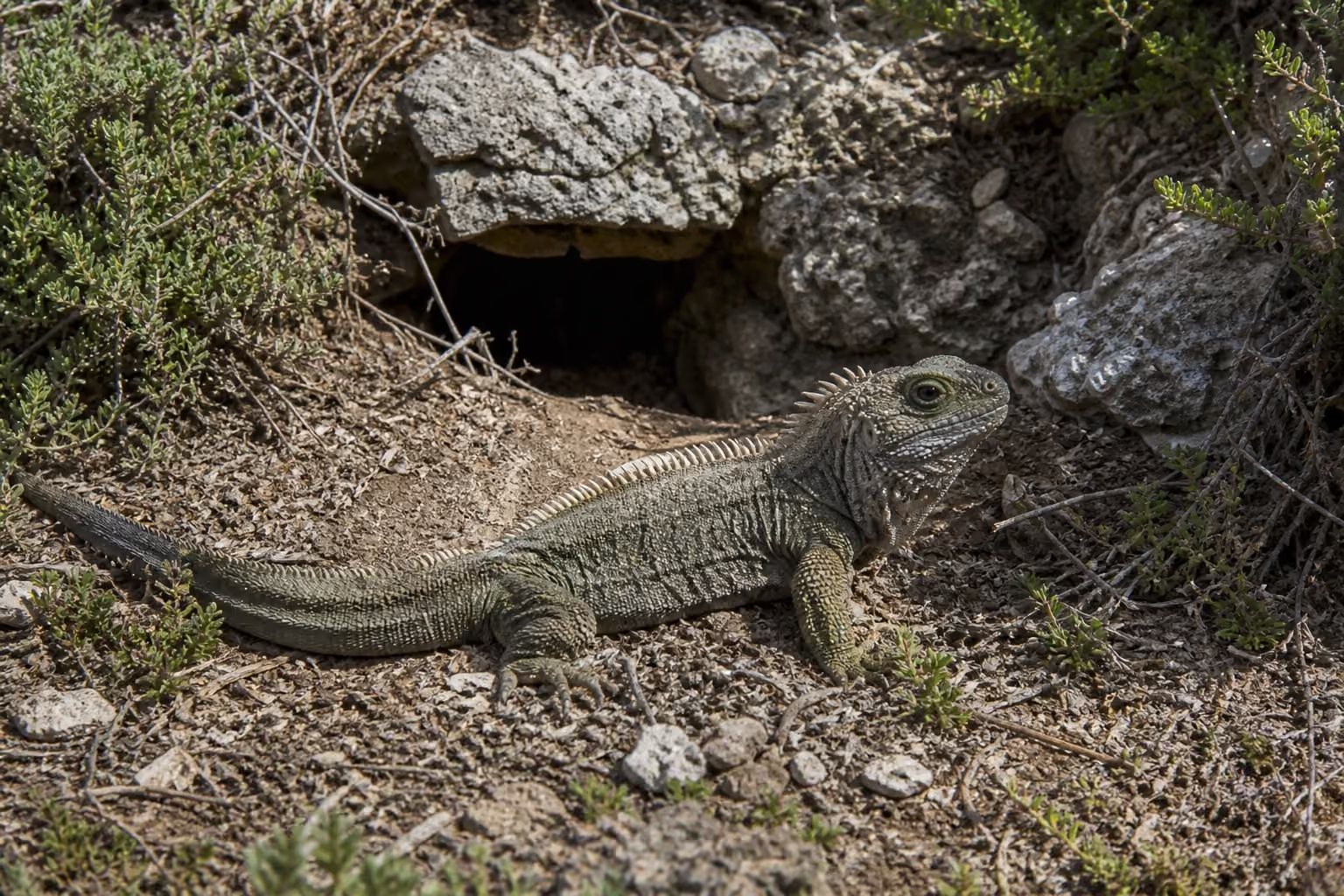
Tuatara

Details

Tuatara

Sphenodon punctatus

Size
40–80 cm · 0.5–1.3 kg
Diet
Carnivore
Activity
Nocturnal
Sociality
Solitary
Lifespan
Varies by species and environment

Endemic to New Zealand, the tuatara is the sole survivor of Rhynchocephalia, an order that flourished alongside the dinosaurs. Lizard-like in form but belonging to an entirely separate lineage, it is famous for a third eye atop its head and an exceptionally slow pace of growth and breeding.
Range

Habitat range map
Native range Occasional / Transient
AustralasianAustralasianAustralasianAustralasianAustralasianAustralasianAustralasianAustralasianAustralasianAustralasianAustralasianAustralasianAustralasianAustralasianAustralasianAustralasianAustralasian

Map: Ecoregions 2017 © RESOLVE (CC BY 4.0) · Natural Earth (PD)

Details

Habitat

Once widespread on the mainland, it now survives on roughly 32 offshore islands kept free of introduced mammals. It favours coastal scrub and forest, often sheltering in burrows dug by nesting seabirds.

Appearance

Adults measure 40 to 80 cm and weigh 500 to 1,300 g, with males larger than females. Coloration ranges from greenish brown through grey to reddish, flecked with white. Males bear a crest of triangular spines along the back, and a scale-covered parietal eye sits on the crown of the head.

Behavior

A nocturnal, ground-dwelling and solitary reptile, the tuatara tolerates far cooler conditions than most reptiles, functioning best around 16 to 21 C and staying active down to about 5 C. It shelters in rock crevices or burrows by day and emerges at night.

Feeding

A carnivore, it feeds mainly on invertebrates such as beetles, crickets, spiders, wetas, earthworms and snails. It also takes frogs, lizards, and seabird eggs and chicks, and will occasionally cannibalise juveniles.

Reproduction

Breeding is among the slowest of any reptile: animals take 10 to 20 years to mature, and females mate only about once every four years. They lay a clutch of soft, parchment-shelled eggs that take 12 to 15 months to hatch. Incubation temperature sets the sex, warmer eggs producing males and cooler eggs females.

Notes

Tuatara are remarkably long-lived, commonly reaching 60 years and sometimes well over 100; one captive male fathered young at 111. Predation of eggs and young by introduced rats is the chief threat, and the surviving, relatively small populations are safeguarded on protected islands.