005 Featured Specimen
Tiger

Details

Tiger

Panthera tigris

Size
2.4–3.3 m · 90–300 kg
Diet
Carnivore
Activity
Nocturnal
Sociality
Solitary
Lifespan
10–15 years (wild)

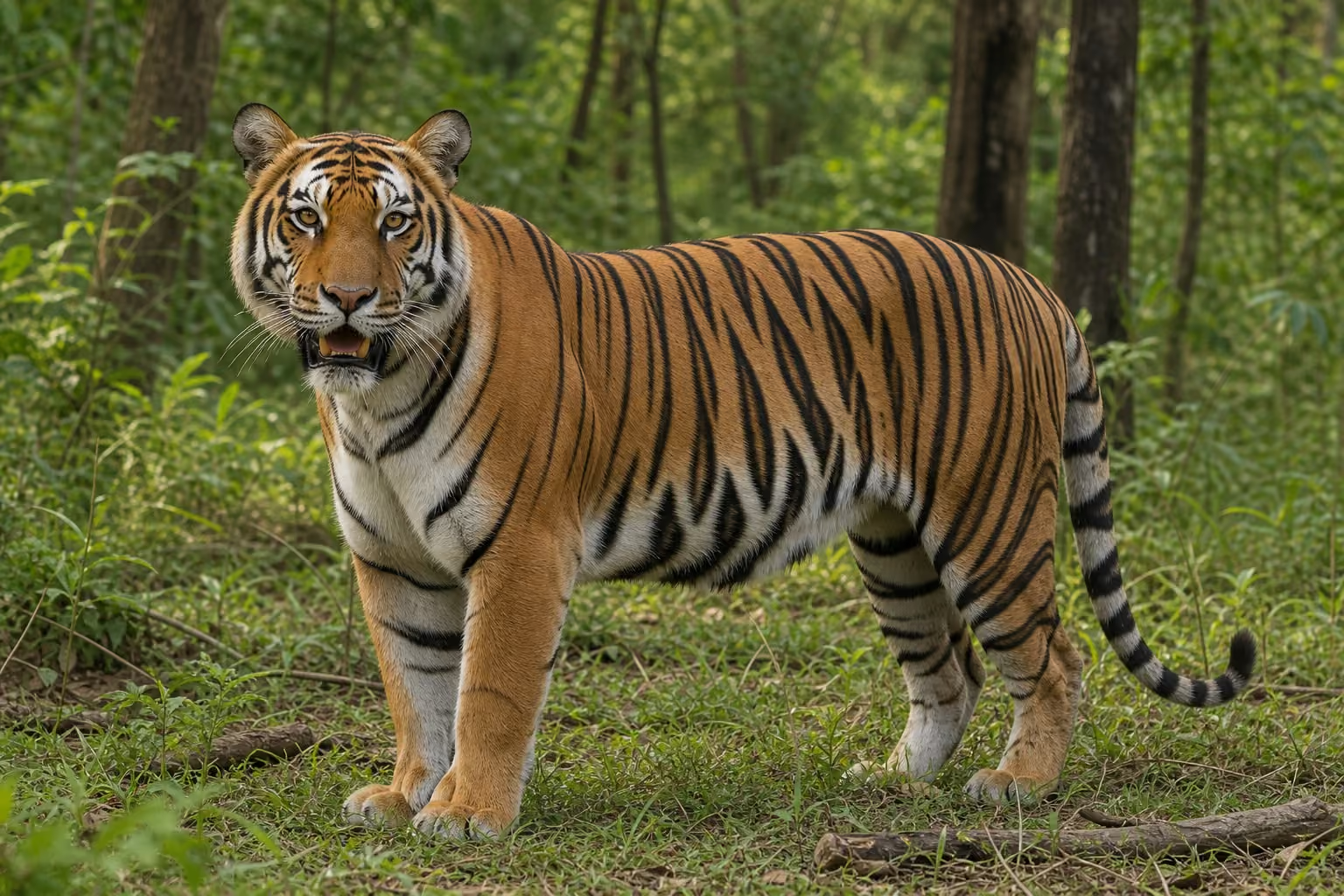
The largest of the cats, instantly recognised by its orange coat streaked with bold black vertical stripes. Each animal's pattern is unique, working as camouflage in forest and tall grass. It is a solitary apex predator of Asia's forests and wetlands.
Range

Habitat range map
Native range Occasional / Transient

Map: Ecoregions 2017 © RESOLVE (CC BY 4.0) · Natural Earth (PD)

Details

Habitat

Tigers occupy habitats ranging from the coniferous forests of the Russian Far East to the tropical broadleaf forests of South and Southeast Asia, and montane forest above 4,000 m in the eastern Himalayas. They also haunt the mangroves of the Sundarbans, but now hold only a fraction of their former range.

Appearance

Combining head-and-body with tail, a tiger spans roughly 240–330 cm and weighs 90–300 kg, with northern animals the heaviest. The coat is tawny to orange with black stripes above and white below; its canines, at 6–7 cm, are the longest of any cat.

Behavior

Tigers form no groups and live alone outside the breeding season, holding large territories. Home ranges run from tens of square kilometres in India to over 800 km² in the Russian Far East. They are powerful swimmers, crossing rivers several kilometres wide.

Feeding

A carnivore preying chiefly on large ungulates such as deer, wild boar and gaur. It hunts by stalking close under cover, then launching an ambush from within about 30 m. A tiger may gorge on a large amount of meat at once and feed on a carcass over several days.

Reproduction

Breeding can occur year-round, with gestation lasting about 96–111 days. A female bears one to six cubs, usually two or three, born blind. The young remain within their mother's territory for roughly 18–24 months before gradually becoming independent.

Notes

Habitat loss and fragmentation, poaching for skins and traditional medicine, and conflict with people have slashed numbers, with the tiger losing over 90% of its historic range. Every subspecies is listed on CITES Appendix I, and conservation efforts continue across its range.