066 Featured Specimen
Southern cassowary

Details

Southern cassowary

Casuarius casuarius

Size
Height 1.3–1.7 m · 30–70 kg
Diet
Herbivore
Activity
Diurnal
Sociality
Solitary
Lifespan
Several years to decades

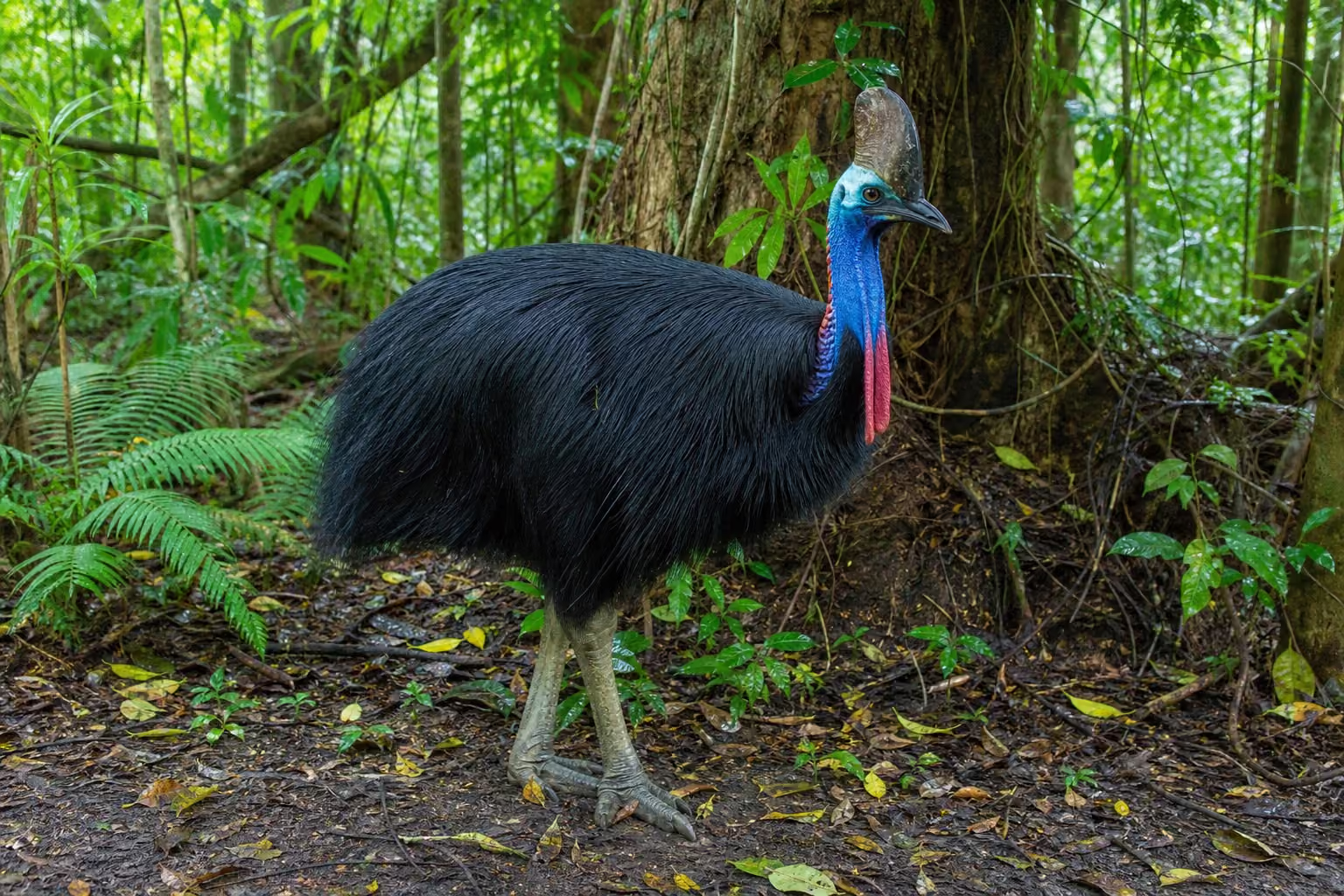
One of the heaviest birds on Earth, a flightless giant of the tropical rainforests of northeastern Australia and New Guinea. It is unmistakable for the helmet-like casque atop its head and the two red wattles dangling from a bare blue neck.
Range

Habitat range map
Native range Occasional / Transient
AustralasianAustralasianAustralasianAustralasianAustralasianAustralasianAustralasianAustralasianAustralasianAustralasianAustralasianAustralasianAustralasianAustralasianAustralasianAustralasianAustralasian

Map: Ecoregions 2017 © RESOLVE (CC BY 4.0) · Natural Earth (PD)

Details

Habitat

It lives in lowland tropical rainforest in Indonesia (southern New Guinea and the Aru Islands), Papua New Guinea, and northeastern Australia, favouring elevations below 1,100 m in Australia and 500 m in New Guinea, and also venturing into savannah forest and mangroves.

Appearance

It stands about 130–170 cm tall and weighs 30–70 kg, with females larger and more vividly coloured than males. The coarse, hair-like plumage is glossy black, while a flat horny casque crowns a bare blue head and neck hung with two red wattles. The inner toe bears a dagger-like claw up to 12 cm long.

Behavior

A largely solitary bird, it walks the forest floor by day, foraging alone. Wary but capable of aggression, it can sprint at 50 km/h, swims well, and may lash out with its clawed feet when cornered.

Feeding

It feeds chiefly on fallen fruit gathered from the forest floor, and can safely digest fruits toxic to other animals. By carrying their seeds far from the parent tree, it is a key seed disperser that helps regenerate the rainforest.

Reproduction

Breeding runs roughly from June to October. The male builds a ground nest of plant matter and incubates the clutch of three or four eggs alone; the eggs hatch in about two months, and he raises the striped chicks single-handedly.

Notes

Through fruit-eating and seed dispersal it acts as a gardener of the forest. Although globally assessed as of low conservation concern, local populations are squeezed by logging, road-building, vehicle strikes, and hunting, and most attacks on people involve birds that have been hand-fed.