057 Featured Specimen
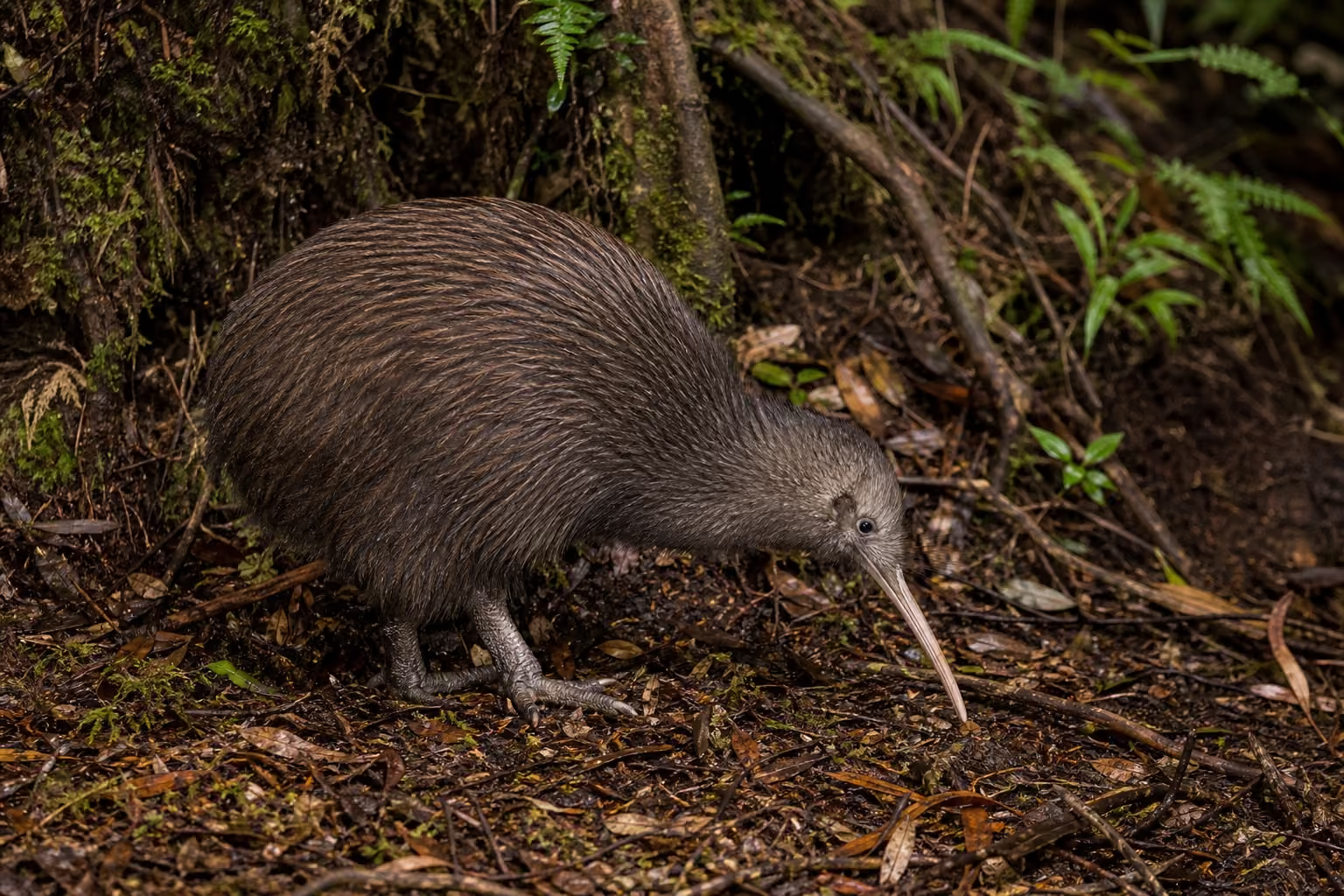
North Island brown kiwi

Details

North Island brown kiwi

Apteryx mantelli

Size
45–55 cm · 1.8–3.8 kg
Diet
Omnivore
Activity
Nocturnal
Sociality
Pair
Lifespan
Several years to decades

A flightless, nocturnal bird endemic to New Zealand's North Island, with nostrils set near the tip of its long bill. It locates buried prey by smell and touch, and is reported to have the smallest visual field of any bird, foraging almost entirely without sight.
Range

Habitat range map
Native range Occasional / Transient
AustralasianAustralasianAustralasianAustralasianAustralasianAustralasianAustralasianAustralasianAustralasianAustralasianAustralasianAustralasianAustralasianAustralasianAustralasianAustralasianAustralasian

Map: Ecoregions 2017 © RESOLVE (CC BY 4.0) · Natural Earth (PD)

Details

Habitat

Endemic to the northern two-thirds of New Zealand's North Island, spread across Northland, Coromandel, and the eastern and western reaches. It favours densely vegetated lowland and coastal native forest but adapts to pine plantations, pasture, dunes, and forest remnants.

Appearance

About 45–55 cm long and weighing 1.8–3.8 kg, with females larger than males. The plumage is streaky red-brown, hair-like, and spiky; there is no visible tail and the keel that anchors flight muscles is reduced, while the long bill carries nostrils close to its tip.

Behavior

Nocturnal and strongly territorial, it forms long-lasting monogamous pairs that call to one another to hold their ground. It relies on sound and scent rather than sight to move through the dark.

Feeding

An omnivore whose diet is dominated by invertebrates such as earthworms, spiders, and insect larvae, supplemented with fruit. It feeds by tapping and probing the soil and rotting logs with its bill until it detects prey.

Reproduction

Pairs breed together, and the female lays an egg enormous for her size (around 430 g, roughly a quarter of her body weight). Clutches usually number about two eggs, the male alone incubates, and the precocial chicks leave the nest within about ten days, fending for themselves with no further parental care.

Notes

Introduced predators such as dogs, cats, and stoats are the gravest threat: where no pest control is carried out, the great majority of chicks die before reaching breeding age. Habitat clearance adds further pressure, and surviving populations are managed within reserves and national parks.