058 Featured Specimen
Kakapo

Details

Kakapo

Strigops habroptilus

Size
58–64 cm · 1–4 kg
Diet
Herbivore
Activity
Nocturnal
Sociality
Solitary
Lifespan
Several years to decades

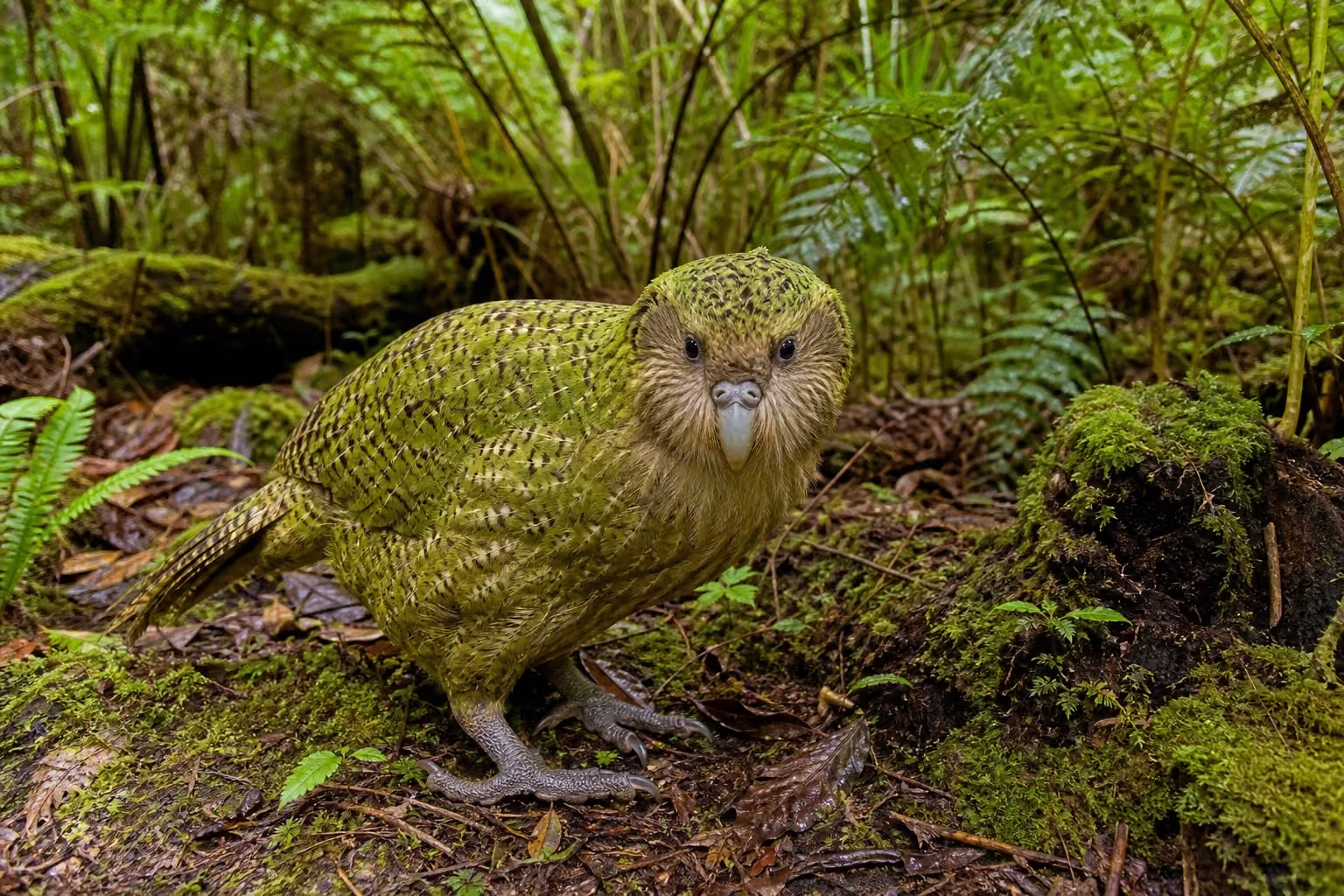
The kakapo is the world's only flightless parrot, endemic to New Zealand. A heavy, rotund bird cloaked in moss-green plumage with an owl-like facial disc, it is also the only parrot with a lek breeding system and one of the planet's rarest birds.
Range

Habitat range map
Native range Occasional / Transient
AustralasianAustralasianAustralasianAustralasianAustralasianAustralasianAustralasianAustralasianAustralasianAustralasianAustralasianAustralasianAustralasianAustralasianAustralasianAustralasianAustralasian

Map: Ecoregions 2017 © RESOLVE (CC BY 4.0) · Natural Earth (PD)

Details

Habitat

Once widespread through the forests, scrublands, and tussock grasslands of New Zealand's main islands, the kakapo was driven to the brink by introduced predators. Survivors now live on a handful of predator-free island sanctuaries and a fenced mainland reserve.

Appearance

A large, barrel-bodied parrot measuring 58-64 cm long and weighing roughly 1-4 kg, it is the heaviest living parrot. Its yellowish moss-green feathers are barred and mottled with black and dark brown, and it has a distinctive owl-like facial disc, short wings, and large bluish feet.

Behavior

Nocturnal, it shelters under cover by day and roams its territory on foot at night. Though flightless, it climbs trees expertly and parachutes down on outstretched wings. Generally solitary, it is noted for a keen sense of smell and a strong, sweet musky odor.

Feeding

Entirely herbivorous, it eats fruits, seeds, leaves, stems, and rhizomes from a wide range of plants. It is especially fond of rimu fruit, feeding on it almost exclusively in bumper years, and strips the nutritious parts with its beak, leaving balled wads of chewed fiber.

Reproduction

It breeds only in years when forest trees mast, with heavy fruiting of rimu and other species triggering the rare event every few years. Females lay 1-4 eggs, incubate them for about 30 days, and raise the chicks alone; young fledge at 10-12 weeks and the birds can live around 60 years.

Notes

Critically endangered, the kakapo has been devastated by introduced mammals such as cats, rats, and stoats. A recovery program begun in the 1990s names and monitors every individual, and through supplementary feeding, nest management, and breeding support it has slowly rebuilt the population from a tiny remnant.