065 Featured Specimen
Snowy owl

Details

Snowy owl

Bubo scandiacus

Size
Wingspan 1.3–1.5 m · 1.6–3 kg
Diet
Carnivore
Activity
Diurnal
Sociality
Solitary
Lifespan
Several years to decades

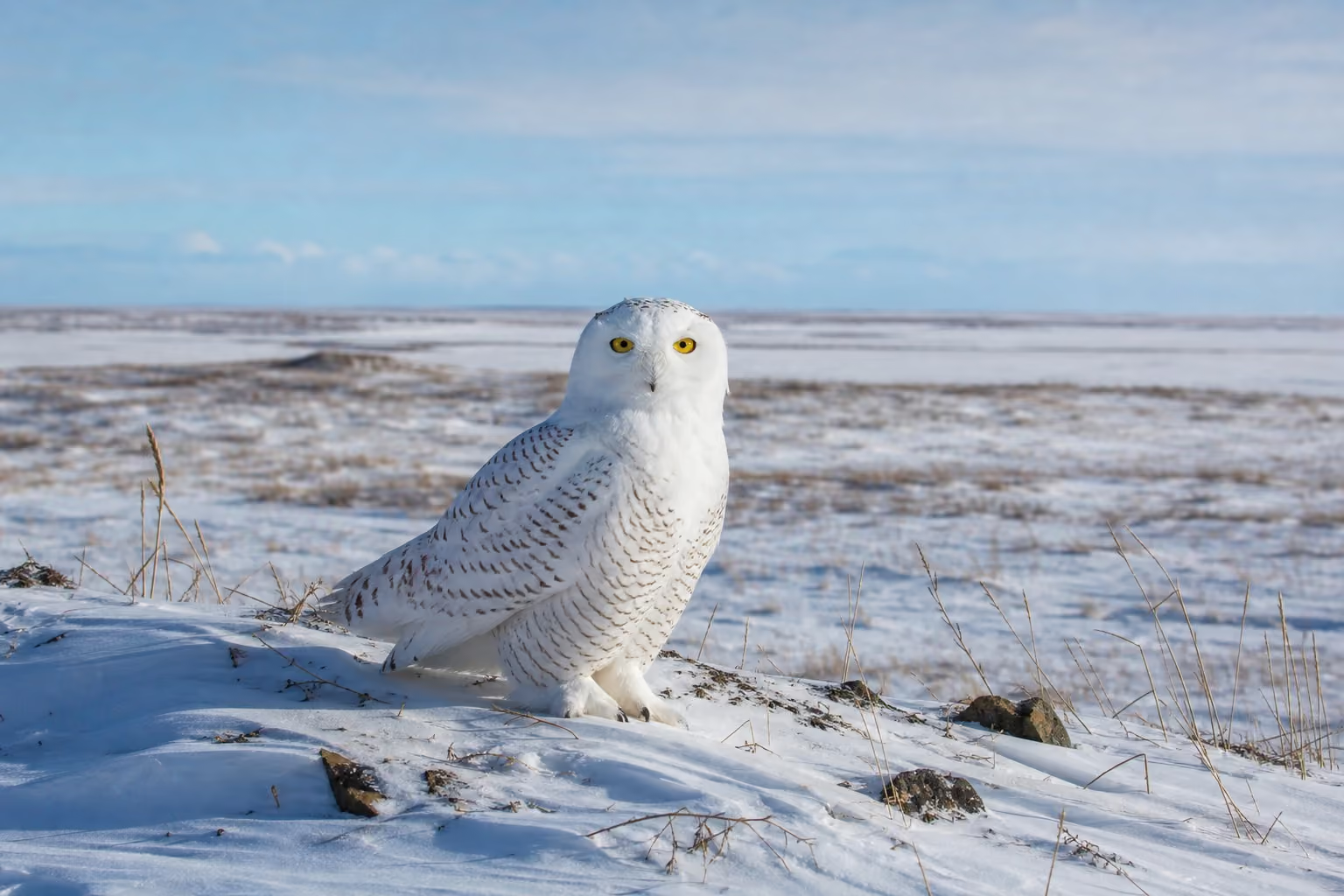
A large, almost pure-white owl of the Arctic tundra, the only owl with mainly white plumage. It blends into snowy terrain and ambushes lemmings and other small prey from open ground.
Range

Habitat range map
Native range Occasional / Transient
PalearcticPalearcticPalearcticPalearcticPalearcticPalearcticPalearcticPalearcticPalearcticPalearcticPalearcticPalearcticPalearcticPalearcticPalearcticPalearcticPalearcticPalearcticPalearcticPalearcticPalearcticPalearcticPalearcticPalearcticNearcticNearcticNearcticNearcticNearcticNearcticNearcticNearcticNearcticNearcticNearcticNearcticNearcticNearcticNearcticNearcticNearcticNearcticNearcticNearcticNearcticNearcticNearcticNearcticNearcticNearcticNearcticNearcticNearcticNearcticNearcticNearcticNearcticNearcticNearcticNearcticNearcticNearcticNearcticNearcticNearctic

Map: Ecoregions 2017 © RESOLVE (CC BY 4.0) · Natural Earth (PD)

Details

Habitat

It breeds across Arctic tundra north of about 60°N, favouring open ground dotted with moss, lichen and rock. In winter it moves south into subarctic grasslands, coastal dunes, farmland and even airports, occasionally irrupting far beyond its usual range.

Appearance

One of the world's largest owls, with a wingspan of roughly 125 to 150 cm and a weight of 1.6 to 3.0 kg. Mature males are nearly pure white, while larger females and juveniles are heavily flecked with dark brown bars. Bright yellow eyes and densely feathered toes equip it for extreme cold.

Behavior

It is solitary and perches on hummocks, rocks or other raised vantage points to scan open country. Unusually for an owl, it remains active by day, well suited to the Arctic's near-constant summer light, and may move south in numbers in lean years.

Feeding

A carnivore, it depends heavily on lemmings and other small rodents, whose abundance shapes its breeding success. Hunting mainly by sight from a perch, it also takes waterfowl, ptarmigan, fish and carrion when the chance arises.

Reproduction

It nests on a low rise of open tundra in spring, laying about 5 to 11 eggs in food-rich years. Eggs are laid and hatch in staggered sequence, and the young fledge at roughly three weeks; both parents defend the nest fiercely.

Notes

The IUCN lists it as Vulnerable, and its global population is thought to have fallen sharply amid wide-scale environmental change. It leads a nomadic life, rarely breeding at the same site or with the same mate from year to year.