Details
Long-eared owl
Asio otus
- Size
- 31–40 cm · 220–435 g
- Diet
- Carnivore
- Activity
- Nocturnal
- Sociality
- Solitary
- Lifespan
- —
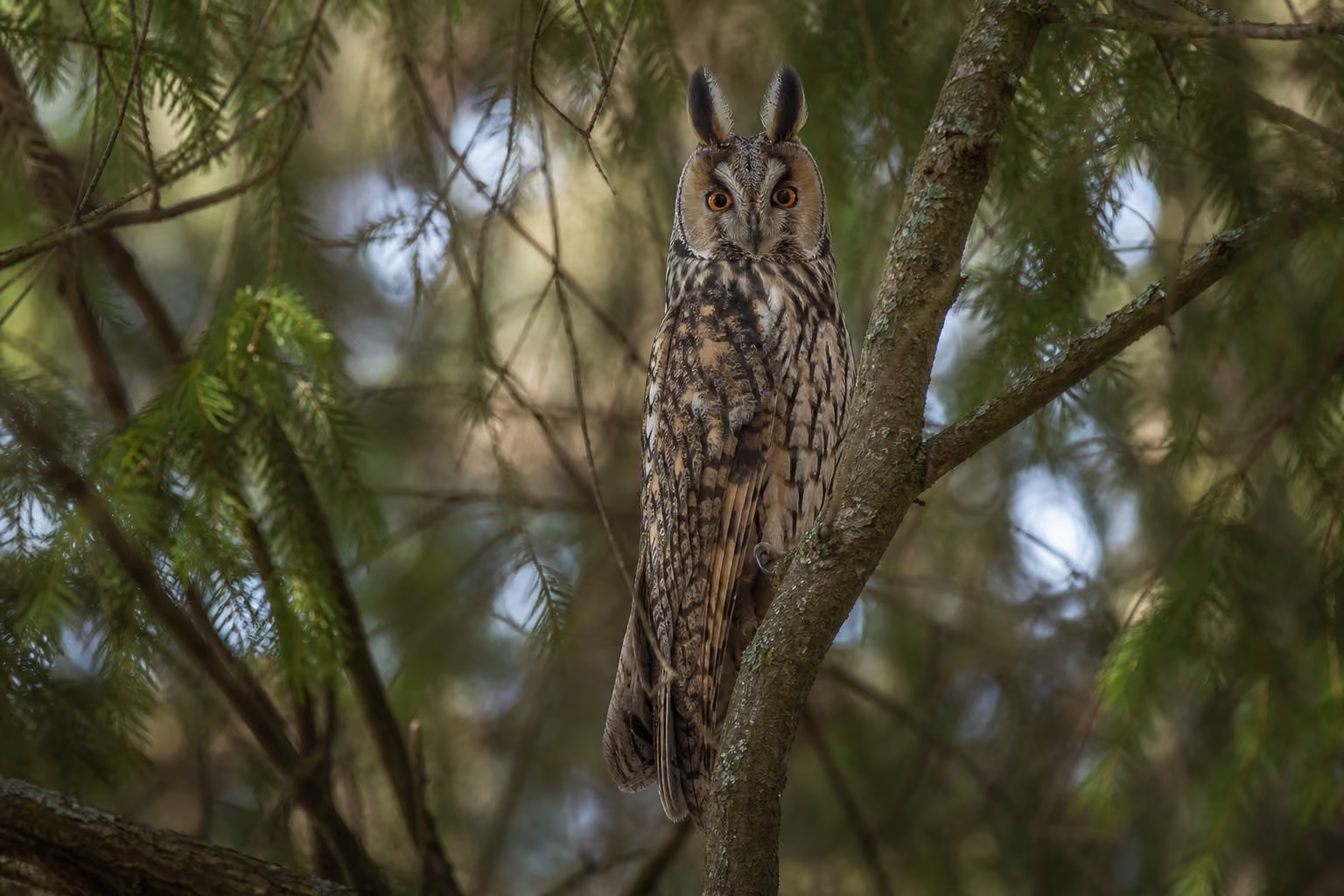
A medium owl with long ear tufts, roosting in trees by day and hunting low over fields and wetlands at night.

Details
Asio otus
A medium owl with long ear tufts, roosting in trees by day and hunting low over fields and wetlands at night.
Map: Ecoregions 2017 © RESOLVE (CC BY 4.0) · Natural Earth (PD)
Found in conifers, woodland edges, riparian woods, scrub, and near open grassland or marshes. Winter communal roosts may form.
The body is slim with long ear tufts, orange eyes, and brown streaking. Roosting birds stretch tall and blend with bark.
Nocturnal birds rest in dense branches by day. In winter, several to many owls may share a roost.
Small mammals, especially voles, dominate the diet, with small birds and insects taken occasionally.
It reuses old nests of crows, magpies, or raptors rather than building its own. Young often branch before they can fly well.
Globally low-risk, but local declines follow loss of grassland and wetland hunting areas; nocturnal habits make monitoring difficult.