050 Featured Specimen
Barn owl

Details

Barn owl

Tyto alba

Size
Wingspan 80–95 cm · 250–700 g
Diet
Carnivore
Activity
Nocturnal
Sociality
Pair
Lifespan
Several years to decades

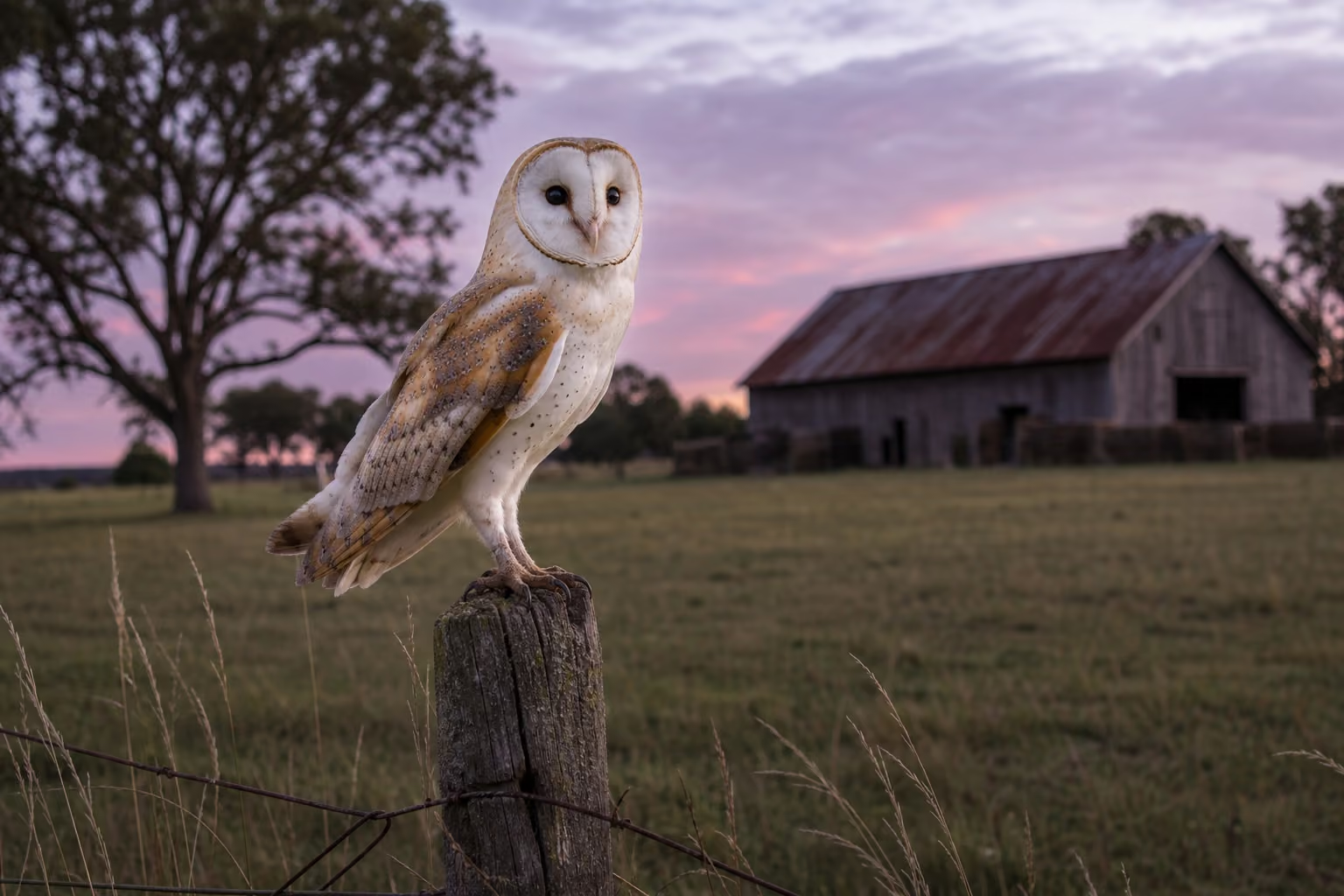
One of the most widely distributed owls on Earth, instantly known by its ghostly white heart-shaped face and dark eyes. It glides silently over farmland and grassland, using acute hearing to pinpoint small mammals in total darkness.
Range

Habitat range map
Native range Occasional / Transient
PalearcticPalearcticPalearcticPalearcticPalearcticPalearcticPalearcticPalearcticPalearcticPalearcticPalearcticPalearcticPalearcticPalearcticPalearcticPalearcticPalearcticPalearcticPalearcticPalearcticPalearcticPalearcticPalearcticPalearcticNearcticNearcticNearcticNearcticNearcticNearcticNearcticNearcticNearcticNearcticNearcticNearcticNearcticNearcticNearcticNearcticNearcticNearcticNearcticNearcticNearcticNearcticNearcticNearcticNearcticNearcticNearcticNearcticNearcticNearcticNearcticNearcticNearcticNearcticNearcticNearcticNearcticNearcticNearcticNearcticNearctic

Map: Ecoregions 2017 © RESOLVE (CC BY 4.0) · Natural Earth (PD)

Details

Habitat

Found on nearly every continent except Antarctica, it favours open country such as farmland and grassland dotted with woodland. Barns, ruined buildings and tree cavities serve as daytime roosts and nest sites, mostly below 2,000 m elevation.

Appearance

It measures 33–39 cm long with an 80–95 cm wingspan and weighs 250–700 g. The head and back are mottled pale grey to buff with fine black-and-white speckling, while the underparts range from white to pale brown. Its hallmark is the large, white-rimmed heart-shaped facial disc; females average slightly larger and more heavily spotted below.

Behavior

Active by night, it is monogamous, usually keeping one mate for life unless a partner dies. Rather than hooting, it gives a piercing, drawn-out shriek and can hiss like a snake when alarmed. Specialised feather structures let it fly almost silently.

Feeding

A carnivore, it preys overwhelmingly on small mammals, chiefly voles and shrews. Asymmetrically placed ears give it extraordinarily acute hearing, letting it locate and seize prey in complete darkness while quartering low over the ground.

Reproduction

The female lays around five eggs (range 2–9), produced on alternate days, and incubates them for about thirty days. Chicks fledge at roughly nine weeks and stay dependent on their parents until about thirteen weeks old.

Notes

Because it devours large numbers of rodents, it is prized by farmers and often welcomed with nest boxes. Although widespread and abundant overall, some island and restricted-range subspecies have declined sharply through habitat loss.