316 Featured Specimen
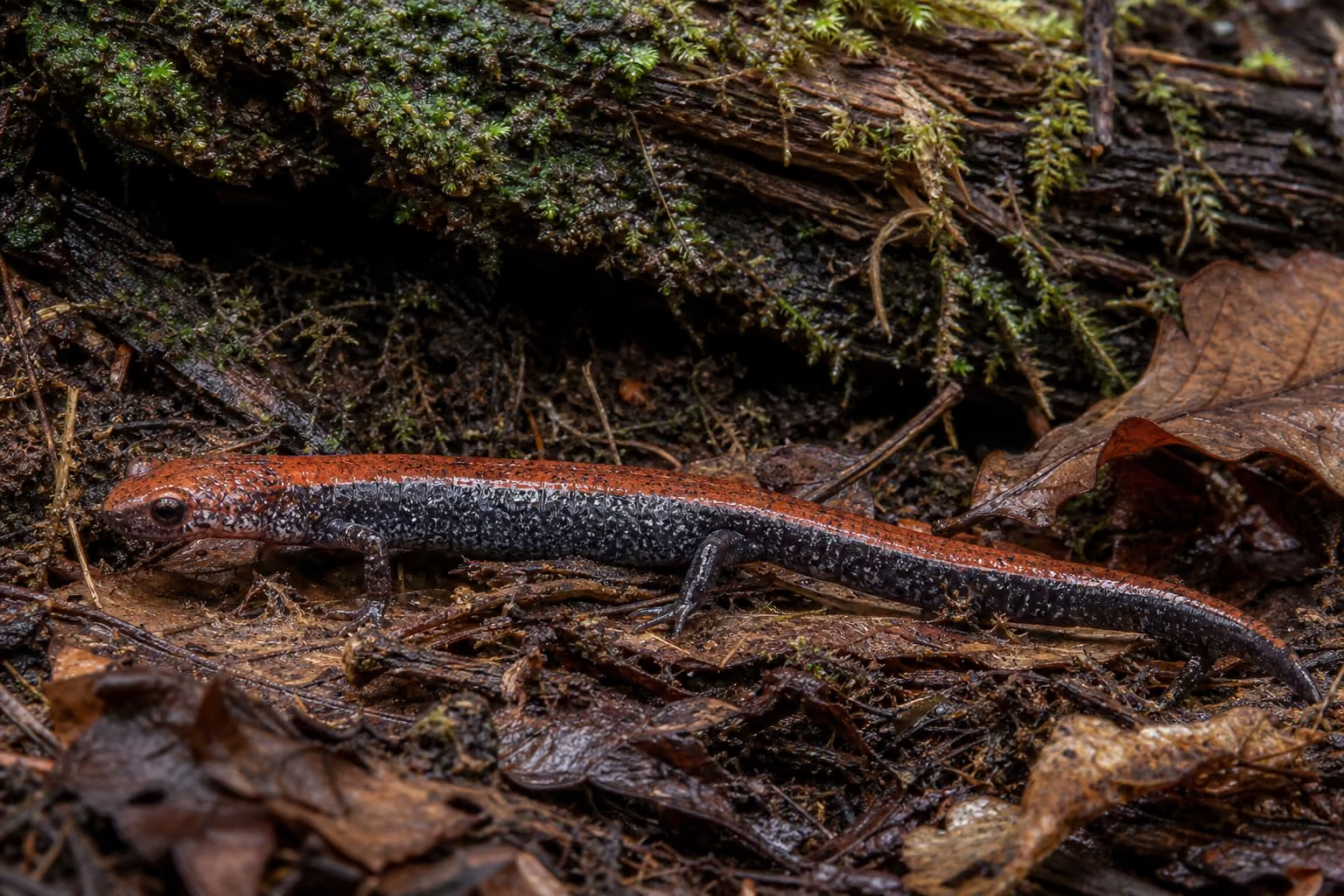
Eastern red-backed salamander

Details

Eastern red-backed salamander

Plethodon cinereus

Size
6–10 cm · 0.5–2 g
Diet
Carnivore
Activity
Nocturnal
Sociality
Solitary
Lifespan
10–25 years

The eastern red-backed salamander is a small woodland salamander common on the floor of eastern North American forests. It lacks lungs and breathes through its moist skin.
Range

Habitat range map
Native range Occasional / Transient
NearcticNearcticNearcticNearcticNearcticNearcticNearcticNearcticNearcticNearcticNearcticNearcticNearcticNearcticNearcticNearcticNearcticNearcticNearcticNearcticNearcticNearcticNearcticNearcticNearcticNearcticNearcticNearcticNearcticNearcticNearcticNearcticNearcticNearcticNearcticNearcticNearcticNearcticNearcticNearcticNearctic

Map: Ecoregions 2017 © RESOLVE (CC BY 4.0) · Natural Earth (PD)

Details

Habitat

It uses cool, damp Nearctic forests with deep leaf litter, logs, stones, and shaded soil. Because it has no aquatic larval stage, breeding also occurs in moist terrestrial cover.

Appearance

Length is 6-10 cm and weight 0.5-2 g. Many individuals have a reddish-brown stripe along a slender body, though dark unstriped forms also occur.

Behavior

Nocturnal and solitary, it hides beneath leaves and logs to avoid drying. Individuals defend small territories and use head and tail displays against rivals.

Feeding

A carnivore, it eats mites, springtails, ants, larvae, tiny worms, and other minute invertebrates. Its feeding links it closely to the forest-floor decomposer community.

Reproduction

Females lay small clutches under damp logs or rocks and guard them until hatching. Young emerge without a free-swimming larval stage, already shaped like small adults.

Notes

It is listed as Least Concern. Where abundant, it consumes large numbers of litter invertebrates and can influence nutrient cycling in forests.