045 Featured Specimen
Platypus

Details

Platypus

Ornithorhynchus anatinus

Size
38–60 cm · 0.7–2.4 kg
Diet
Carnivore
Activity
Nocturnal
Sociality
Solitary
Lifespan
10-15 years

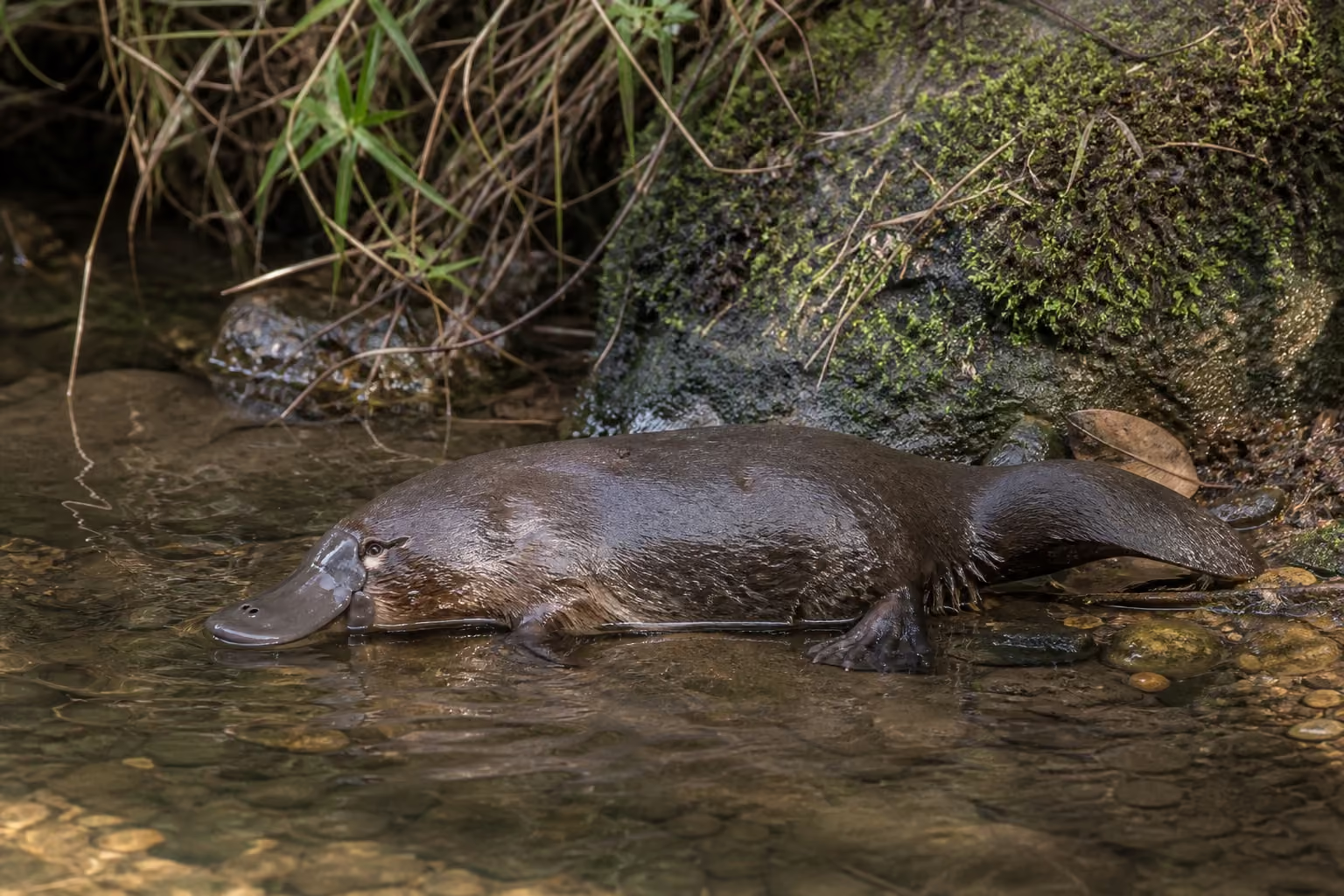
One of the few egg-laying mammals, the platypus combines a duck-like bill, webbed feet and a flat tail in one improbable body. Males bear a venomous ankle spur, and thousands of electroreceptors on the bill let it hunt prey underwater with eyes and ears shut.
Range

Habitat range map
Native range Occasional / Transient

Map: Ecoregions 2017 © RESOLVE (CC BY 4.0) · Natural Earth (PD)

Details

Habitat

Endemic to eastern Australia, from Queensland to Tasmania, in permanent rivers, streams, lakes and pools. It ranges across freshwater systems fringed by forest, from tropical rainforest to cold alpine country.

Appearance

Roughly 38–60 cm long and 700–2,400 g, with males larger than females. Dense, waterproof brown fur covers a streamlined body with a broad rubbery bill, a flattened fat-storing tail and large webbed feet. Only males carry a venomous spur on the hind ankle.

Behavior

Active by night and solitary, it forms no herds. A platypus may spend half the day foraging in water before retreating to a riverbank burrow, swimming with eyes and ears closed and typically diving for a minute or two.

Feeding

A carnivore, it forages by probing the streambed with its bill. It feeds on bottom-dwelling insect larvae such as caddisflies and midges, plus crustaceans, worms, bivalves and fish eggs, storing prey in cheek pouches to chew at the surface.

Reproduction

Breeding spans winter into spring. The female lays one to three leathery eggs about 17 mm long in a burrow and incubates them for around ten days. Lacking nipples, she nurses the young on milk secreted from the belly for some four months; maturity comes at about two years.

Notes

Numbers are thought to have fallen substantially since European settlement, with dams, pollution, urban and agricultural development and drought degrading its waterways. Curiously, its fur glows blue-green under ultraviolet light.