467 Featured Specimen
Babirusa

Details

Babirusa

Babyrousa celebensis

Size
0.9–1.1 m · 43–100 kg
Diet
Omnivore
Activity
Diurnal
Sociality
Loose group
Lifespan
20–24 years

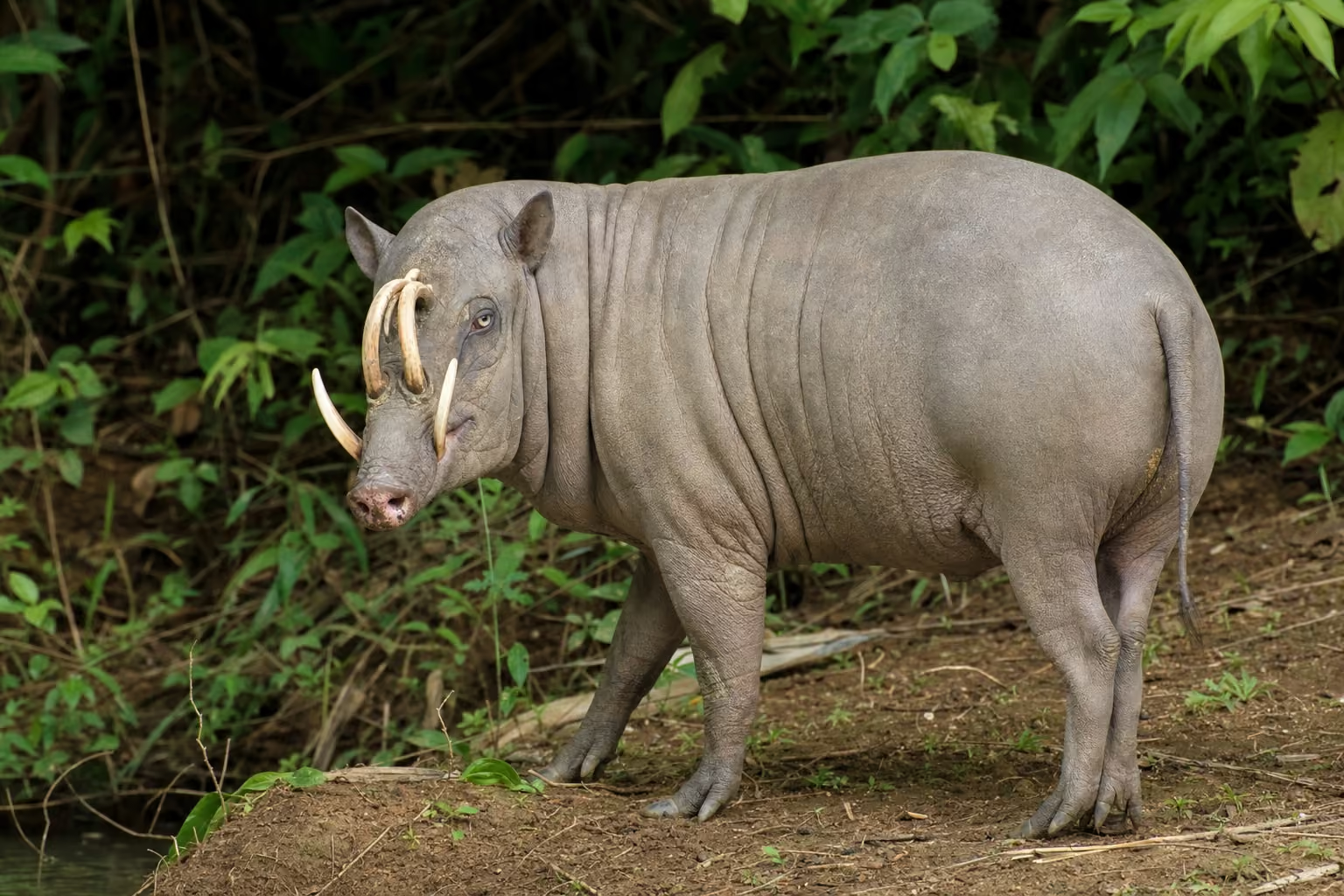
The babirusa is an Indonesian pig relative with extraordinary upward-curving tusks. It walks through forest and wetland edges searching for fruit and small foods.
Range

Habitat range map
Native range Occasional / Transient
IndomalayanIndomalayanIndomalayanIndomalayanIndomalayanIndomalayanIndomalayanIndomalayanIndomalayanIndomalayanIndomalayanIndomalayanIndomalayanIndomalayanIndomalayanAustralasianAustralasianAustralasianAustralasianAustralasianAustralasianAustralasianAustralasianAustralasianAustralasianAustralasianAustralasianAustralasianAustralasianAustralasianAustralasianAustralasian

Map: Ecoregions 2017 © RESOLVE (CC BY 4.0) · Natural Earth (PD)

Details

Habitat

It inhabits island forests, river edges, and wetland margins in the Australasian and Indomalayan regions. Lowland forest near water is especially useful.

Appearance

Length 85-110 cm; weight 43-100 kg. The body is slim with long legs and sparse grey-brown hair. In males, upper canines grow through the snout skin and curve upward.

Behavior

Diurnal and loosely social, it may travel alone or in small groups. It wallows, bathes, and moves quietly through forest.

Feeding

An omnivore, it eats fruit, roots, leaves, insects, and small animals. It uses fallen fruit heavily and is less specialized for rooting than many pigs.

Reproduction

Females bear small litters and care for young in cover. Piglets follow the mother and learn to forage in forest.

Notes

It is listed as Vulnerable. Forest loss and hunting are key threats, and conservation depends on protecting small island populations.