032 Featured Specimen
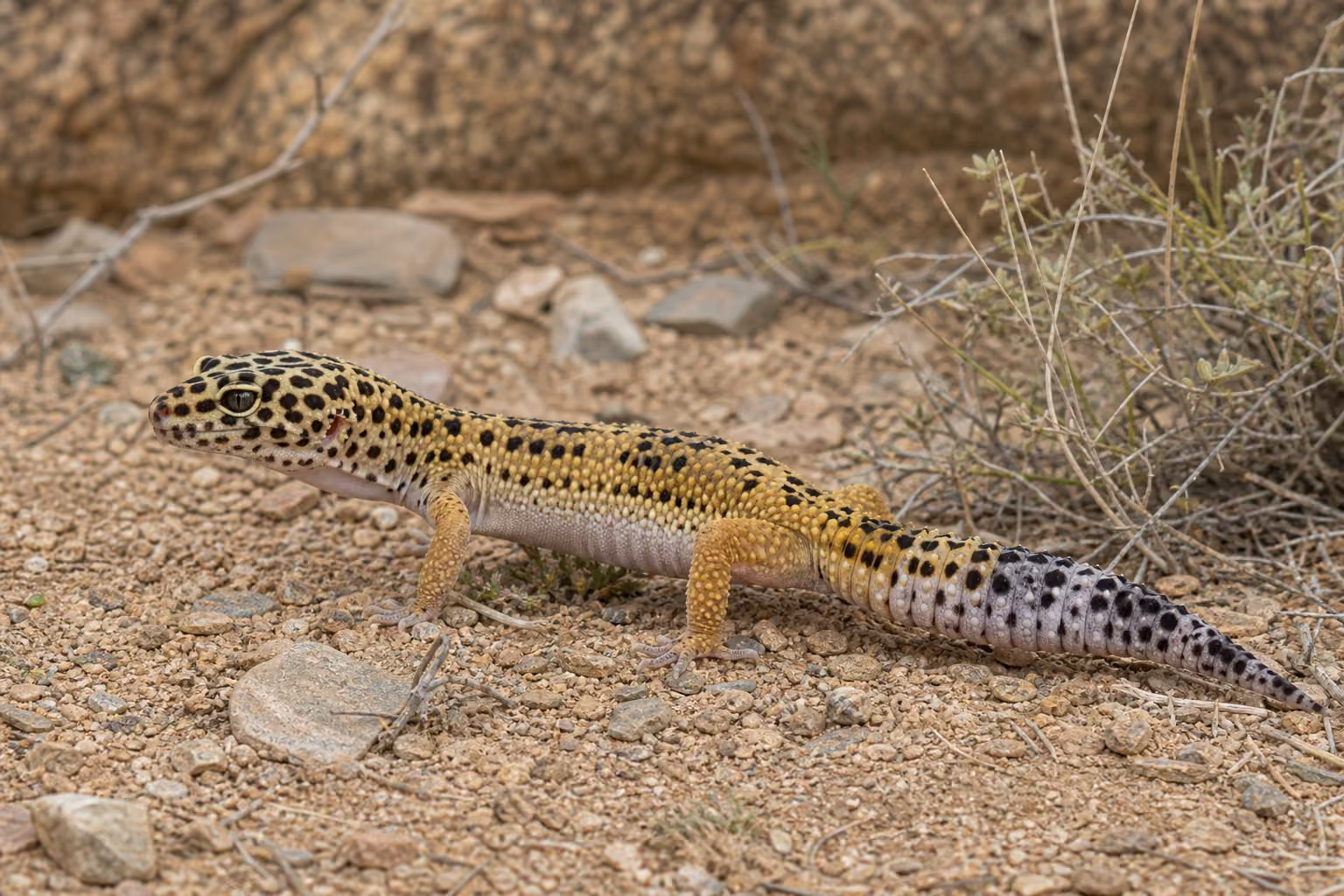
Leopard gecko

Details

Leopard gecko

Eublepharis macularius

Size
18–28 cm
Diet
Carnivore
Activity
Nocturnal
Sociality
Solitary
Lifespan
15–20 years

A nocturnal, ground-dwelling gecko of the arid lands of central and southern Asia. Unlike most geckos it has movable eyelids and cannot climb smooth walls, and it stores fat in its thick tail. It is one of the most popular pet lizards in the world.
Range

Habitat range map
Native range Occasional / Transient

Map: Ecoregions 2017 © RESOLVE (CC BY 4.0) · Natural Earth (PD)

Details

Habitat

It ranges across the rocky deserts and dry grasslands of Afghanistan, Pakistan and north-western India. It favours arid, sparsely vegetated terrain, sheltering by day in rock crevices and the burrows of other animals.

Appearance

Adults reach roughly 18 to 28 cm in total length, patterned with dark spots over a yellow-brown ground. Hatchlings show bold dark bands that break up into spots as they mature. The thick tail stores fat reserves, and unlike typical geckos it has functional eyelids.

Behavior

Generally solitary, though several individuals may share a refuge. Lacking adhesive toe lamellae, it walks on the ground rather than climbing. When threatened it can shed its tail to escape, regrowing a stubby replacement, and northern or highland populations brumate through the cold months.

Feeding

A carnivore, it preys mainly on insects such as beetles, grasshoppers and caterpillars, along with spiders, scorpions, centipedes and even small reptiles and mammals. Fat stored in its plump tail lets it survive long fasts as long as water is available.

Reproduction

It is egg-laying, producing clutches of usually two eggs several times a season. Eggs hatch in roughly one to three months. Sex is temperature-dependent, with cool and very warm incubation yielding mostly females and intermediate temperatures producing males. There is no parental care.

Notes

Listed as Least Concern on the IUCN Red List. It is among the most popular pet lizards worldwide, with the great majority of traded animals captive-bred. Remarkably long-lived for its size, it can survive well over 20 years in captivity.