088 Featured Specimen
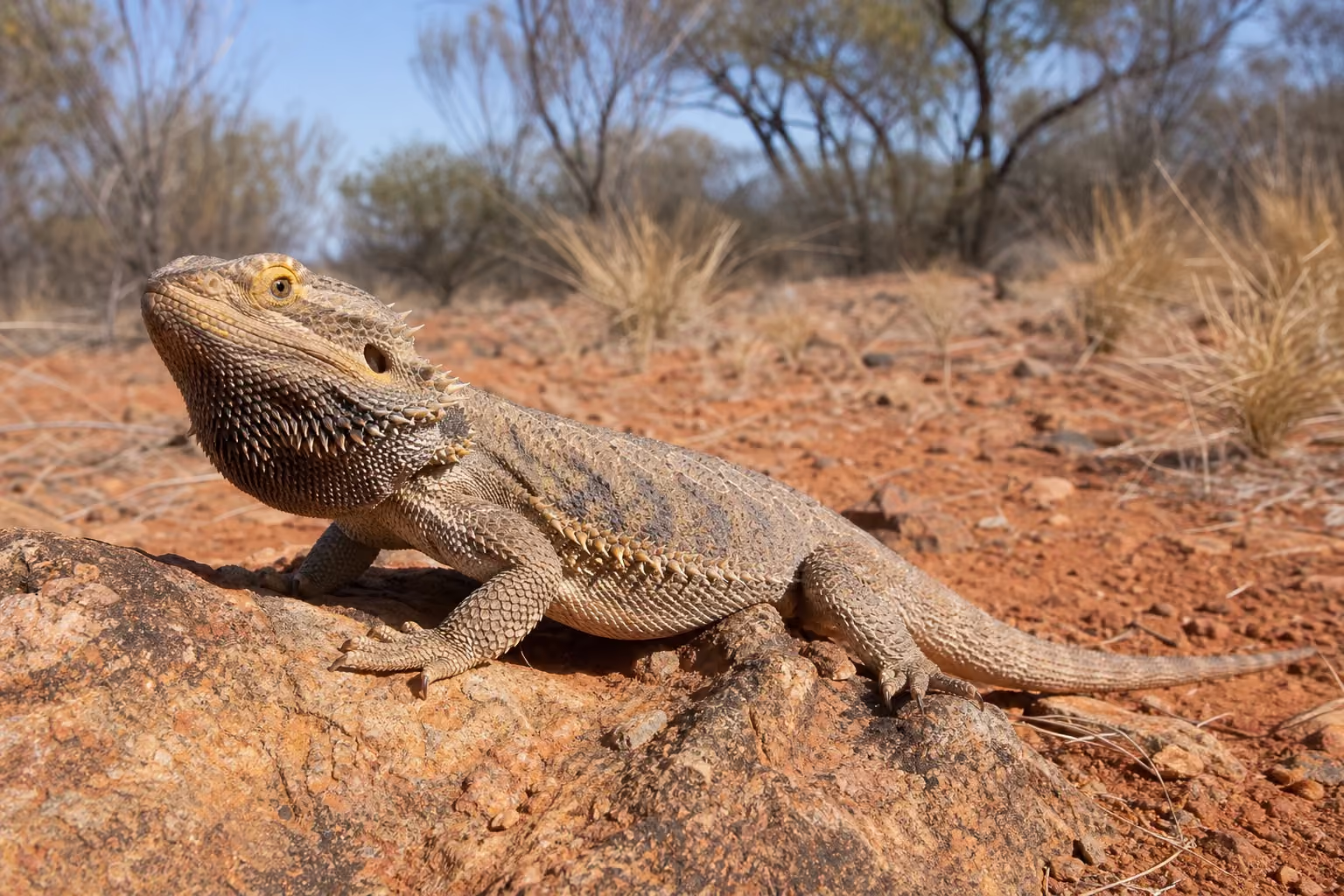
Central bearded dragon

Details

Central bearded dragon

Pogona vitticeps

Size
40–60 cm · 280–510 g
Diet
Omnivore
Activity
Diurnal
Sociality
Solitary
Lifespan
Varies by species and environment

An agamid lizard of arid inland Australia, named for the spiny throat scales it flares and darkens into a beard-like display when threatened. Highly expressive, it changes color and signals with head-bobs and arm-waves.
Range

Habitat range map
Native range Occasional / Transient
AustralasianAustralasianAustralasianAustralasianAustralasianAustralasianAustralasianAustralasianAustralasianAustralasianAustralasianAustralasianAustralasianAustralasianAustralasianAustralasianAustralasian

Map: Ecoregions 2017 © RESOLVE (CC BY 4.0) · Natural Earth (PD)

Details

Habitat

It ranges across central and eastern Australia in semi-arid woodland, arid woodland and rocky desert, including New South Wales, Queensland, South Australia and the Northern Territory. Semi-arboreal, it spends much of its time basking on tree limbs and rocks.

Appearance

Adults measure roughly 40-60 cm long and weigh 280-510 g, with the tail making up more than half the length. The flattened body bears rows of spiny scales along the head, flanks and throat. Coloration ranges from light brown and reddish-brown to yellow and orange, and males have broader heads and a more developed throat beard.

Behavior

A diurnal basker that lives largely alone, it darkens or lightens its back in response to sunlight and mood. It communicates dominance and submission through the speed of its head-bobbing and circular waves of a foreleg.

Feeding

An opportunistic omnivore, it eats insects such as crickets, grasshoppers and beetles alongside plant matter, and occasionally small lizards. The proportion of vegetation rises with age, and plants make up more than half the diet of wild adults by volume.

Reproduction

Females breed in early spring and bury 11-30 elongated eggs in a shallow sand nest. The eggs hatch in about 60-80 days depending on temperature, with no parental care after laying. At high incubation temperatures, genetic males develop and function as females.

Notes

It is listed as Least Concern. Calm and easily tamed, it has become one of the most popular reptiles kept worldwide, with all animals in trade being captive-bred. Selective breeding has produced many color and form variants, including the scaleless Silkback, which loses water far faster than wild-type dragons.