318 Featured Specimen
Greater siren

Details

Greater siren

Siren lacertina

Size
50–98 cm · 0.2–1 kg
Diet
Carnivore
Activity
Nocturnal
Sociality
Solitary
Lifespan
15–25 years

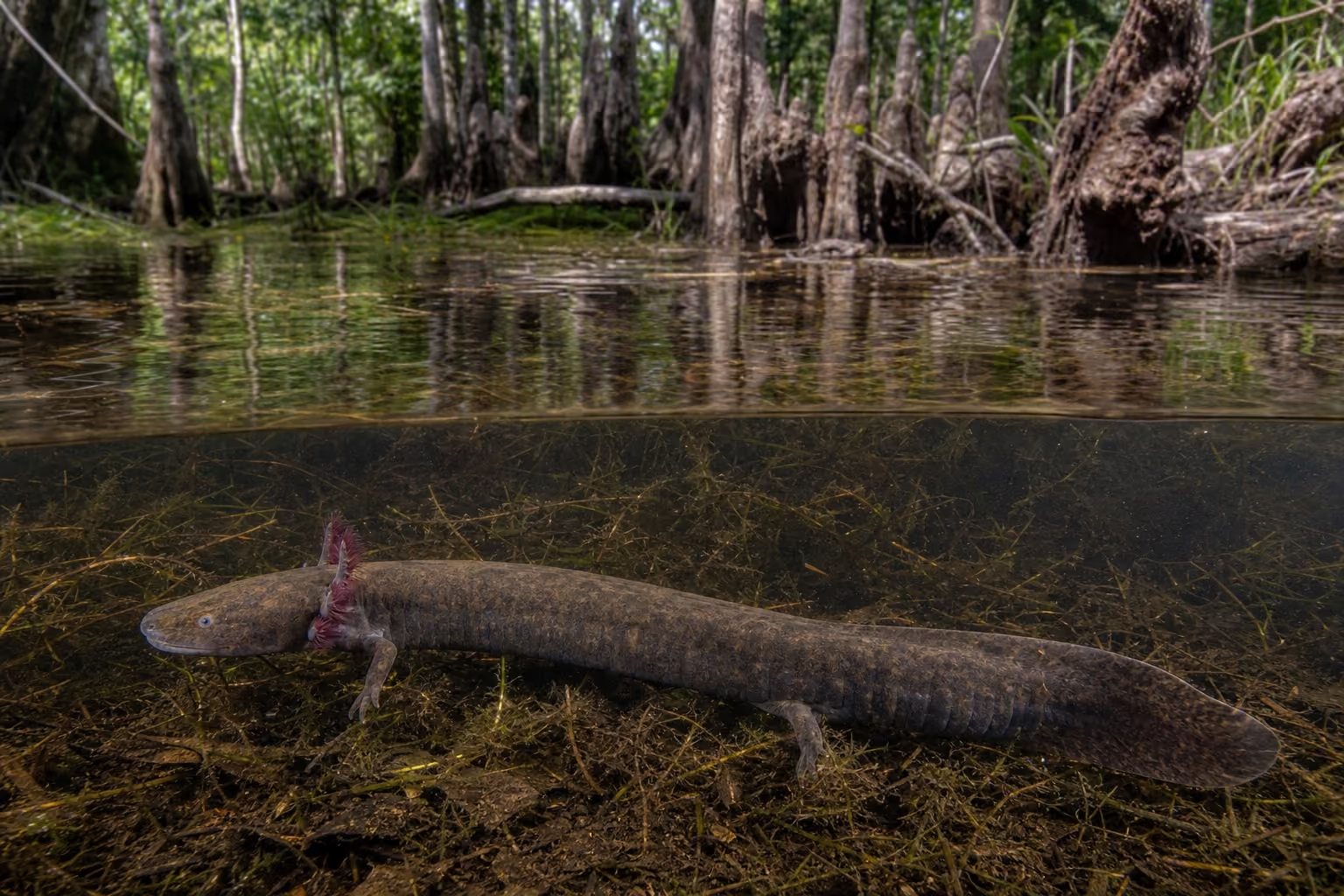
The greater siren is a large aquatic salamander of southeastern North American wetlands. It lacks hind limbs and retains external gills throughout life.
Range

Habitat range map
Native range Occasional / Transient
NearcticNearcticNearcticNearcticNearcticNearcticNearcticNearcticNearcticNearcticNearcticNearcticNearcticNearcticNearcticNearcticNearcticNearcticNearcticNearcticNearcticNearcticNearcticNearcticNearcticNearcticNearcticNearcticNearcticNearcticNearcticNearcticNearcticNearcticNearcticNearcticNearcticNearcticNearcticNearcticNearctic

Map: Ecoregions 2017 © RESOLVE (CC BY 4.0) · Natural Earth (PD)

Details

Habitat

It inhabits Nearctic swamps, marshes, vegetated ponds, and slow channels. When water levels fall, it may retreat into mud and aestivate through dry periods.

Appearance

Length is 50-98 cm and weight 200-1000 g. The eel-like body has only small forelimbs, feathery external gills on each side of the head, and dark grey to brown coloration.

Behavior

Nocturnal and solitary, it hides among aquatic plants and soft bottoms. When disturbed it writhes away, aided by slippery mucus.

Feeding

A carnivore, it eats aquatic insects, snails, crustaceans, worms, and small fish. It probes mud and vegetation and often takes prey by suction.

Reproduction

Breeding is hard to observe, but eggs are laid underwater among vegetation or bottom material. Young have external gills, and adults retain a larval-like form.

Notes

It is listed as Least Concern. Vegetated wetlands are important for the species, so drainage and poor water quality can affect local populations.