063 Featured Specimen
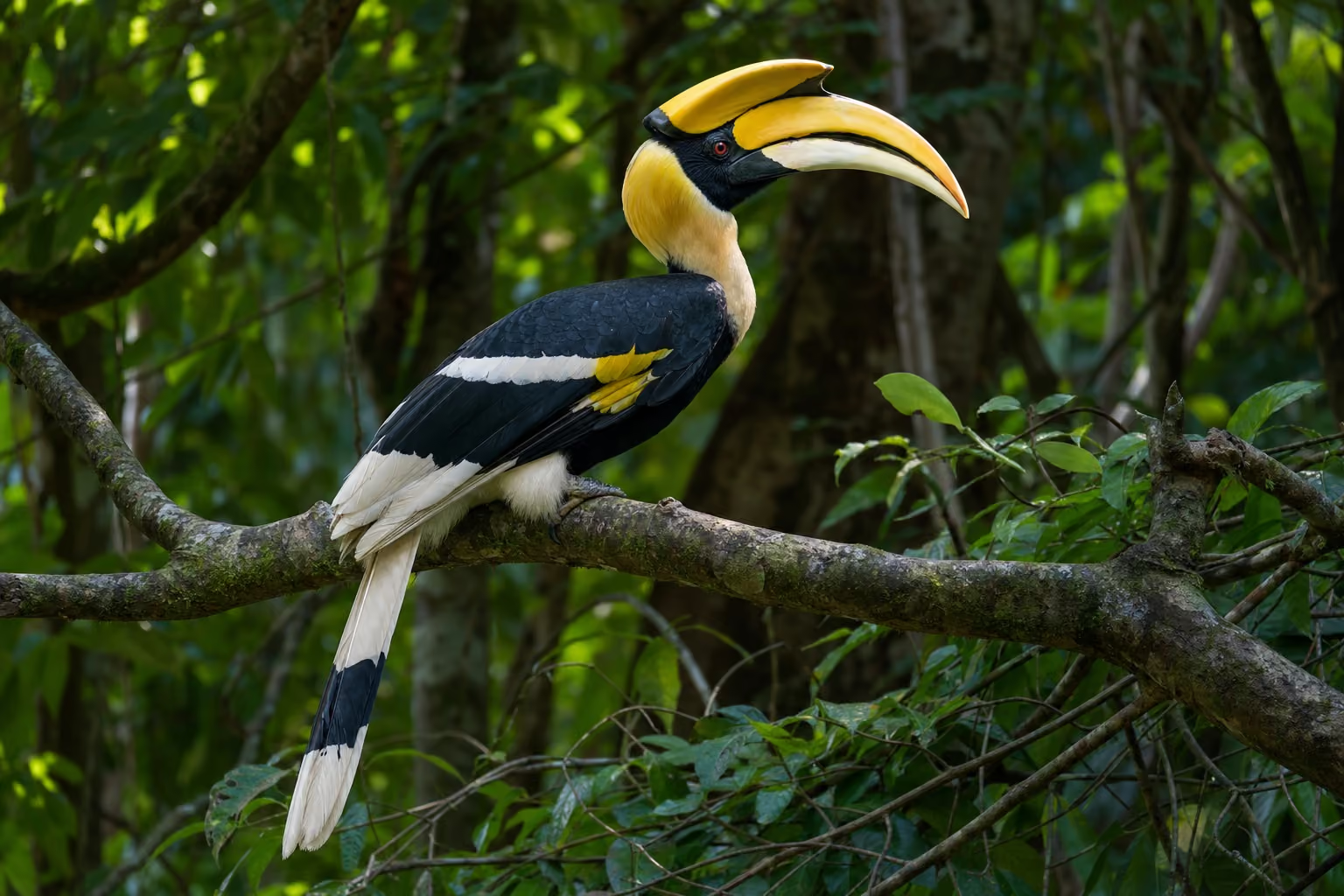
Great hornbill

Details

Great hornbill

Buceros bicornis

Size
Wingspan 1.5–1.8 m · 2.1–4 kg
Diet
Omnivore
Activity
Diurnal
Sociality
Pair
Lifespan
Several years to decades

A large Asian hornbill of tropical forests, instantly recognized by its massive yellow-and-black bill topped with a helmet-like casque. It feeds heavily on fruit, especially figs, and is a key disperser of forest seeds.
Range

Habitat range map
Native range Occasional / Transient
IndomalayanIndomalayanIndomalayanIndomalayanIndomalayanIndomalayanIndomalayanIndomalayanIndomalayanIndomalayanIndomalayanIndomalayanIndomalayanIndomalayanIndomalayan

Map: Ecoregions 2017 © RESOLVE (CC BY 4.0) · Natural Earth (PD)

Details

Habitat

Found across the Indomalayan realm from the Indian subcontinent through southern China and mainland Southeast Asia to Sumatra. It favors dense, unlogged old-growth evergreen forest in hilly country and depends on large tracts with tall emergent trees.

Appearance

A heavyset bird spanning 150-180 cm across the wings and weighing 2.1-4.0 kg, among the heaviest of all hornbills. The plumage is mostly black with a pale yellow neck, set off by the big yellow-and-black casque; preen-oil staining adds yellow to bill and feathers. The sexes differ in eye color, red in males and bluish in females.

Behavior

Active by day, it lives in pairs but gathers in small parties, and sometimes large congregations, at fruiting trees. Its heavy wingbeats are audible from a distance, and breeding birds exchange loud, far-carrying duets. Birds roost in regular tall trees, returning punctually at dusk.

Feeding

Omnivorous, it eats mainly fruit, with figs especially important and supplying most of its water. It also takes small mammals, birds, lizards and insects, hopping along branches and tearing at bark to find prey.

Reproduction

Breeding runs from January to April. The female seals herself inside a tree cavity, the entrance plastered shut by the male except for a narrow slit. She lays one or two eggs and incubates for about 38-40 days; the male passes food through the slit to the confined female and chicks, which break out once grown.

Notes

Conservation assessments flag a heightened risk for the species, driven by deforestation and hunting for meat as well as the casque and tail feathers used as adornments. Celebrated as the state bird of Kerala and Arunachal Pradesh, it is widely known across its range as the King of the Jungle.