067 Featured Specimen
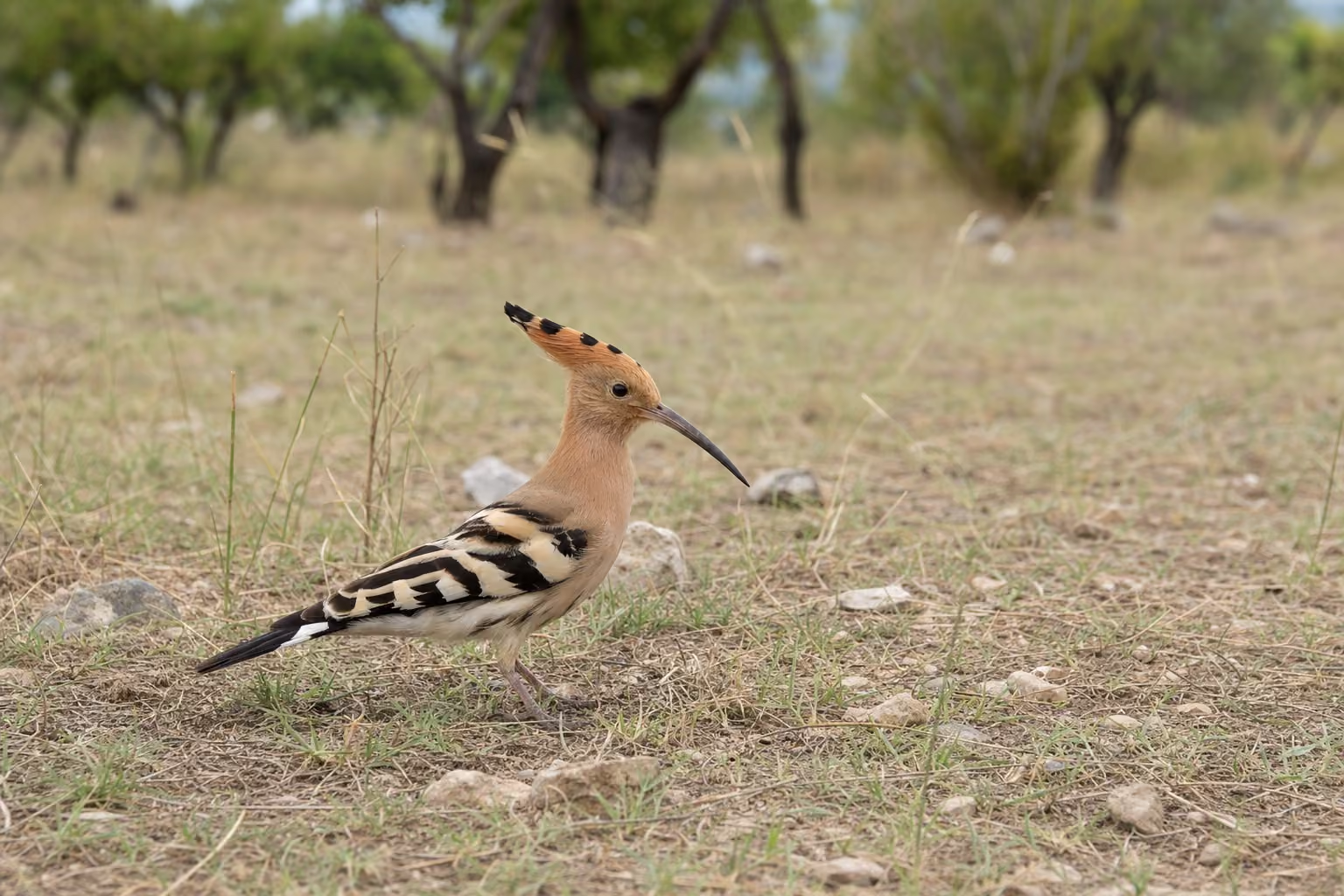
Eurasian hoopoe

Details

Eurasian hoopoe

Upupa epops

Size
25–32 cm · 46–89 g
Diet
Carnivore
Activity
Diurnal
Sociality
Pair
Lifespan
Several years to decades

A striking bird recognised by its fan-shaped orange crest and boldly black-and-white barred wings. It walks the ground probing with a long, downcurved bill and flies with an undulating, butterfly-like beat. It ranges across the Palearctic into Africa and southern Asia.
Range

Habitat range map
Native range Occasional / Transient
PalearcticPalearcticPalearcticPalearcticPalearcticPalearcticPalearcticPalearcticPalearcticPalearcticPalearcticPalearcticPalearcticPalearcticPalearcticPalearcticPalearcticPalearcticPalearcticPalearcticPalearcticPalearcticPalearcticPalearcticAfrotropicalAfrotropicalAfrotropicalAfrotropicalIndomalayanIndomalayanIndomalayanIndomalayanIndomalayanIndomalayanIndomalayanIndomalayanIndomalayanIndomalayanIndomalayanIndomalayanIndomalayanIndomalayanIndomalayan

Map: Ecoregions 2017 © RESOLVE (CC BY 4.0) · Natural Earth (PD)

Details

Habitat

It favours open country with bare or lightly vegetated ground for foraging, such as grassland, farmland and woodland edges, alongside vertical surfaces and cavities for nesting. Northern breeders migrate south for winter, while African birds remain year-round residents.

Appearance

A medium-sized bird of 25-32 cm and 46-89 g, cinnamon-buff on the head, upper back and breast, with vividly black-and-white barred wings and tail. Its most distinctive feature is the erectile crest, which fans open in orange-buff tipped with black, above a slender, downcurved black bill.

Behavior

Active by day, it forages alone or in pairs, walking and probing across open ground. It sunbathes by spreading its wings low against the earth and is fond of dust and sand baths. It is territorial, and rival males may fight fiercely.

Feeding

Largely insectivorous, it takes prey from the soil surface and underground, probing with its long bill for crickets, beetles, ants and locusts. It also seizes frogs and small lizards and prises food from bark and moss.

Reproduction

Pairs nest in tree holes or crevices in walls, and will use nest boxes. The female incubates alone for roughly two and a half to three weeks, and the young fledge after about four weeks of care.

Notes

Listed as Least Concern, though declines from habitat loss are noted across parts of its range. Nesting females and chicks produce a foul uropygial secretion, and nestlings squirt faeces at intruders to deter them. Chosen as Israel's national bird in 2008, the hoopoe also appears in Ancient Egyptian art and the Quran.