053 Featured Specimen
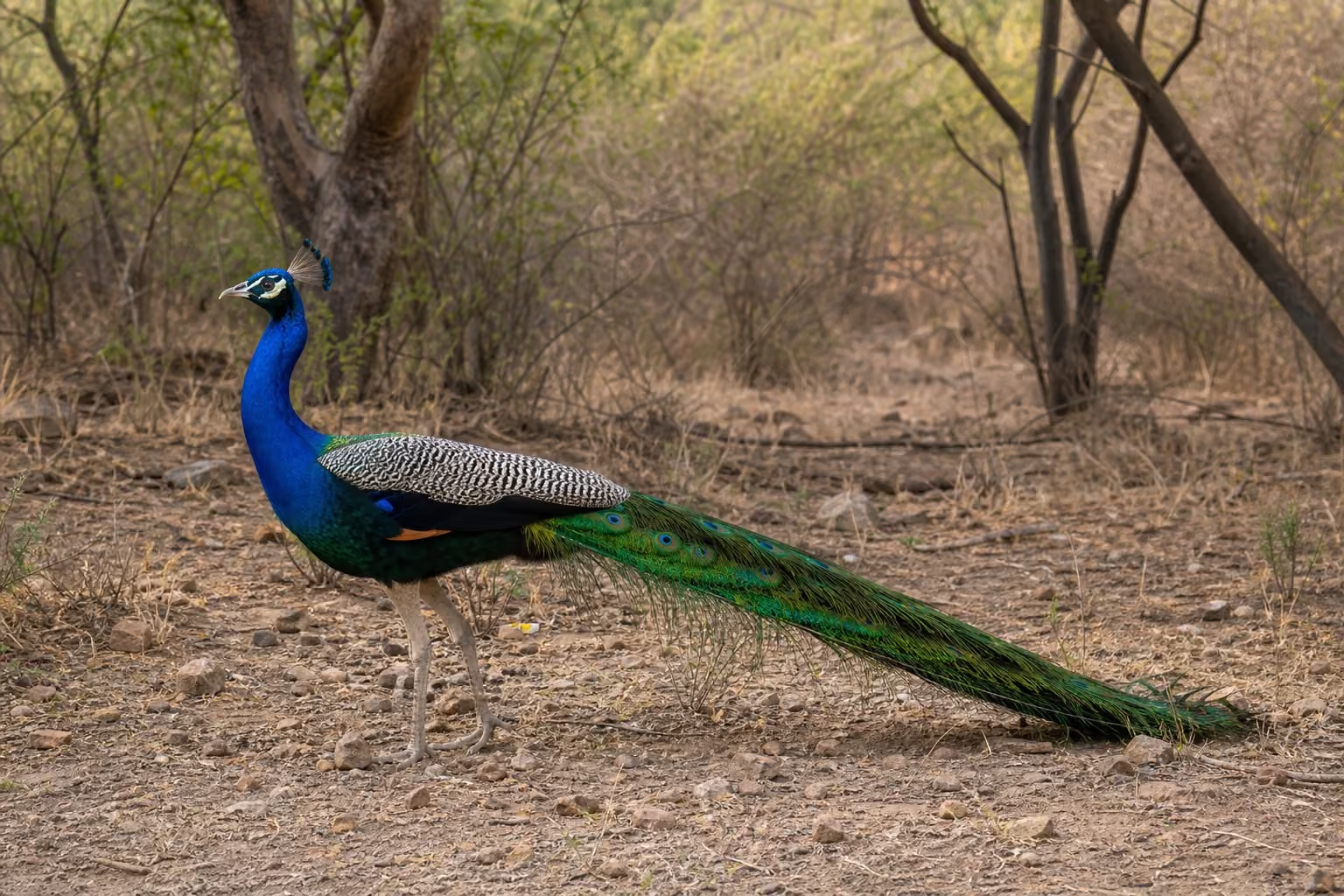
Indian peafowl

Details

Indian peafowl

Pavo cristatus

Size
0.9–2.3 m · 2.8–6 kg
Diet
Omnivore
Activity
Diurnal
Sociality
Loose group
Lifespan
Several years to decades

A large pheasant celebrated for the peacock's enormous train of elongated upper-tail coverts, studded with iridescent blue-green eyespots. He raises it into a shimmering fan during courtship. It is the national bird of India.
Range

Habitat range map
Native range Occasional / Transient
IndomalayanIndomalayanIndomalayanIndomalayanIndomalayanIndomalayanIndomalayanIndomalayanIndomalayanIndomalayanIndomalayanIndomalayanIndomalayanIndomalayanIndomalayan

Map: Ecoregions 2017 © RESOLVE (CC BY 4.0) · Natural Earth (PD)

Details

Habitat

Native across the Indian subcontinent and Sri Lanka, it favours lowland deciduous forest, scrub, forest edges and cultivated land near water. Introduced widely elsewhere, it has founded feral populations around the world.

Appearance

Size ranges from the roughly 90 cm peahen to the male at about 230 cm including his train, weighing 2.75–6 kg. The peacock has a glossy deep-blue head and neck and a train of eyespotted coverts; the brown peahen lacks the train, and both sexes wear a fan-shaped crest.

Behavior

A ground-dweller, it is a reluctant flier that usually escapes on foot and roosts in tall trees at night. It lives in small groups of one peacock and several peahens, giving loud, far-carrying calls, especially before the breeding season.

Feeding

Omnivorous, it forages on the ground for seeds, fruit and shoots alongside insects and small reptiles. Near settlements it readily takes crops and food scraps.

Reproduction

The polygamous male breeds with the onset of the monsoon, displaying his fanned train at communal sites to attract females. The hen lays a clutch of three to eight eggs and incubates them for about 28 days; she alone tends the nidifugous chicks, which follow her soon after hatching.

Notes

Long valued for eating venomous snakes and pests, the peafowl is venerated in Hindu tradition and protected in India and Sri Lanka. Yet as an introduced species, as on Japan's Sakishima Islands, it preys on native wildlife and has become a problem.